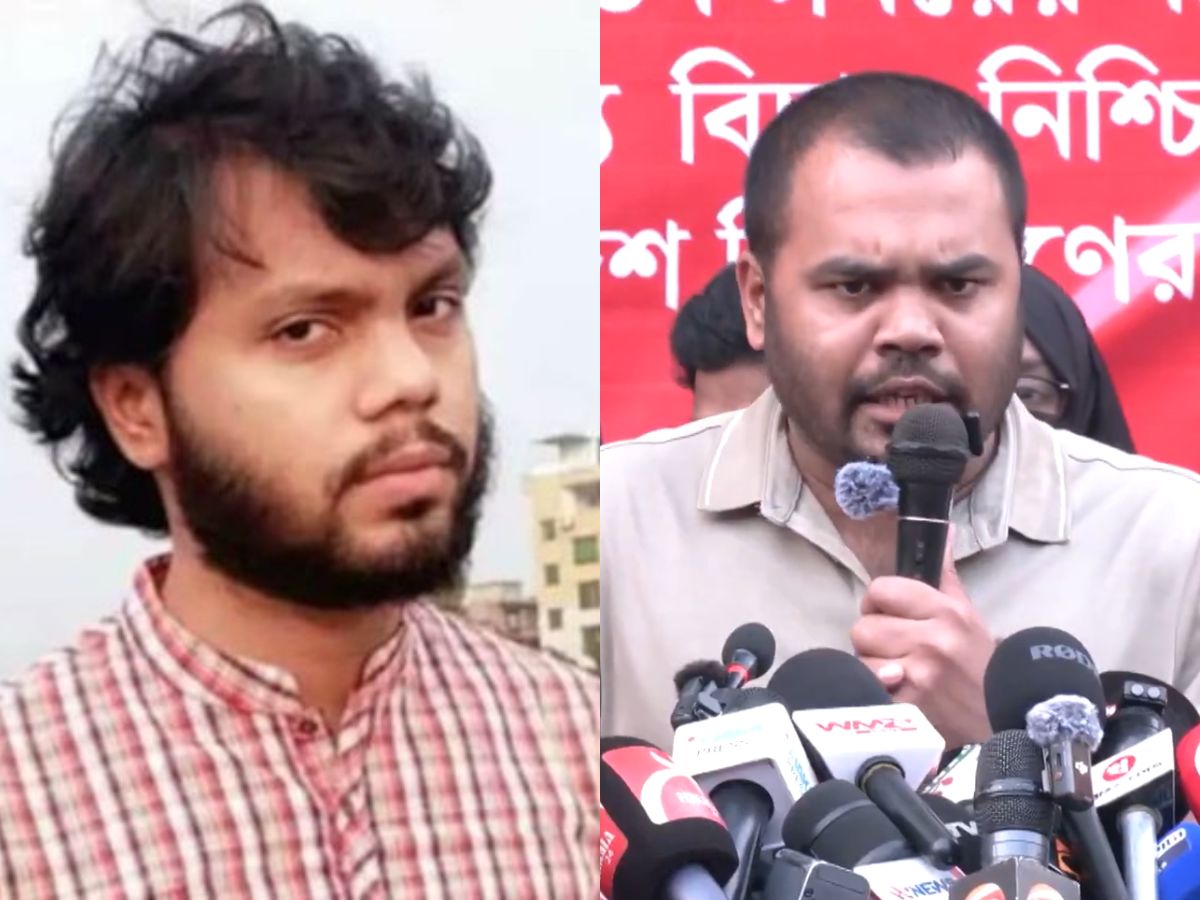
The brother of student leader Sharif Osman Hadi has publicly accused Bangladesh’s interim government, led by Muhammad Yunus, of being behind the killing. He claims Hadi’s assassination was planned to prevent the February general election and destabilise the political environment. The comments come amid escalating protests and deep national division.
Sharif Omar bin Hadi spoke at a public gathering in Shahbagh, Dhaka, accusing those in power of orchestrating the murder and using it as a tool to hinder the electoral process. He warned that if justice is not delivered, the government could face a fate similar to Sheikh Hasina, who was forced into exile last year during nationwide uprisings.
Who Was Osman Hadi?
Sharif Osman bin Hadi was a prominent youth leader and convenor of Inqilab Moncho, a political activist group born from the 2024 student-led movement that played a key role in ousting former Prime Minister Sheikh Hasina.
Sharif Osman Hadi was shot on December 12 in Dhaka while campaigning and later died from his injuries in Singapore on December 18. Hadi was also an independent candidate planning to contest the upcoming national elections. His death has shocked many in Bangladesh and ignited widespread anger.
Brother Alleges Election Sabotage
At the Shahbagh event, Omar Hadi said his brother had worked actively on the ground to prepare for elections scheduled for February 12, 2026. He claimed authorities were using the murder as a pretext to disrupt the democratic process. “You had Osman Hadi killed, and now you are trying to foil the election by using this as an issue,” he said.
Omar also warned that without a speedy trial of the killers, those responsible would one day be forced to flee Bangladesh. “Ensure a speedy trial of the killers so that the election environment is not harmed… If justice for Osman Hadi is not delivered, you too will be compelled to flee Bangladesh one day,” he said.
Rising Protests and Public Outrage
Hadi’s death has sparked large rallies and demonstrations in Dhaka and other parts of the country, with activists demanding immediate justice and accountability. Protesters have criticised the government’s response and have called for a transparent investigation.
In some areas, demonstrations have turned confrontational, with clashes between protesters and security forces. In response, Inqilab Moncho issued an ultimatum to authorities, warning of intensified protests if the killers are not brought to justice swiftly.
Violence and Wider Unrest
Beyond political rallies, unrest has spilled into broader society. There have been attacks on media offices and violence involving civilian casualties. This includes the shocking lynching of a Hindu man, Dipu Chandra Das, which has further inflamed tensions and drawn international attention to issues of minority safety and law enforcement in Bangladesh.
These incidents have also strained relations between Bangladesh and neighbouring countries. Protests outside the Bangladeshi High Commission in New Delhi have been reported, reflecting regional concern over the violence.
Interim Government’s Position
The interim government, led by Nobel laureate Muhammad Yunus, has condemned mob violence and vowed to pursue legal action against perpetrators of attacks. It has also promised to expedite the investigation into Hadi’s assassination, including through the Speedy Trial Tribunal process.
Government officials maintain their focus on maintaining security as the country prepares for the upcoming national elections. They have emphasised that justice will be served and called for calm among citizens.
Impact on Bangladesh’s Political Future
The murder of Osman Hadi and the ensuing political turmoil underline the fragile state of Bangladesh’s democracy ahead of pivotal elections. Critics argue that political violence threatens free and fair participation in the electoral process, while supporters of the government call for unity and stability in an increasingly divided nation.
As tensions continue, the clash over accountability and justice for Osman Hadi is shaping up to be one of the defining issues of Bangladesh’s political future.