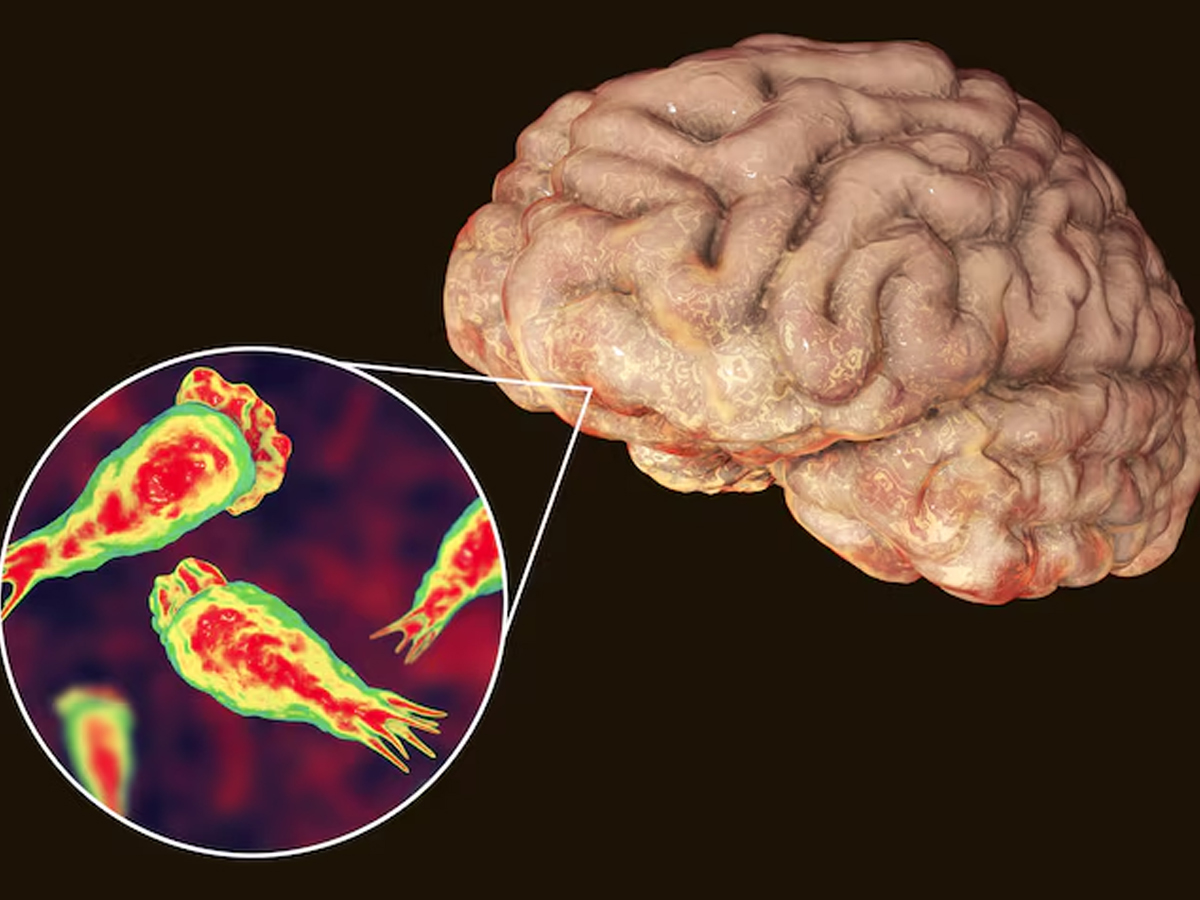
Following the death of a nine-year-old child in Kozhikode from a rare brain-eating amoeba, Kerala health officials have issued an alert. The death was reported on August 14, just a day after the child was admitted to Kozhikode Medical College. Doctors confirmed that she was infected with primary amoebic meningoencephalitis (PAM), a rare and usually fatal brain infection.
This is the third case in recent weeks reported from the district. Among the patients was also a three-month-old baby.
How the Girl Contracted the Amoeba
The girl was admitted to a local hospital on August 13 with a high fever. As her condition worsened, she was shifted to the medical college. She died the same day.
Now, medical personnel are attempting to identify the infection’s origin, which is most likely a freshwater body like a lake or pond.
ALSO READ: Brain-Eating Amoeba Kills 9-Year-Old in Kerala, Fourth Case in 2025
The infant may have been exposed to tainted water that contained the brain-eating amoeba, scientifically known as Naegleria fowleri, according to officials.
What is Primary Amoebic Meningoencephalitis (PAM)?
PAM is a rare brain infection caused by the free-living amoeba Naegleria fowleri. The organism thrives in warm freshwater sources like lakes, rivers, ponds, and hot springs. It can survive in temperatures as high as 46°C.
The amoeba enters the body through the nose when people swim, dive, or come into contact with contaminated water. From there, it travels to the brain, destroying tissue and causing rapid inflammation.
How Does Infection Spread?
Experts stress that PAM does not spread from person to person. Infection happens only when contaminated water enters the nasal cavity. The US Centers for Disease Control (CDC) explains, “The amoeba travels up your nose and enters the brain cavity, where it slowly destroys brain tissue.”
Apart from natural water sources, poorly maintained swimming pools and unchlorinated water parks have also been linked to cases in rare situations. Using contaminated tap water in nasal rinsing devices, like neti pots, can also pose risks.
Symptoms of Brain-Eating Amoeba
The infection progresses rapidly, with early symptoms appearing between one and nine days after exposure.
Initial symptoms include:
- High fever
- Headache
- Nausea and vomiting
Later symptoms include:
- Stiff neck
- Seizures
- Confusion
- Hallucinations
- Coma
Most cases turn fatal within one to five days. The fatality rate is over 97 per cent.
Currently, no standard treatment exists because PAM is so rare. Doctors often use a combination of drugs like amphotericin B, rifampin, fluconazole, and miltefosine. Cooling the body below normal temperature is sometimes used to reduce brain swelling.
How to Stay Safe
Doctors urge people to take preventive steps, as treatment is rarely effective. Health advisories recommend:
- Avoid swimming in warm, stagnant freshwater.
- Use only distilled, sterilised, or boiled water for nasal cleansing.
- Ensure swimming pools are properly chlorinated.
- Prevent water from going up the nose when diving or swimming.
A Georgia Department of Public Health advisory noted, “You can reduce your risk of infection by limiting the amount of water that goes up the nose.”