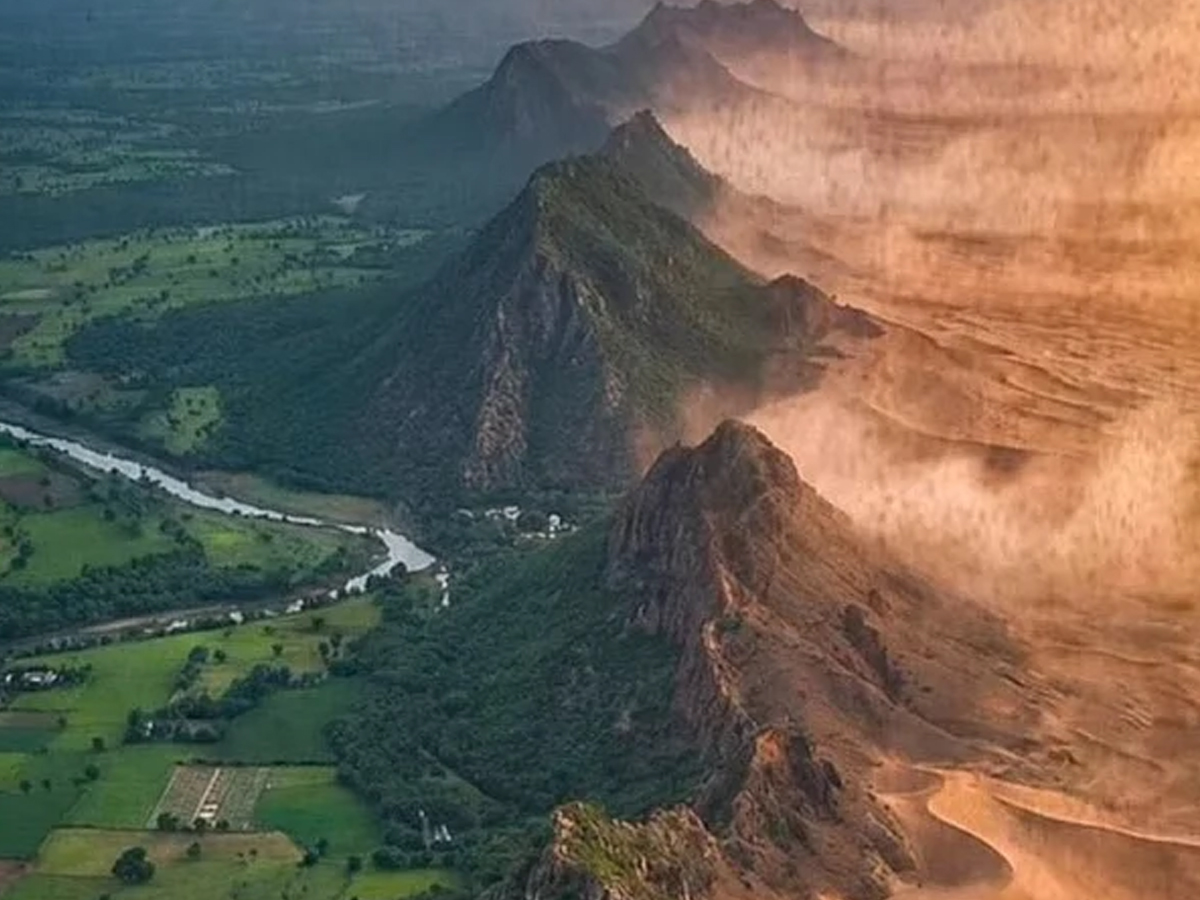
A recent Supreme Court decision on how to define the Aravalli hills has triggered protests across parts of north India. The ruling follows a recommendation by the central government and changes how Aravalli landforms will be identified and regulated.
The Aravalli range is among the oldest mountain systems in the world. It stretches across Rajasthan, Haryana, Gujarat, and Delhi. Environmentalists say the new definition could leave many ecologically sensitive areas exposed to damage.
The government says the move aims to bring clarity and consistency. Protesters fear it may weaken long-standing protections.
What the Supreme Court’s New Aravalli Definition Says
Under the new framework, an Aravalli hill is any landform that rises at least 100 metres above the surrounding area. If two or more such hills lie within 500 metres of each other, the land between them will also count as part of the Aravalli range.
The government argues that this clear benchmark will help regulate mining and construction in a uniform way across states.
However, critics say the Aravallis are not defined by height alone.
Why Environmental Groups Are Protesting
Over the weekend, protests broke out in cities such as Gurugram and Udaipur. Residents, farmers, environmental activists, and legal groups joined the demonstrations.
Many argue that the lower, scrub-covered hills play a vital role in the region’s ecology.
Neelam Ahluwalia, founder member of People for Aravallis, said the new definition risks harming the range’s role in “preventing desertification, recharging groundwater and protecting livelihoods”.
Environmentalists say these smaller hills act as natural barriers against desert expansion and help maintain water levels in north-west India.
Why Height Alone Is Not Enough, Say Experts
Activists insist that the Aravallis should be identified by their function, not just elevation.
“The Aravalli range should not be defined by height alone, but by its ecological, geological and climatic role,” Vikrant Tongad said.
He added, “Any landform that is geologically part of the Aravalli system and plays a critical role in ecology or preventing desertification should be recognised as part of the range, regardless of its height.”
Protesters want the government to include factors such as wildlife corridors, climate resilience, and groundwater recharge zones in future classifications.
Concerns Over Mining and Construction
Many fear the new definition may open the door to mining and real estate activity in areas that were earlier protected.
Opposition leaders have also raised alarms. Akhilesh Yadav said protecting the Aravallis is “inseparable from Delhi’s survival.” Rajasthan Congress leader Tika Ram Jully described the range as the state’s “lifeline.”
Activists warn that damage to the hills could worsen air pollution, heatwaves, and water scarcity in Delhi and nearby regions.
Government Defends the Decision
The central government has rejected claims that the ruling weakens environmental safeguards. It says mining remains banned in protected forests, eco-sensitive zones, and wetlands. Existing leases must follow sustainable norms.
Environment minister Bhupender Yadav said only about 2% of the total Aravalli area could even be considered for mining, and only after approvals. Still, protest groups say they will continue demonstrations and explore legal challenges.