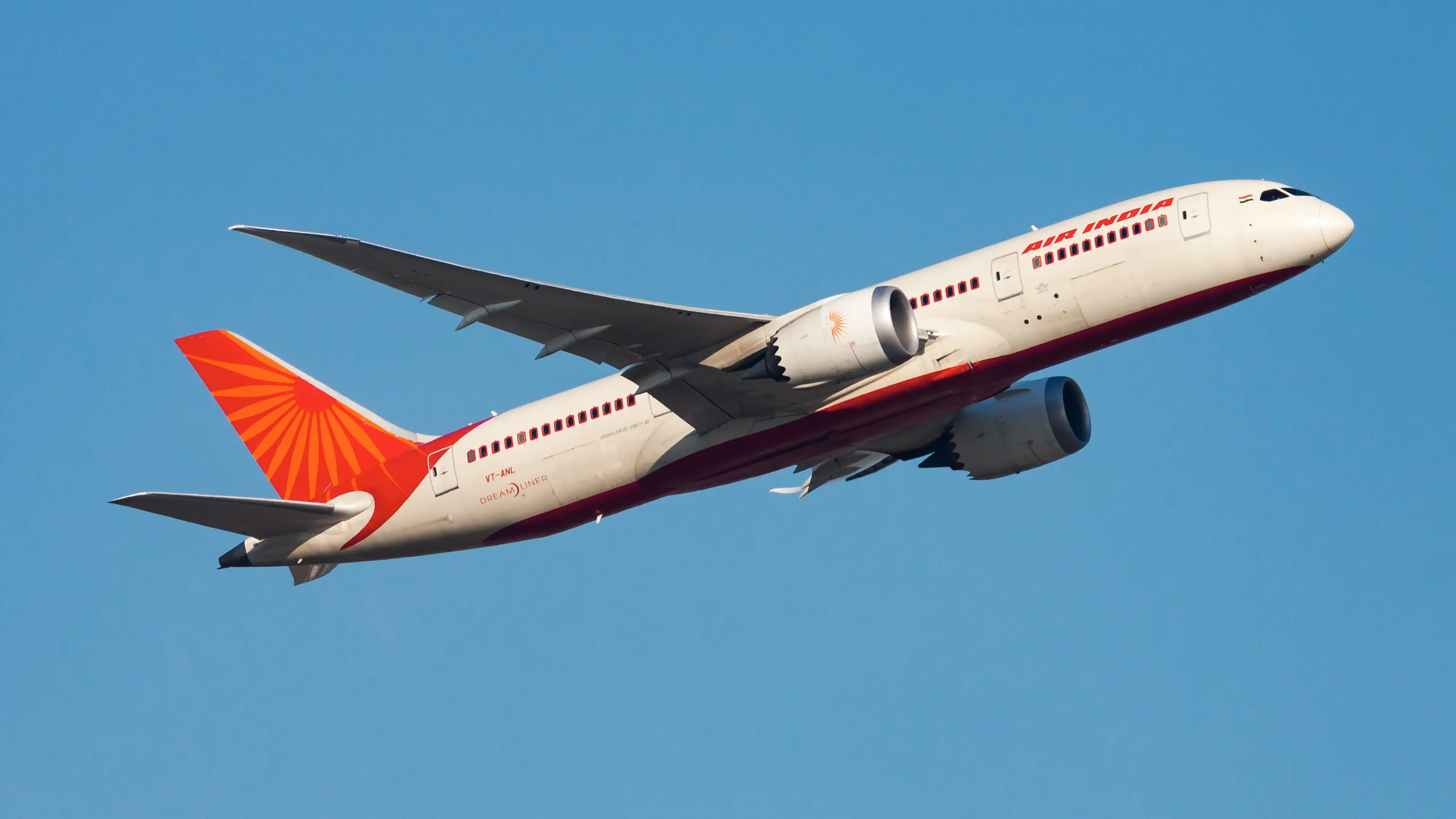
New Delhi: A day after an Air India flight from Phuket to Delhi encountered severe turbulence, leaving 17 passengers and cabin crew members with injuries ranging from minor to serious, questions are being raised over the pilots’ decision not to divert the aircraft to the nearest airport.
On August 4, Flight AI2379 took off from Phuket at 8:41 am for Delhi. About 90 minutes into the journey, while flying over Odisha, the aircraft encountered severe turbulence and suffered a sudden drop in altitude of approximately 300 feet.
A passenger, who was later admitted to Fortis Hospital, is heard in a viral video claiming that despite repeated requests from passengers seeking immediate medical attention for the injured, the pilots decided to continue to Delhi instead of diverting to a closer airport.
Suggesting that the crew wanted to avoid greater scrutiny that a diversion could attract, the passenger claimed one of the pilots said, “Delhi chalo, waha achha ilaaz milega (Let’s go to Delhi. Better treatment will be available there).”
Another passenger, Shrikant Jha, also alleged that the captain appealed to passengers not to record videos. According to Jha, the captain said, “Koi video nahi banana. Hamare liye bura hai, tumhare liye bura hai (Please don’t make any videos. It is not good for us or for you).”
The turbulence left several passengers and crew members with injuries to the spine, pelvis, shoulders and neck. Some also suffered ruptured eardrums, cuts and bruises.
Recalling the ordeal, Jha said, “People who were not wearing seat belts hit their heads on the ceiling. But even those with seat belts were injured. My mother had her seat belt fastened, yet she suffered a rib injury after striking the armrest.”
However, aviation experts have cautioned against blaming the pilots before the investigation is completed.
According to aviation expert Vipul Saxena, severe turbulence of this magnitude often results in the autopilot disengaging, forcing pilots to manually control the aircraft.
“Once an aircraft enters unexpected turbulence of this intensity, pilots may not immediately know whether climbing, descending or changing course is the safest option. That naturally delays decision-making,” he said.
Experts believe the absence of advance weather warnings may explain why the seat belt sign was not switched on before the turbulence struck, leaving passengers and cabin crew unprepared.
Modern aircraft continuously receive weather information through onboard systems that help pilots identify hazardous weather and generate real-time alerts. However, aviation safety expert Group Captain (Retd.) G.P. Bajpai said the aircraft may have encountered Clear Air Turbulence (CAT), one of the most difficult weather phenomena to detect.
“Unlike conventional turbulence associated with storms or clouds, Clear Air Turbulence is invisible to the naked eye and cannot be detected by conventional onboard weather radar,” Bajpai explained.
He said the CAT likely caused the sudden loss of altitude and suggested it may also have triggered a temporary electrical malfunction. “Since the aircraft was cruising at a high altitude, it recovered quickly. Had this happened at a much lower altitude, as in the case of the ill-fated AI171 at Ahmedabad, the consequences could have been far more severe,” he said.
Meanwhile, the Directorate General of Civil Aviation (DGCA) has launched an investigation into the incident. The regulator has ordered the aircraft to be grounded for inspection and directed Air India to preserve the Cockpit Voice Recorder (CVR) and Flight Data Recorder (FDR) for analysis.
Similarities with 2012 incident
The incident has revived memories of a similar Air India turbulence event in 2012.
Flight AI312, operating from Delhi to Shanghai, encountered severe turbulence about 90 minutes after take-off, injuring 18 passengers and two cabin crew members. Like AI2379, the aircraft continued to its scheduled destination despite injured passengers reportedly requesting a diversion.
Following the investigation, the DGCA grounded both pilots for procedural lapses.