More than 25,000 women took to Fifth Avenue in a historic demonstration, seeking political equality days before a crucial referendum
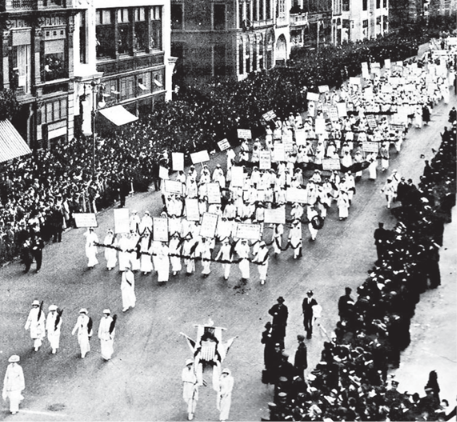
On October 23, 1915, New York City’s Fifth Avenue became the stage for a historic demonstration as tens of thousands of women and their supporters marched through Manhattan demanding the right to vote. The procession, which stretched for approximately three miles and continued for four and a half hours, turned one of the city’s most prominent streets into a powerful expression of the American women’s suffrage movement.
Carrying banners, displaying placards and marching alongside bands, the participants delivered a message that had taken generations to bring into the public arena: women deserved an equal voice in the political decisions that governed their lives. The demonstration came at a decisive moment in the campaign for women’s voting rights. New York voters were due to decide on November 2 whether the state constitution should be changed to grant women the right to vote. With only days remaining before the referendum, suffrage campaigners organised the procession as a final, large-scale appeal to the electorate.
They hoped the sight of thousands of determined marchers would persuade undecided voters, counter opposition and demonstrate that the demand for political equality was supported by a substantial section of society. The scale of the event was extraordinary. Contemporary reports placed the number of women in the procession at more than 25,000, while estimates by the grand marshal put the total number of participants, including approximately 8,000 men, at around 33,000. About 30 bands accompanied the marchers, adding to the spectacle as the procession moved through the city.
The demonstration was described as one of the largest suffrage parades organised in the United States up to that time. Its size reflected years of campaigning and the growing determination of women to challenge their exclusion from the democratic process.
A march with a political purpose
The march was more than a public gathering. It was a carefully planned political intervention intended to influence an approaching vote. Women in New York could not cast ballots in state elections, yet their future depended on the decision of an electorate from which they were excluded. They therefore took their argument directly to the streets, asking male voters to recognise that citizenship, responsibility and participation in public life should not be determined by sex.
Fifth Avenue offered a fitting setting for the demonstration. Known for its fashionable establishments, wealthy residents and prominent public spaces, the avenue represented a visible centre of New York’s social and commercial life. By bringing their campaign to this busy thoroughfare, suffragists placed their demand before residents, visitors, newspaper readers and political observers. Their presence challenged the idea that women’s suffrage was a minor issue confined to private meetings or a handful of activists.
The procession made it a question that the city could no longer easily ignore. The discipline and organisation of the march were central to its message. The participants moved in coordinated groups, carrying signs and banners that presented voting rights as a matter of justice, citizenship and good government. The event showed that women could organise a major public demonstration, communicate a political demand and participate in civic affairs on a large scale. At a time when opponents argued that women lacked the experience or judgement necessary for political participation, the procession offered a visible challenge to those assumptions.
For the marchers, the right to vote represented far more than the ability to mark a ballot. It was a means of influencing legislation, holding elected representatives accountable and ensuring that women’s concerns were considered in decisions affecting education, employment, public health, family life and social welfare. Suffragists argued that women were expected to obey laws and contribute to society, yet they were denied the political power to help shape those laws. The contradiction lay at the heart of their campaign.
The roots of a decades-long struggle
The October demonstration also reflected a broader transformation in the movement’s methods. Earlier generations of activists had relied heavily on conventions, petitions, lectures and meetings to advance women’s rights. By the early 20th century, public parades had become an increasingly important means of attracting attention and demonstrating the movement’s strength. Organisers understood that a large procession could influence public opinion, generate newspaper coverage and place political pressure on decision-makers.
The campaign for women’s suffrage had deep roots in American history. In the decades before the Civil War, women reformers began challenging laws and customs that restricted their education, property rights, employment opportunities and participation in public affairs. They argued that women should be recognised as independent citizens rather than individuals whose interests could be represented automatically by fathers, husbands or other male relatives. A landmark gathering took place in Seneca Falls, New York, in July 1848.
Organised by Elizabeth Cady Stanton, Lucretia Mott and other reformers, the convention brought women’s rights into a more organised public movement. Its Declaration of Sentiments adapted the language of the American Declaration of Independence to argue that women were entitled to equal rights. Among its demands was the right to vote, a proposal that many people at the time regarded as radical. The convention did not immediately change the law, but it helped establish a foundation for decades of activism.
Women and their supporters organised associations, circulated petitions, delivered speeches and challenged the belief that politics belonged exclusively to men. The campaign faced ridicule and resistance from those who insisted that women’s proper responsibilities lay within the home. Others argued that extending voting rights would disrupt traditional family structures and undermine established social arrangements. Susan B. Anthony emerged as one of the movement’s most influential figures. Working alongside Stanton and other campaigners, she devoted years to securing women’s political rights.
Activists sought changes at both state and national levels, recognising that legal reforms in individual states could expand voting rights while a constitutional amendment could provide a broader national guarantee. Their approaches differed, but their central demand remained the same: women should not be excluded from political participation simply because they were women.
The divisions within the suffrage movement
The movement was not without divisions. Disagreements over strategy, political alliances, race and the meaning of equality shaped its development. Black women faced discrimination both within wider society and in parts of the suffrage movement. Activists such as Ida B. Wells challenged racial injustice while campaigning for women’s political rights, insisting that the demand for equality had to address the barriers confronting Black Americans as well.
Their work exposed the limitations of a movement that did not always represent the interests of all women equally. By the early 20th century, suffrage organisations had become more experienced in public campaigning. They used newspapers, posters, speeches, petitions and demonstrations to reach wider audiences. Public parades offered a particularly effective way to make their demands visible. Rather than relying solely on arguments delivered in meeting halls, activists could bring thousands of supporters into prominent public spaces and make their campaign a direct subject of public discussion.
New York had become an important centre of the suffrage movement. Its political influence, large population and powerful newspapers made it a valuable place to build support. Earlier demonstrations had already established the potential of public marches, including a major Fifth Avenue procession in 1912. By 1915, campaigners had refined their methods and were preparing for a referendum that could determine whether women would gain voting rights in the state.
The referendum that could change new York
The approaching vote gave the October 23 procession a particular urgency. The referendum was not an abstract debate about the future. It offered a direct opportunity to change the political status of women in New York. Organisers sought to convince voters that granting women the ballot would strengthen democracy rather than weaken it. Their message appealed to fairness, civic responsibility and the belief that public institutions should reflect the interests of the people they governed.
The marchers came from different backgrounds and represented different experiences of women’s lives. Some had spent years campaigning for political equality, while others were taking part in a large public demonstration for the first time. Working women had a particular interest in the political decisions affecting wages, working conditions and social protections. Others focused on education, family welfare, public health or the broader principle of equal citizenship.
The movement brought these concerns together under the demand for voting rights. Men also joined the procession, demonstrating that the campaign had supporters beyond the women directly denied the vote. Their participation was significant because the referendum would be decided by male voters. Suffragists needed to persuade people who already possessed political power to extend that power to others. The presence of male supporters helped show that women’s suffrage could be understood as a democratic reform rather than simply a conflict between women and men. Publicity was another important part of the strategy.
The organisers understood that the impact of the demonstration would extend beyond those who watched it from the pavements. Newspaper reports and photographs could carry the procession’s message across the city and into communities far from Fifth Avenue. The march became both a political demonstration and a carefully staged public appeal, using visibility to strengthen the case for reform. Yet the procession also revealed the fundamental inequality that campaigners were trying to overcome.
Women could organise thousands of people, make speeches, publish arguments and demonstrate their commitment to the country, but they still could not vote in the referendum that would decide their political future. They were required to persuade others to grant them a right that those others already possessed. The scale of the demonstration made this contradiction especially clear.
A major setback At the ballot box
On November 2, 1915, New York voters rejected the proposal to grant women the right to vote. The result was a major disappointment for suffrage campaigners, particularly after the enormous public mobilisation of the preceding weeks. Despite the visibility of the movement and the strength of its organisation, opposition remained powerful enough to defeat the measure.
The referendum demonstrated that public demonstrations could bring attention to a cause but could not guarantee electoral success. The defeat was a setback, not the end of the campaign. Suffragists continued to organise, lobby politicians, publish arguments and work to change public opinion. The experience of 1915 helped sustain the movement’s efforts by exposing the need for continued political engagement. Campaigners recognised that winning voting rights would require persistent work beyond a single march or referendum.
Two years later, New York voters approved a measure granting women the right to vote in state elections. The victory was an important breakthrough for the movement and demonstrated that the earlier defeat had not settled the question permanently. The political climate had changed, and continued campaigning had helped bring the issue back before the electorate. The success in 1917 also strengthened the case for a nationwide constitutional amendment.
From state victories to a national guarantee
Across the United States, the struggle continued through a combination of state-level campaigns, lobbying in Congress, public demonstrations and direct political pressure. Some states had already granted women voting rights, particularly in the West, while others remained resistant. This uneven situation meant that a woman’s political rights could depend on where she lived. Suffrage campaigners increasingly argued that a national constitutional guarantee was necessary to prevent states from excluding women from elections.
The proposed amendment had been introduced in Congress decades earlier, but repeated efforts to secure its passage had failed. The movement nevertheless continued to build support. By the final years of the 1910s, pressure for a federal amendment had grown, while women’s contributions to public life during the First World War added strength to arguments for political equality. Women worked in industries, supported relief efforts and took on responsibilities across communities, further challenging claims that they should remain outside the political system. In 1919, Congress approved the proposed 19th Amendment and sent it to the states for ratification.
The amendment stated that the right to vote could not be denied or restricted by the United States or any state on account of sex. Its passage marked a decisive step towards establishing a nationwide constitutional protection for women’s voting rights, although ratification still required approval from the necessary number of states. The final hurdle came in August 1920, when Tennessee became the 36th state to ratify the amendment. On August 26, the amendment was formally certified, establishing a landmark in American political history. The achievement was the result of decades of organising, protest, lobbying and public campaigning by generations of suffragists. Many of the women who had begun the struggle in the 19th century did not live to witness its national success.
The unfinished struggle for equal voting rights
However, the amendment did not immediately secure equal access to the ballot for every woman. Black women and other marginalised groups continued to encounter discriminatory laws and practices that obstructed voting. Native American women also faced barriers linked to citizenship and state restrictions. The constitutional change prohibited sex-based denial of voting rights, but additional struggles were needed to challenge racial discrimination and other forms of exclusion. The history of suffrage therefore includes both a landmark achievement and the unfinished work of making political participation genuinely accessible.
The march along Fifth Avenue on October 23, 1915, remains an important episode in that wider history. It brought tens of thousands of people together at a decisive moment, demonstrating the organisation and determination of a movement that had spent generations demanding political equality. Although the immediate referendum ended in defeat, the procession helped make women’s suffrage a visible public issue and formed part of the continuing campaign that eventually changed American electoral politics. Its significance lies partly in the contrast between the scale of the demonstration and the political power available to its participants.
The women who marched could command attention, organise supporters and make a compelling public argument, yet they still lacked the vote that would determine the outcome. Their procession exposed the distance between being heard and having formal political power. More than a century later, the demonstration stands as a reminder that democratic rights are often secured through prolonged public effort rather than a single decisive moment. The marchers of 1915 did not win their immediate demand, but they helped keep it before the public and strengthened a movement that continued long after the crowds had left Fifth Avenue. Their struggle contributed to a transformation that would eventually extend constitutional voting protections to women across the United States.
On that October day, Fifth Avenue became more than a fashionable city thoroughfare. It became a public platform for a demand rooted in decades of activism and directed towards a future in which political participation would no longer be restricted by sex. The referendum that followed brought disappointment, but the campaign continued, New York changed its laws in 1917, and the national constitutional amendment followed in 1920. The procession remains a powerful chapter in the history of women’s suffrage, showing how collective action can challenge established barriers even when victory does not come immediately.