New Delhi:
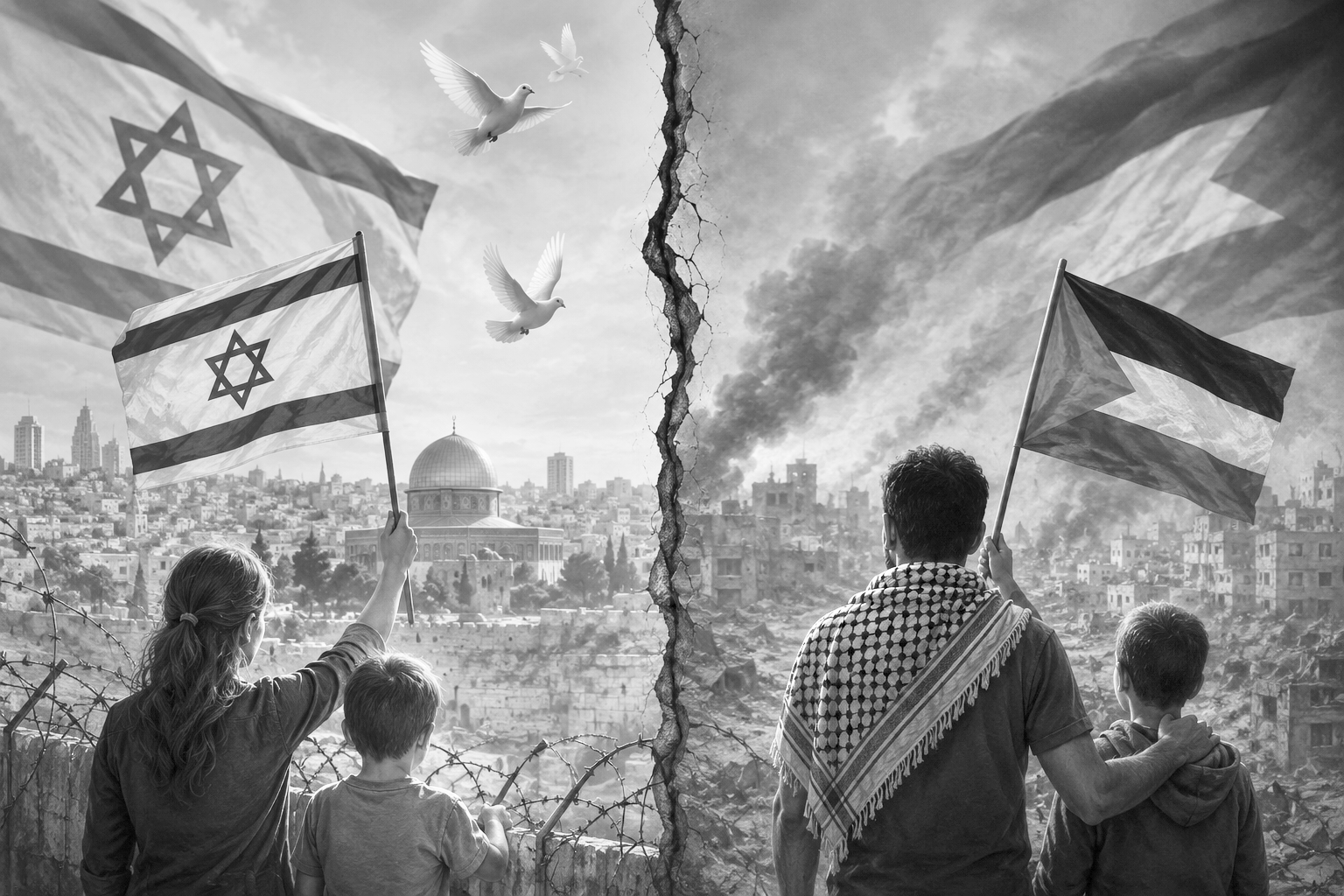
Understanding this conflict requires moving beyond headlines and military statistics. It demands a journey through empire, nationalism, colonial legacies, wars, peace processes and generations born into uncertainty. More than a dispute over territory, the conflict encompasses questions of identity, belonging, historical justice and security.
The Origins: Nationalism in the Age of Empires
The roots of the conflict lie in the late nineteenth century, when two parallel nationalist movements emerged.
The first was Zionism, a political movement advocating the establishment of a Jewish homeland. Jews across Europe had endured centuries of discrimination, pogroms and exclusion. The rise of antisemitism convinced many Jewish intellectuals that assimilation alone could not guarantee safety.
Theodor Herzl, often regarded as the father of political Zionism, argued that Jews required a sovereign state of their own. Palestine, linked deeply to Jewish religious and historical traditions, became the focus of this aspiration.
At the same time, Arab nationalism was gaining momentum throughout territories controlled by the Ottoman Empire. Palestinian Arabs, who formed the overwhelming majority of Palestine’s population, viewed the land as their homeland, cultivated over generations through shared cultural, religious and social ties.
For decades, these identities coexisted under Ottoman rule. Yet the rise of competing nationalist visions planted the seeds of future conflict.
The British Mandate and Conflicting Promises
The collapse of the Ottoman Empire after the First World War transformed Palestine’s political landscape.
Under the League of Nations, Britain received the Mandate for Palestine in 1920. British rule would prove decisive.
In 1917, Britain issued the Balfour Declaration, expressing support for “the establishment in Palestine of a national home for the Jewish people.” Simultaneously, British wartime diplomacy had encouraged Arab aspirations for independence in return for support against Ottoman rule.
These contradictory commitments fostered mistrust on all sides.
Jewish immigration accelerated, particularly during the 1920s and 1930s as European antisemitism intensified and Nazi persecution spread. Palestinian Arabs increasingly feared demographic displacement and political marginalisation.
By the late 1930s, Palestine witnessed violent confrontations among Arabs, Jewish groups and British authorities. The Arab Revolt of 1936–39 reflected growing Palestinian resistance to British policies and expanding Jewish immigration.
Britain struggled to reconcile incompatible national aspirations and ultimately failed to devise a settlement acceptable to both communities.
The Holocaust and the Push for Statehood
The Holocaust transformed international attitudes.
The murder of six million Jews during the Second World War reinforced demands for a secure Jewish homeland. Sympathy for Jewish survivors strengthened support for partitioning Palestine.
In 1947, the United Nations proposed Resolution 181, recommending the creation of separate Jewish and Arab states, while Jerusalem would be administered internationally.
Jewish leaders accepted the proposal despite reservations.
Arab leaders rejected it, arguing that the plan allocated a majority of the land to the Jewish state despite Arabs constituting the larger population.
Partition never materialised peacefully.
1948: Independence and Catastrophe
On May 14, 1948, David Ben-Gurion declared the establishment of the State of Israel.
The following day, neighbouring Arab states—including Egypt, Jordan, Syria, Iraq and Lebanon—entered the conflict.
Israel survived the war and expanded beyond the borders envisaged in the UN plan.
For Israelis, 1948 symbolised national rebirth after centuries of exile and persecution.
For Palestinians, it marked the Nakba—Arabic for “catastrophe.”
Approximately 700,000 Palestinians fled or were displaced during the war. Hundreds of villages were depopulated. Families became refugees across Gaza, the West Bank, Jordan, Lebanon and Syria.
The refugee issue remains among the conflict’s most emotionally charged disputes. Palestinians continue to demand recognition of their suffering and varying forms of return or compensation. Israelis fear that large-scale return would fundamentally alter the Jewish character of their state.
Thus, two collective memories emerged from the same historical moment.
One celebrated independence.
The other mourned dispossession.
The Battle of Narratives
The Israeli–Palestinian conflict is unusual because history itself is contested.
The Israeli narrative emphasises ancient Jewish ties to the land, centuries of exile, repeated persecution and the existential necessity of a Jewish state.
The Palestinian narrative stresses continuous residence, indigenous attachment to the land and the experience of displacement beginning in 1948.
Neither narrative fully explains the conflict on its own.
For Israelis, security is inseparable from historical trauma, including the Holocaust and repeated wars.
For Palestinians, justice cannot be separated from occupation, statelessness and refugeehood.
These competing memories shape diplomacy, education, public discourse and international alliances.
The Six-Day War and Occupation
Another turning point arrived in 1967.
Amid escalating regional tensions, Israel launched pre-emptive strikes against Egypt and Syria in what became known as the Six-Day War.
Israel captured:
● The Gaza Strip and Sinai Peninsula from Egypt,
● The West Bank and East Jerusalem from Jordan,
● The Golan Heights from Syria.
Although Sinai was later returned to Egypt, Israel retained control over East Jerusalem, the West Bank and Gaza.
The occupation transformed the conflict.
Palestinians living in these territories increasingly experienced military administration, restrictions on movement and expanding Israeli settlements.
The international community generally regards settlements in occupied territory as illegal under international law, although Israel disputes aspects of this interpretation.
The territorial question became central to all future peace efforts.
The Rise of Palestinian Nationalism
In 1964, the Palestine Liberation Organization was established to represent Palestinians internationally.
Under the leadership of Yasser Arafat, the PLO evolved from armed resistance toward diplomatic engagement.
Palestinian identity increasingly crystallised around demands for national self-determination.
The occupation deepened these aspirations.
The Intifadas: Uprisings Against Occupation
The First Intifada erupted in 1987.
Characterised largely by demonstrations, strikes, civil disobedience and youth-led protests, it drew global attention to Palestinian grievances.
During this period, Hamas> emerged from the Muslim Brotherhood’s Palestinian branch.
Unlike Fatah, Hamas combined social welfare activities with armed resistance and rejected recognition of Israel.
The Second Intifada, beginning in 2000, proved significantly bloodier.
Suicide bombings, shootings and Israeli military operations led to heavy casualties.
Israel constructed security barriers around parts of the West Bank, arguing they reduced attacks.
Palestinians viewed these structures as symbols of occupation and territorial fragmentation.
The peace process suffered immense damage.
Oslo: The Promise That Faded
The early 1990s generated unprecedented optimism.
Secret negotiations in Norway produced the Oslo Accords.
In 1993, Israel and the PLO formally recognised one another.
The accords established the Palestinian Authority, granting Palestinians limited self-governance in parts of Gaza and the West Bank.
The West Bank was divided into Areas A, B and C, each with varying degrees of Israeli and Palestinian control.
Many believed Oslo represented the first step toward a two-state solution.
Yet the agreements postponed the most contentious issues:
● Jerusalem,
● Borders,
● Refugees,
● Settlements,
● Security arrangements.
As violence persisted and settlements expanded, trust eroded.
For many Israelis, Palestinian militancy demonstrated that concessions endangered security.
For many Palestinians, Oslo institutionalised occupation rather than ending it.
Gaza and the Hamas–Fatah Divide
Israel withdrew settlers and permanent military installations from Gaza in 2005.
A year later, Hamas won Palestinian legislative elections.
International actors refused engagement unless Hamas renounced violence and recognised Israel.
Conflict between Hamas and Fatah culminated in Hamas assuming control of Gaza in 2007.
Since then:
● Hamas has governed Gaza.
● The Palestinian Authority has administered parts of the West Bank.
Israel and Egypt imposed a blockade on Gaza, citing security concerns.
Critics argue the blockade has devastated Gaza’s economy and humanitarian conditions.
This internal Palestinian division has complicated diplomacy ever since.
Cycles of War
The years that followed witnessed repeated confrontations.
Major wars and escalations occurred in:
● 2008–09,
● 2012,
● 2014,
2021.
Rocket attacks from Gaza targeted Israeli communities.
Israeli airstrikes and military operations inflicted extensive destruction in Gaza.
Each round deepened mutual trauma.
Israeli civilians feared indiscriminate attacks.
Palestinian civilians endured repeated displacement and infrastructure collapse.
The prospect of reconciliation seemed increasingly remote.
October 7 and the Gaza War
On October 7, 2023, Hamas launched an unprecedented assault on southern Israel.
Thousands of rockets were fired.
Militants breached border communities.
Over 1,300 Israelis were killed and hundreds taken hostage.
The attack shocked Israeli society and revived existential fears.
Israel declared war and launched large-scale operations in Gaza aimed at dismantling Hamas and recovering hostages.
The humanitarian consequences proved catastrophic.
According to Palestinian health authorities, tens of thousands of Gazans were killed. Vast portions of Gaza’s infrastructure were destroyed. Hospitals, schools and residential areas suffered extensive damage.
Israel maintained that Hamas embedded military infrastructure within civilian areas.
International humanitarian organisations warned of famine risks, mass displacement and severe shortages of medicine and shelter.
The war reignited global debates over proportionality, international law, terrorism, occupation and civilian protection.
It also polarised public opinion worldwide.
Regional and International Dimensions
The conflict has never been solely local.
The United States has been Israel’s closest ally and principal mediator in peace efforts.
Arab states historically supported Palestinian aspirations, although regional priorities have evolved.
The Camp David Accords brought peace between Israel and Egypt.
The Abraham Accords normalised Israel’s relations with the United Arab Emirates, Bahrain, Morocco and Sudan.
Meanwhile, Iran’s support for groups such as Hamas and Hezbollah has introduced broader geopolitical dimensions.
Thus, the conflict intersects with regional rivalries and global power politics.
India’s Position
India’s approach has evolved significantly.
Historically, India strongly supported Palestinian self-determination.
Mahatma Gandhi expressed reservations about establishing a religious state in Palestine.
India voted against Israel’s admission to the United Nations in 1949.
However, since establishing full diplomatic relations with Israel in 1992, bilateral ties have expanded considerably.
Israel has become a major defence partner.
Cooperation extends to:
● agriculture,
● water management,
● cybersecurity,
● innovation.
At the same time, India continues to endorse a two-state solution, supports Palestinian statehood and provides humanitarian assistance.
This “de-hyphenated” approach reflects India’s attempt to maintain strategic ties with Israel while preserving longstanding support for Palestinian aspirations.
Why Peace Remains Elusive
Despite decades of diplomacy, several obstacles endure.
Jerusalem
Both Israelis and Palestinians claim the city as their capital.
It contains sacred sites central to Judaism, Islam and Christianity.
Refugees
Millions of Palestinian refugees seek recognition, compensation or return.
Israel fears demographic consequences.
Settlements
Israeli settlements in the West Bank continue expanding, complicating territorial negotiations.
Security
Israel prioritises protection against militant attacks.
Palestinians seek freedom from military occupation and restrictions.
Political Fragmentation
Hamas and Fatah remain divided.
Israeli politics are also deeply polarised.
Trust Deficit
Repeated failures and cycles of violence have eroded confidence in negotiations.
The Search for a Future
Several frameworks continue to be debated.
The two-state solution envisions independent Israeli and Palestinian states living side by side.
The one-state solution proposes equal citizenship within a single democratic state.
Others advocate shared sovereignty over Jerusalem, phased security arrangements and international guarantees.
No proposal has secured consensus.
Yet history suggests that military victories alone have never resolved the underlying grievances.
Conclusion
Historically speaking, the Israeli–Palestinian conflict cannot be reduced to a simple struggle between good and evil, nor explained solely through religion. It is the product of competing national movements, imperial decisions, historical trauma and failed diplomacy.
For Israelis, the story is inseparable from survival after centuries of persecution and the determination to preserve a homeland.
For Palestinians, it is inseparable from displacement, occupation and the enduring quest for dignity and statehood.
A century after the first seeds of conflict were sown, generations on both sides continue to inherit fear, loss and uncertainty.
Peace remains elusive not because the issues are unknown, but because history itself is contested, trust is scarce and compromise demands painful concessions.
Yet if history offers one enduring lesson, it is this: neither Israelis nor Palestinians are disappearing. Their futures remain intertwined. The challenge before the world is whether those futures will continue to be written through war and bereavement, or through the difficult, imperfect work of coexistence.