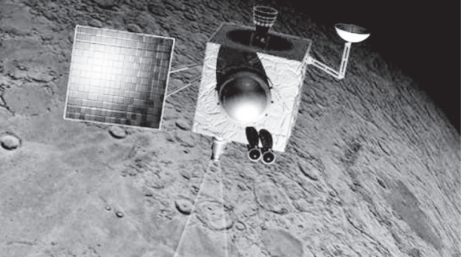
India’s journey to the Moon began long before a spacecraft lifted off from Sriharikota. It began with a young nation trying to establish its place in the world of science, a group of scientists working with limited resources, and a belief that even the most advanced technology could be used to address the everyday problems of an emerging nation. The ambition was not initially to reach distant planets or explore the lunar surface, but to find ways of using science to improve communication, education, agriculture and the management of natural resources.
In the years following Independence, India faced enormous developmental challenges. Vast rural areas remained difficult to connect, access to modern communication was limited, and scientific infrastructure was still developing. Space technology, which was then being explored by a small number of countries, offered possibilities that extended beyond scientific curiosity. Satellites could carry television programmes to remote villages, provide information about weather patterns and help researchers study land, forests and water resources.
It was in this environment that Dr Vikram Sarabhai, widely regarded as the father of the Indian space programme, began advocating the use of space technology for national development. He believed that India could not afford to ignore advanced science simply because it was a developing country. Instead, scientific progress had to be directed towards solving the country’s problems while building the technological capabilities needed for the future.
The first steps towards space
India’s organised space programme began taking shape in 1962, when the Indian National Committee for Space Research was established under the Department of Atomic Energy. Sarabhai played a central role in its formation, bringing together scientists who believed that space research could become an important instrument of national development.
The committee’s early work was centred on atmospheric research and the use of sounding rockets. These rockets carried scientific instruments into the upper atmosphere, allowing researchers to study atmospheric conditions and phenomena that could not be investigated adequately from the ground.
The programme began operating from Thumba, near Thiruvananthapuram in Kerala. The location was selected because of its proximity to the magnetic equator, making it suitable for atmospheric and ionospheric studies. The facilities were modest, particularly when compared with the extensive launch infrastructure developed by established space powers.
On November 21, 1963, India launched its first sounding rocket from Thumba. The event marked the beginning of the country’s organised space launch activities. It was a small step in terms of the distance travelled, but a significant one in the development of Indian scientific capabilities.
The birth of ISRO
On August 15, 1969, the Indian Space Research Organisation was established, replacing the earlier committee and providing a more structured institutional foundation for the country’s growing ambitions in space research.
The establishment of ISRO marked an important transition. India was moving beyond experimental launches towards the development of satellites, launch vehicles and the supporting infrastructure required for a long-term space programme.
Following Sarabhai’s death in December 1971, the programme continued to expand. The creation of the Space Commission and the Department of Space in 1972 further strengthened the institutional structure responsible for coordinating India’s space activities.
The objectives remained closely connected to national development. Satellite communication could connect distant regions, television broadcasts could support education, and remote sensing could provide valuable information about agriculture, water resources and the environment. At the same time, the country needed to develop its own launch vehicles to reduce its dependence on foreign launch services.
Aryabhata and the expansion of Indian space research
A major milestone arrived on April 19, 1975, when India launched Aryabhata, its first satellite. Designed and fabricated in India, the spacecraft was launched using a Soviet rocket from Kapustin Yar.
Named after the ancient Indian mathematician and astronomer, Aryabhata carried scientific experiments intended to investigate X-ray astronomy, solar physics and aeronomy. Although the mission experienced technical difficulties, it demonstrated that Indian scientists could design and build a satellite capable of operating in space.
The achievement was important because satellite development and satellite launching presented different challenges. India had demonstrated its ability to manufacture a spacecraft, but it still depended on another country to place it in orbit. Developing an indigenous launch capability would become one of the programme’s central objectives.
Learning to launch independently
The development of indigenous launch vehicles was one of the most important stages in India’s journey towards planetary exploration.
The Satellite Launch Vehicle-3, or SLV-3, was developed to demonstrate the country’s ability to place satellites into orbit using an Indian rocket. Its first experimental flight in August 1979 failed to achieve the intended orbital deployment, but the programme continued.
On July 18, 1980, the SLV-3 successfully placed the Rohini satellite into orbit. India had demonstrated that it could launch a satellite using an indigenously developed launch vehicle, a major step towards technological self-reliance.
The achievement also illustrated an important feature of scientific progress: failure did not necessarily end a programme. Engineering development required repeated testing, the identification of technical weaknesses and improvements based on the results of previous attempts.
India subsequently developed more capable launch systems, including the Polar Satellite Launch Vehicle. The PSLV became one of the country’s most dependable launch vehicles, capable of placing satellites into a range of orbits.
By the time Chandrayaan-1 was being prepared, the PSLV had become a critical component of India’s space infrastructure. An upgraded version, designated PSLV-C11, was selected to launch the lunar spacecraft in October 2008.
The rocket’s development represented decades of work in propulsion, guidance, navigation, structural engineering and flight control. Its ability to carry a spacecraft beyond Earth’s immediate orbital environment reflected the progress made since the first experimental launch at Thumba.
India was no longer merely experimenting with space technology. It was building the systems required to undertake increasingly complex scientific missions.
The idea of Chandrayaan takes shape
By the beginning of the 21st century, India’s space programme had acquired considerable experience in satellite technology and launch operations. The country had developed the ability to build spacecraft, place them in orbit and use their instruments to gather information about Earth.
The next question was whether those capabilities could be extended to another celestial body.
On August 15, 2003, Prime Minister Atal Bihari Vajpayee announced India’s intention to undertake a lunar mission. The proposal reflected a new stage in the country’s scientific ambitions: moving beyond the applications of space technology on Earth towards the exploration of the Solar System.
The Moon was a natural destination for the first such undertaking. It was close enough to make a robotic mission feasible, yet scientifically complex enough to present substantial challenges. Its surface preserved evidence of ancient impacts and geological processes, while its mineral composition offered clues about the formation and evolution of the lunar crust.
The proposed mission was designed to map the lunar surface, investigate its chemical and mineral composition, and improve understanding of its geological history. It would also allow Indian scientists and engineers to develop experience in deep-space communication, spacecraft navigation and operations around another celestial body.
The name Chandrayaan combined two Sanskrit words: Chandra, meaning Moon, and yaan, meaning vehicle. It captured the central purpose of the undertaking, which was to send an Indian spacecraft to study the Moon.
The mission was not intended to land an astronaut or establish a permanent lunar presence. Instead, it would use scientific instruments to collect information that could help answer fundamental questions about the Moon.
One of the most important objectives was to obtain a detailed mineralogical map of the lunar surface. Researchers wanted to understand the distribution of different minerals and identify features that could reveal how the Moon had evolved over billions of years.
October 22, 2008: The historic launch
On October 22, 2008, the PSLV-C11 lifted off from the Satish Dhawan Space Centre at Sriharikota, carrying Chandrayaan-1 into space.
The launch marked the beginning of India’s first dedicated lunar mission and represented the culmination of nearly five decades of institutional and technological development. The spacecraft weighed approximately 1,380 kilograms at launch and carried 11 scientific instruments developed by Indian and international research teams.
The journey to the Moon required a carefully planned sequence of manoeuvres. The spacecraft first entered an orbit around Earth before its trajectory was progressively adjusted to send it towards the Moon. It subsequently entered lunar orbit on November 8, 2008.
Once established in orbit, Chandrayaan-1 began operating at an altitude of approximately 100 kilometres above the lunar surface. From this position, its instruments could examine extensive areas of the Moon and collect information about the terrain, mineral composition and geological features.
The spacecraft carried five Indian instruments, while the remaining payloads came from international partners, including scientific institutions in the United States, Europe and other countries. The arrangement reflected the collaborative nature of modern space science, in which a mission led by one country can draw on expertise and instruments developed elsewhere.
India was responsible for the spacecraft, the launch vehicle and the overall mission, while the scientific payloads provided complementary methods of investigating the Moon. The mission also relied on specialised ground facilities capable of communicating with and tracking a spacecraft operating hundreds of thousands of kilometres away.
The successful launch was therefore only the beginning of the mission’s scientific work. Its true significance would depend on the observations it collected and the discoveries that emerged from analysing them.
Tricolour reaches the lunar surface
On November 14, 2008, Chandrayaan-1 released the Moon Impact Probe, a small instrument-carrying module designed to descend towards and deliberately strike the lunar surface.
The probe carried instruments to collect information during its descent, including a video imaging system, a radar altimeter and a mass spectrometer. It impacted near the Moon’s south polar region, marking another milestone in India’s lunar exploration programme.
Unlike a lander designed for a soft touchdown, the probe was intended to make a controlled descent followed by impact. Its short operational period was designed to gather scientific information while approaching the surface.
The event carried symbolic importance, as the Indian tricolour was represented on the probe that reached the lunar surface. However, its significance extended beyond national symbolism. The instruments contributed observations of the lunar environment, adding another element to the wider scientific investigation being conducted by the orbiter.
The impact probe’s mass spectrometer also contributed evidence concerning water-related molecules in the Moon’s extremely thin exosphere. Meanwhile, Chandrayaan-1 continued surveying the lunar surface from orbit.
The two components served different purposes. The probe collected information during its brief descent, while the orbiter could repeatedly observe extensive regions of the Moon. Together, they demonstrated how a single mission could combine different methods of scientific investigation.
The discovery of water on the Moon
Among Chandrayaan-1’s most significant contributions was its role in transforming scientific understanding of water on the Moon.
For decades, the Moon had generally been regarded as an extremely dry world. Scientists had investigated whether water ice could survive in permanently shadowed craters near the lunar poles, where sunlight never reaches the surface. However, the distribution and nature of water-related material across the wider lunar landscape remained uncertain.
Chandrayaan-1 helped change that understanding through an instrument known as the Moon Mineralogy Mapper, or M3, developed by NASA.
The instrument examined sunlight reflected from the lunar surface at different wavelengths. Certain wavelengths are absorbed by water and hydroxyl molecules, producing distinctive patterns in the reflected light. By studying these patterns, researchers could identify evidence of water-related material in lunar minerals.
In September 2009, scientific findings based on the instrument’s observations provided evidence of water molecules and hydroxyl across portions of the lunar surface, with stronger signatures at higher latitudes. Observations from other lunar and planetary missions subsequently supported the broader conclusion that the Moon was not as dry as previously believed.
A mission that ended early but left a lasting legacy
Chandrayaan-1 had originally been designed to operate for two years. However, communication with the spacecraft was lost on August 29, 2009, after it had completed more than 3,400 orbits around the Moon. The mission had operated for approximately 312 days.
The premature loss of contact marked the end of its active operations, but it did not erase the achievements already secured. The spacecraft had completed important scientific observations, and the data collected during its operational life continued to support research.
The mission also provided ISRO with experience in deep-space navigation, spacecraft control, communication and the management of scientific instruments beyond Earth’s immediate environment. These capabilities would be important for later planetary missions.
From Thumba to the Moon: The historical significance
The launch of Chandrayaan-1 on October 22, 2008, was the result of a journey that began decades earlier with modest rocket experiments and a vision of using science for national development. The programme that started at Thumba gradually developed into an institution capable of building satellites, designing launch vehicles and operating spacecraft far beyond Earth. Aryabhata demonstrated India’s ability to manufacture a satellite, the development of indigenous rockets established launch capabilities, and the expansion of satellite applications showed how space technology could serve practical national needs.
Chandrayaan-1 brought these developments together in a mission that extended India’s scientific reach to the Moon. Its observations advanced lunar research, while the evidence concerning water and hydroxyl helped reshape the understanding of the lunar environment.