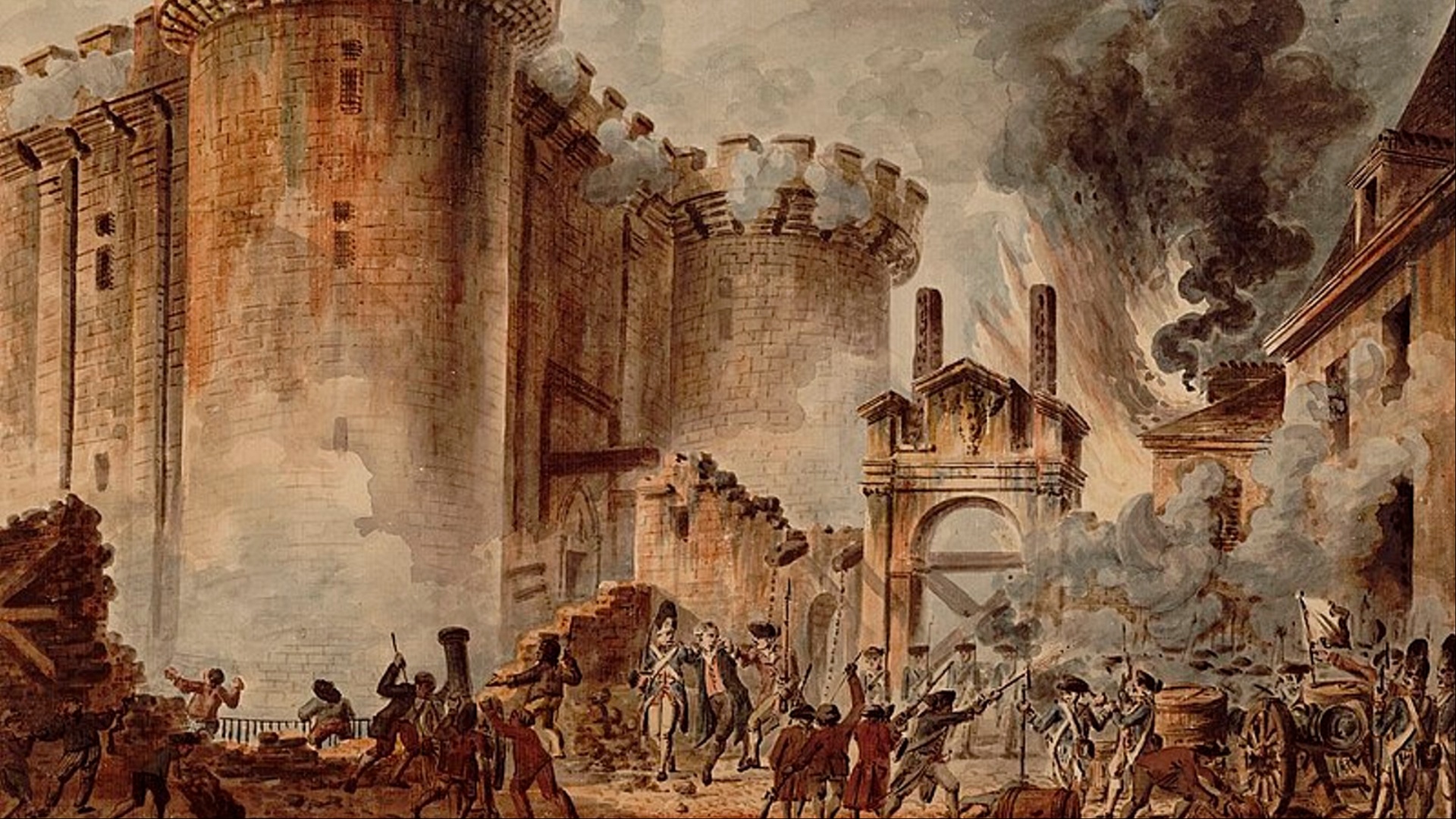
History recalls the 14th of July as the day of revolution and rebellion; it saw the beginning of the French Revolution in 1789 with the storming of the Bastille. Several decades later, in 1958, Iraq saw the violent deposal of its monarchy and the beginning of a new republican era, both events transformed their respective countries but also changed the fate of world politics.
Here’s a glimpse at what took place on this pivotal day through history.
The Storming of the Bastille: People’s Power Symbol
On July 14, 1789, Parisians in thousands, supported by mutinous soldiers, stormed the Bastille prison in Paris, the fortress that had become a symbol of the oppression of King Louis XVI’s rule. Political discrimination, heavy taxation, and the soaring price of bread had brought France to a breaking point.
During rumors of a royal attack on the recently established National Assembly, citizens started taking up arms and they thought the Bastille contained ammunition and political prisoners. In fact, there were only seven prisoners within, but the symbolism of the assault outweighed the utilitarian benefit.
Despite hours of fighting, the mob captured the fortress, and the downfall of the Bastille sent shockwaves through France and the rest of Europe. It demonstrated that the monarchy was not invincible, before long King Louis XVI had to accept the power of the National Assembly. The revolution gained unstoppable velocity, and France celebrates Bastille Day annually to commemorate liberty and people’s power.
1958: Iraq Toppled Its Monarchy
Nearly 170 years later, the other revolution took place on July 14, this time in Iraq. The Hashemite monarchy of the country fell in a bloody coup engineered by General Abd al-Karim Qasim and Colonel Abdul Salam Arif.
Growing resentment against King Faisal II’s pro-Western policies and foreign alliances under the Baghdad Pact fueled the military uprising, on the morning of the coup, rebel forces seized key government buildings in Baghdad. King Faisal II and Prime Minister Nuri al-Said were executed, Iraq was declared a republic, and Qasim took power as Prime Minister and Defense Minister.
This revolution created shockwaves throughout the Arab world, Iraq withdrew from membership in the Baghdad Pact and turned towards Soviet-aligned and non-aligned countries. Its inspirations by emerging Arab nationalism, the event had an impact on political movements in Syria and Egypt.
While most Iraqis were in favor of the regime change, the nation soon descended into political chaos. Rival groups clashed, coups ensued, and decades of unrest commenced. The 1958 coup irreversibly changed Iraq’s path and brought an end to its alignment with the West.
Other Significant Events on July 14
- It was on this day in 2013 that the world witnessed the end of an era. India sent its last telegram as its state-owned telecom firm closed down the telegraph service.
- In 1881, American outlaw Billy the Kid died. The notorious gunfighter was shot and killed by Sheriff Pat Garrett in New Mexico.