A journey through the laws that reshaped the Republic and sparked some of the fiercest debates in independent India’s history
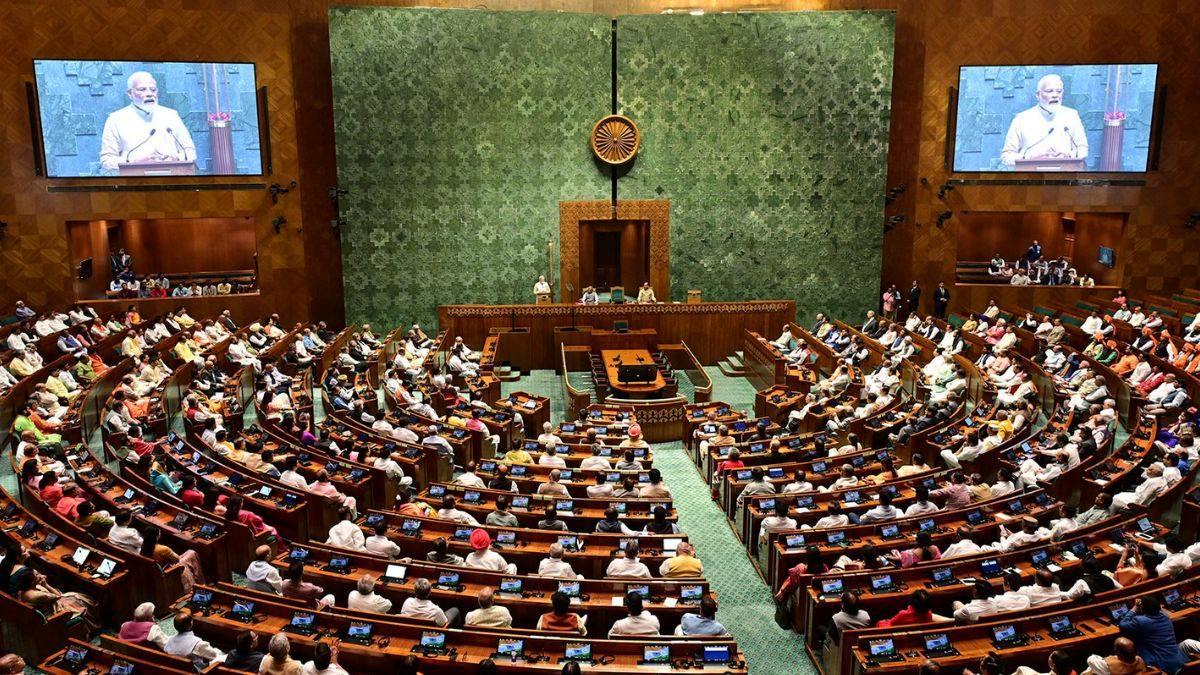
Parliament is often described as the temple of Indian democracy, but it is also where the country’s biggest ideological battles have been fought. Every law passed in Parliament reflects the concerns, aspirations and political priorities of its time. While thousands of Bills have become Acts since Independence, only a handful have fundamentally altered the course of the nation.
Some redefined the rights of women, others transformed India’s economy, strengthened democratic institutions or challenged long-standing constitutional conventions. Many were welcomed as historic reforms, while others triggered protests, court battles and nationwide movements. A few were even repealed after public opposition. Yet each of these landmark legislations has left a lasting imprint on India’s political and social landscape.
The latest to join this distinguished list is the Prevention of Insults to National Honour (Amendment) Bill, 2026, which grants Vande Mataram the same legal protection as the National Anthem. Like many transformative laws before it, the Bill has ignited debate over nationalism, constitutional values and the role of Parliament in shaping India’s identity.
To understand why this legislation matters, it is worth looking back at the Bills that have defined India’s democratic journey over the past seven decades.
1955–56: The Hindu Code Bills
India’s First Major Social Reform
Few pieces of legislation in independent India generated as much controversy as the Hindu Code Bills.
The idea of reforming Hindu personal laws had existed even before Independence. Under colonial rule, matters relating to marriage, inheritance, divorce and adoption were governed largely by traditional customs and religious interpretations, many of which discriminated against women.
Law Minister Dr. B.R. Ambedkar believed political democracy would remain incomplete without social democracy. He strongly advocated a comprehensive legal framework that would provide women equal rights in marriage and property.
However, the proposals met fierce opposition from conservative politicians, religious organisations and even several members within the ruling Congress Party. Critics argued that Parliament was interfering in religious traditions.
Unable to secure consensus for one comprehensive law, the government eventually divided the proposal into four separate Acts:
· Hindu Marriage Act (1955)
· Hindu Succession Act (1956)
· Hindu Minority and Guardianship Act (1956)
· Hindu Adoptions and Maintenance Act (1956)
The reforms legalised divorce, recognised women’s inheritance rights, regulated adoption and modernised family laws.
Although the Bills led to Ambedkar’s resignation as Law Minister after delays in their passage, historians regard them as among the greatest social reforms in independent India.
1971: Abolition of Privy Purses
Ending India’s Royal Legacy
When India became independent in 1947, more than 560 princely states agreed to join the Indian Union.
As part of the integration process negotiated by Sardar Vallabhbhai Patel and V.P. Menon, former rulers were promised annual payments called Privy Purses, along with certain ceremonial privileges.
By the late 1960s, Prime Minister Indira Gandhi argued that continuing these payments contradicted the ideals of a democratic republic.
Her government introduced the 26th Constitutional Amendment, abolishing privy purses and withdrawing official recognition from former princes.
Supporters described it as completing India’s transition from monarchy to democracy.
Critics argued the government had violated solemn constitutional commitments made during national integration.
The issue reached the Supreme Court before Parliament ultimately amended the Constitution.
1976: The 42nd Constitutional Amendment
The ‘Mini Constitution’
No constitutional amendment has attracted as much attention as the 42nd Amendment passed during the Emergency (1975–77).
Often called the Mini Constitution, it was the most extensive constitutional amendment ever enacted.
Among its major provisions were:
· Strengthening Parliament’s powers.
· Curtailing judicial review.
· Reducing the powers of the Supreme Court and High Courts.
· Extending the tenure of legislatures.
· Adding Socialist, Secular, and Integrity to the Preamble.
· Introducing Fundamental Duties.
Supporters argued that a stronger Centre was essential for national stability.
Opposition leaders considered it an assault on constitutional checks and balances.
After the Emergency, the Janata Party government reversed several controversial provisions through the 44th Amendment.
1985: Anti-Defection Law
Ending Political Horse-Trading
The phrase “Aaya Ram, Gaya Ram” entered Indian politics after Haryana MLA Gaya Lal switched parties three times within a single day in 1967.
Frequent defections destabilised governments across the country.
To prevent legislators from changing parties for political gain, Parliament enacted the 52nd Constitutional Amendment, introducing the Tenth Schedule.
The law allows legislators to be disqualified if they voluntarily leave their party or defy the party whip in crucial votes.
Supporters praised the law for promoting stable governments.
Critics argue it discourages independent thinking among legislators and strengthens party leadership at the cost of parliamentary debate.
2005: Right to Information Act
Power to the People
The RTI Act emerged after years of grassroots campaigns led by organisations like the Mazdoor Kisan Shakti Sangathan (MKSS), which demanded transparency in government spending.
Before RTI, government files were largely inaccessible to ordinary citizens.
The Act legally empowered every citizen to seek information from public authorities.
Within a few years, RTI applications exposed corruption in welfare schemes, recruitment processes, infrastructure projects and public spending.
The legislation fundamentally changed governance by making transparency a legal right rather than administrative discretion.
2013: Lokpal and Lokayuktas Act
The Anna Hazare Movement’s Biggest Victory
Mass protests against corruption in 2011 forced Parliament to address public demands for stronger anti-corruption institutions.
Millions participated in nationwide demonstrations supporting activist Anna Hazare’s campaign.
After intense parliamentary debates, the Lokpal Bill became law in 2013.
The Act established an independent ombudsman to investigate corruption allegations against public servants, including senior officials.
Although implementation faced delays, the law marked one of the most important governance reforms in modern India.
2017: Goods and Services Tax (GST)
One Nation, One Tax
For decades, India had a complex tax system comprising excise duty, service tax, VAT, entry tax and numerous state levies.
GST replaced this fragmented structure with a unified indirect tax regime.
The reform required unprecedented cooperation between the Union Government and the states through the GST Council.
While businesses initially struggled with compliance and technological adaptation, GST simplified interstate trade and created a common national market.
2019–2026: A New Era of Landmark Legislation
The years since 2019 have seen Parliament enact several laws that have generated intense national debate.
The Jammu and Kashmir Reorganisation Act (2019) revoked the state’s special constitutional status under Article 370 and reorganised it into two Union Territories, prompting discussions on federalism, national integration and constitutional procedure.
The Citizenship Amendment Act (2019) amended India’s citizenship law to fast-track citizenship for persecuted non-Muslim minorities from Pakistan, Bangladesh and Afghanistan. While supporters called it a humanitarian measure, critics argued that excluding Muslims challenged India’s secular principles, leading to nationwide protests.
The Three Farm Laws (2020) sought to liberalise agricultural markets but triggered one of the largest farmers’ movements in independent India. After more than a year of protests, Parliament repealed all three laws in 2021—an uncommon reversal that underscored the influence of public mobilisation.
In 2023, Parliament passed the Nari Shakti Vandan Adhiniyam (Women’s Reservation Bill), reserving one-third of seats in the Lok Sabha and State Legislative Assemblies for women. The Bill was hailed as a landmark for gender representation, though its implementation is linked to future delimitation.
Most recently, in 2026, Parliament passed amendments to strengthen laws against examination fraud through the Public Examinations (Prevention of Unfair Means) Amendment Bill, responding to repeated paper leak controversies. During the same session, lawmakers also approved the Prevention of Insults to National Honour (Amendment) Bill, extending legal protection to Vande Mataram. The legislation has reopened debates over patriotism, national symbols and the balance between constitutional freedoms and legal safeguards.
Parliament: The Theatre of Indian Democracy
India’s Parliament has always been more than a law-making body—it is where competing visions of the nation meet. From granting women equal rights in the 1950s to ending royal privileges, strengthening transparency through RTI, overhauling taxation with GST, addressing corruption, redefining federal relations and debating national identity, each landmark Bill reflects the evolving aspirations of the Republic.
History shows that many of these laws were initially controversial. Some were challenged in courts, some were amended, and a few were even repealed. Yet together they illustrate the strength of India’s democratic process, where legislation is shaped not only by parliamentary majorities but also by public opinion, judicial review and constitutional values.
The Vande Mataram Amendment Bill, 2026, is the latest chapter in this ongoing story. Whether it ultimately comes to be remembered for its symbolism, its legal consequences or the debates it generated, it has already earned its place in the long and fascinating history of Parliament’s most transformative laws.