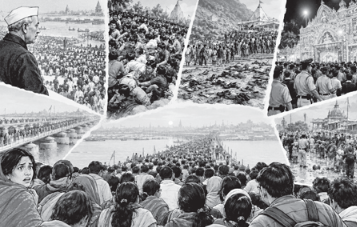
The deaths of 19 people in a stampede at the Chorebagan Sarbojanin Durga Puja pandal in Kolkata on October 17 have once again brought into focus a recurring tragedy at India’s religious gatherings. As devotees gathered to celebrate Durga Puja, a sudden rush in a crowded area resulted in multiple people falling and triggering a deadly chain of events. At least 25 others were reported injured, while authorities announced an investigation into the circumstances surrounding the incident.
The tragedy came against the backdrop of a history stretching back decades, in which religious festivals, pilgrimages and mass congregations have repeatedly turned into scenes of panic and loss. From the Kumbh Mela in Allahabad in 1954 to temple disasters in Maharashtra, Himachal Pradesh and Rajasthan, and more recent incidents in Uttar Pradesh and Prayagraj, the circumstances have differed, but the central challenge has remained the same: managing enormous crowds in confined spaces while ensuring that a sudden movement does not become fatal.
India’s religious gatherings are among the largest collective events in the world. Millions of people travel to sacred rivers, temples, shrines and festival venues, often converging on particular locations at specific hours considered auspicious. Such gatherings carry immense religious and cultural significance, but they also demand careful planning, effective coordination and an understanding of how crowds behave when movement becomes restricted. When these arrangements fail, the consequences can be devastating.
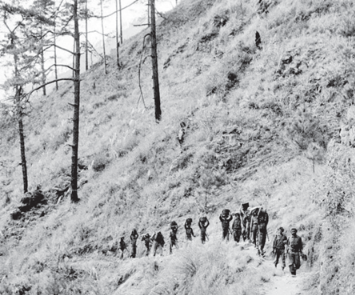
The 1954 Kumbh Mela stampede in Allahabad, now Prayagraj, remains one of the defining disasters in the history of crowd management at religious gatherings in independent India. The Kumbh, held from January 14 to March 3 that year, was the first edition of the festival after Independence. It attracted millions of pilgrims over several weeks, with the largest crowds arriving for the principal bathing days. On February 3, Mauni Amavasya, a stampede occurred as devotees gathered at the Sangam, the confluence of the Ganga, Yamuna and the traditionally revered Saraswati.
The presence of large processions and the movement of prominent visitors added to the complexity of managing the gathering. Accounts of the disaster described pilgrims pressing towards the bathing area and attempting to reach religious processions, with people falling and others unable to stop or move away. The incident prompted an official inquiry, while independent criticism questioned whether the authorities had adequately anticipated the scale of the gathering and prioritised the safety of ordinary pilgrims.
The tragedy also exposed a difficult aspect of public illustration depicts the recurring tragedy of stampedes at india’s religious gatherings, highlighting how overcrowding and lapses in crowd management can turn mass congregations into disasters. Casualty figures have varied across accounts. Coming less than two months after the Naina Devi incident, the tragedy reinforced concerns about crowd management at major religious sites. The two disasters exposed the importance of reliable communication during emergencies.
Organisers and police need systems that allow them to issue clear, coordinated instructions and prevent unverified announcements from creating further panic. They must also ensure that people can administration in the management of mass religious events. Organisers and authorities must accommodate religious practices and the movement of devotees without allowing the demands of ceremonies, processions or VIP arrangements to compromise public safety. The 1954 disaster became an enduring warning that the scale and intensity of a pilgrimage cannot be managed through routine arrangements alone.
From temple steps to crowded riverbanks
The history of crowd disasters at religious gatherings predates Independence. Historical accounts of the Kumbh Mela record deadly incidents at Haridwar and other pilgrimage centres during the 19th and early 20th centuries. The increasing size of gatherings, the concentration of pilgrims around bathing ghats and the movement of large groups through limited passages had long posed challenges to those responsible for public order.
By the time of the 1954 disaster, the dangers associated with mass gatherings were already well established. Yet the decades that followed demonstrated that experience alone could not eliminate the risk. On August 27, 2003, a stampede during the Kumbh Mela in Nashik, Maharashtra, killed 39 people and injured around 140. The incident occurred during the ritual bathing period, when large numbers of pilgrims converged on a limited area. Accounts described a sudden rush among devotees, including a scramble after coins were thrown into the crowd.
The disaster illustrated how quickly a gathering that appears manageable can become dangerous when people begin moving simultaneously towards a single point. The Nashik incident also highlighted the importance of regulating not just the total number of visitors but their movement within the venue. A site may have sufficient space in aggregate and still contain bottlenecks where people are forced into narrow lanes or towards barriers.
When incoming and outgoing flows intersect, or when a crowd suddenly accelerates, the people at the front may have little room to move even if those behind them cannot see that movement has stopped. In January 2005, another devastating incident occurred at the Mandhardevi temple in Maharashtra’s Satara district. The annual pilgrimage attracted large numbers of devotees to the hilltop shrine. The stampede on January 25 killed more than 250 people according to commonly cited official figures, although some reports gave higher estimates.
Slippery steps, a tightly packed crowd and difficulties in controlling movement contributed to the disaster. Reports also described a fire, compounding the danger faced by pilgrims. The Mandhardevi tragedy demonstrated how the physical conditions of a religious site can magnify the consequences of overcrowding. Pilgrims climbing or descending steep steps cannot easily change direction when movement slows. If people fall, those behind them may be unable to see the obstruction or stop in time. A minor disruption can therefore spread through a densely packed crowd, leaving those caught in the middle with little opportunity to escape.
The incident also raised questions about the adequacy of security deployment, access routes and emergency arrangements at a site that regularly received large numbers of visitors. The safety of a pilgrimage cannot depend solely on devotees exercising caution. Authorities and organisers must assess the capacity of routes, identify hazardous stretches, control entry when necessary and ensure that medical assistance can reach injured people without being blocked by the crowd.
When rumours turn crowds into danger zones
Three years later, two major temple disasters in northern India again demonstrated the dangers associated with rumours, restricted movement and sudden panic. On August 3, 2008, a stampede at the Naina Devi temple in Himachal Pradesh killed around 145 people, with reports attributing the panic to rumours of a landslide. The shrine, situated on a hill, drew large numbers of pilgrims during the religious season.
As fear spread through the crowd, people began moving in ways that placed others in danger. The Naina Devi tragedy showed that a crowd disaster does not necessarily begin with a physical obstruction or a deliberate rush towards a religious object. Information, whether accurate or false, can influence how thousands of people respond within seconds. In a crowded setting, a rumour about a landslide, collapsing structure or other immediate threat can trigger a sudden attempt to flee. If routes are narrow, visibility is limited and crowd movement is poorly controlled, people may be trapped between those trying to escape and those who do not know what is happening.
On September 30, 2008, another stampede at the Chamunda Devi temple in Jodhpur, Rajasthan, killed around 250 people according to several reports. The disaster occurred during Navratri, when large numbers of devotees had gathered at the temple. Reports attributed the panic to rumours of a bomb, although move away from a threatened area without being forced into a single narrow exit. Emergency communication cannot substitute for sound physical planning, but poor communication can turn an already difficult situation into a catastrophe.
The danger extends beyond the shrine
The risks were not confined to temples and hilltop shrines. On January 14, 2011, at least 100 pilgrims died in a disaster near Pulmedu in Kerala’s Idukki district during the return journey from the Sabarimala pilgrimage. A vehicle reportedly crashed into pilgrims, triggering a stampede. The incident illustrated the dangers of mixing pedestrian crowds with vehicular movement, particularly on routes used by large numbers of people travelling home after a religious event.
The Sabarimala disaster underlined that crowd safety must extend beyond the main shrine or ceremonial site. Pilgrims often travel through forest roads, temporary pathways, parking areas and narrow approach routes, where lighting, traffic regulation and emergency access can be difficult to maintain. A venue may have a carefully managed central area, but the surrounding transport network can remain vulnerable if large groups are released at once or vehicles and pedestrians are allowed to converge.
In October 2013, the Ratangarh temple in Madhya Pradesh’s Datia district witnessed one of the country’s deadliest recent religious stampedes. Around 115 people died during Navratri celebrations on October 13. Large numbers of devotees had gathered near the temple, and panic spread amid fears that a bridge over a river might collapse. People rushed to escape, while others fell or were pushed into the river below. Reports also raised questions about the management of traffic and the movement of pilgrims across the bridge.
The Ratangarh disaster was particularly significant because it brought together several recurring vulnerabilities: a large gathering, a confined crossing, rumours of danger and the difficulty of moving people away from a threatened location. When a crowd begins to retreat simultaneously through a narrow passage, the movement can become as dangerous as the original threat. People near the rear may continue pushing forward without knowing that those ahead have stopped, while those at the front may be unable to move in either direction.
The Kumbh Mela in Allahabad witnessed another major crowd disaster on February 10, 2013, when at least 36 pilgrims died in a stampede at the railway station on Mauni Amavasya. The incident took place as large numbers of people were returning from the pilgrimage. The railway station became congested as passengers attempted to move through the premises, and reports described difficulties involving footbridges and the movement of people.
The railway station tragedy was a reminder that a pilgrimage’s most dangerous moments may occur after the central religious observance has ended. The arrival and departure of millions of people require planning that extends across railway stations, bus terminals, approach roads, parking areas and the routes linking them to the religious site. Crowd management cannot be treated as the responsibility of a single department when transport agencies, police, local authorities and event organisers are all handling different parts of the same movement.
Further disasters continued to occur. In July 2015, at least 27 people died in a stampede during the Godavari Pushkaram festival at Rajahmundry, now Rajamahendravaram, in Andhra Pradesh. Thousands of devotees had gathered for a ritual bath on the opening day of the event. The incident again highlighted the pressure placed on bathing areas when large numbers of people arrive within a short period and seek access to the same limited stretch of riverbank.
Recent tragedies, Familiar questions
On January 1, 2022, at least 12 people died in a stampede at the Vaishno Devi shrine in Jammu and Kashmir. The incident occurred amid a heavy rush of devotees at the shrine, with reports pointing to an altercation and overcrowding as factors preceding the disaster. The tragedy renewed concerns about controlling the number of visitors inside confined areas and maintaining clear movement through entry points.
The Vaishno Devi incident also illustrated the challenge of balancing access to a major pilgrimage with the practical capacity of its routes and facilities. Registration systems and entry controls can help authorities estimate visitor numbers, but they are effective only when actual entry is monitored and restrictions are enforced when capacity is reached. A system that records pilgrims without regulating the flow into congested areas cannot, by itself, prevent a dangerous crowd build-up.
In July 2024, a religious congregation in Hathras district of Uttar Pradesh ended in tragedy when 121 people died in a stampede after a gathering attended by thousands of devotees. The event centred on a religious preacher, and the crowd reportedly surged as people attempted to move towards him after the programme. The scale of the loss drew attention to questions about the number of people admitted, the arrangements for crowd movement, the adequacy of exits and the responsibilities of organisers and authorities.
The Maha Kumbh was a reminder that modern technology and extensive administrative preparation do not remove every risk associated with mass gatherings. Surveillance, registration, communication systems and detailed traffic plans can help authorities monitor conditions, but these measures must translate into decisions on the ground. Officials need to identify where congestion is building, prevent additional people from entering an unsafe area, open alternative routes when possible and communicate instructions before a crowd reaches a critical density.
Kolkata brings the history into the present
The latest tragedy in Kolkata brings this history into the present. On October 17, 2026, a stampede at the Chorebagan Sarbojanin Durga Puja pandal in north Kolkata killed at least 19 people and injured 25, according to reports published the following day. The incident took place during the crowded Durga Puja celebrations. Initial accounts differed in their description of the events immediately preceding the stampede, with reports referring to heavy rain, a sudden rush and a warning or announcement that may have caused panic.
An investigation was announced to establish the circumstances and examine possible crowd-control failures. The precise sequence of events and the question of responsibility must be determined through that investigation. Nevertheless, the incident has brought renewed attention to the safety arrangements required at festival pandals, where large numbers of visitors move through temporary structures, access lanes and crowded neighbourhoods. Such venues may attract people over several days, with attendance fluctuating sharply during peak hours. Their design and management must account for the possibility of sudden weather changes, blocked routes, misleading information and unexpected surges in visitor numbers.
The historical record does not suggest that every stampede has the same cause. Some have followed rumours, others have involved narrow passages, slippery steps, the collapse of structures, vehicle movements or the convergence of incoming and outgoing crowds. In several incidents, more than one factor was involved. Treating every tragedy as a simple consequence of overcrowding would obscure the specific failures that need to be identified and corrected. The more useful comparison is the recurrence of conditions that allow a disturbance to spread through a crowd without an effective intervention.
Why the lessons remain urgent
Crowd safety depends on understanding that people in a dense gathering cannot always see what is happening ahead of them or control their own movement. When the space available to each person becomes too limited, even a small change in direction or speed can generate pressure that people at the centre cannot resist. Those at the front may be unable to advance, while those behind continue moving. People who fall may be difficult to reach, and emergency personnel may find it impossible to move against the flow.
The National Disaster Management Authority has issued guidance for managing crowds at events and venues of mass gathering, emphasising planning, risk assessment, coordination and emergency preparedness. Such guidance provides a framework for organisers and authorities, but its value depends on implementation at individual sites. Crowd estimates must inform decisions about capacity; entry and exit routes must remain usable; barriers must guide movement without creating traps; and arrangements must be in place to stop entry when a venue becomes unsafe.