From Temporary Provision to Constitutional Transformation: The Story of Jammu & Kashmir’s Special Status
On 5 August 2019, India witnessed one of the most significant constitutional developments since Independence. The Union Government revoked the special status enjoyed by Jammu and Kashmir under Article 370 and rendered Article 35A inoperative. The decision also reorganised the erstwhile state into two Union Territories—Jammu & Kashmir and Ladakh.
Seven years later, the decision continues to influence discussions on federalism, constitutional law, national integration, governance, security, and development. For some, it marked the completion of India’s political integration. For others, it raised important questions about constitutional procedure, state autonomy, and democratic representation.
To understand why Article 370 became one of the most debated provisions of the Indian Constitution, one must revisit the dramatic events surrounding India’s Independence and the accession of Jammu and Kashmir.
The Background: Partition and the Kashmir Question
When British India was partitioned in August 1947, nearly 565 princely states were given the option to join either India or Pakistan or, theoretically, remain independent. Most states acceded quickly based on geography and political considerations.
Jammu and Kashmir, however, occupied a unique position.
It was:
· The largest princely state by area
· Strategically located in the Himalayas
· Bordered India, Pakistan, Afghanistan, and China
· Home to a Muslim-majority population ruled by a Hindu monarch, Maharaja Hari Singh
Unlike many rulers, Hari Singh initially chose to remain independent. He signed Standstill Agreements with Pakistan to maintain existing trade, transport, and communication arrangements. India suggested further discussions before entering into such an agreement.
This delicate balance lasted only a few months.
The Tribal Invasion and the Instrument of Accession
In October 1947, armed tribal militias from Pakistan’s North-West Frontier Province, supported by elements from Pakistan, entered Kashmir. They advanced rapidly toward Srinagar, leading to widespread violence and creating an urgent military crisis.
Unable to defend the state alone, Maharaja Hari Singh requested military assistance from India.
India agreed, but only after the state formally acceded to the Indian Union.
On 26 October 1947, the Maharaja signed the Instrument of Accession, the legal document through which Jammu and Kashmir became part of India.
The Instrument granted Parliament authority over only three subjects:
· Defence
· External Affairs
· Communications
Later, ancillary matters related to these subjects were also included.
Unlike the complete integration accepted by most princely states, Jammu and Kashmir retained significant autonomy over internal governance.
The Promise of a Temporary Constitutional Arrangement
As India prepared its Constitution, the special circumstances surrounding Jammu and Kashmir demanded a different constitutional arrangement.
Several factors influenced this decision:
· The state had recently joined India during an armed conflict.
· Parts of Jammu and Kashmir were under Pakistani control after the 1947–48 war.
· The matter had reached the United Nations.
· The state’s own Constituent Assembly was expected to determine its constitutional future.
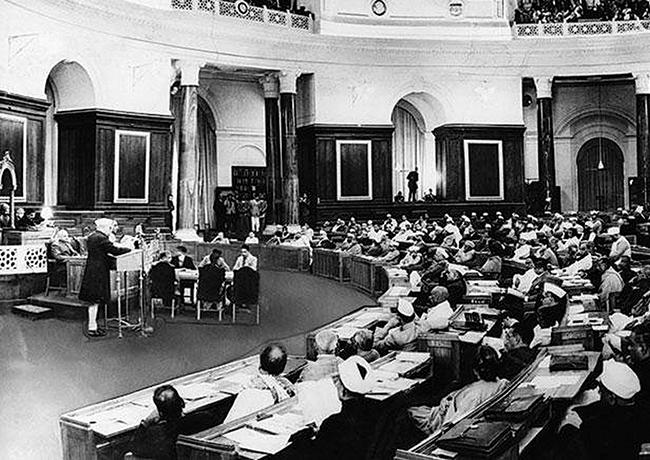
To address these exceptional circumstances, N. Gopalaswami Ayyangar, a former Prime Minister of Jammu and Kashmir and member of the Constituent Assembly of India, drafted what later became Article 370.
Why Was It Called a “Temporary Provision”?
Article 370 was placed under Part XXI of the Constitution, titled “Temporary, Transitional and Special Provisions.”
It came into force on 26 January 1950, the day India became a Republic.
The provision was considered temporary because:
· Jammu and Kashmir was expected to frame its own Constitution.
· The state’s Constituent Assembly would later decide whether Article 370 should continue or be modified.
· The political future of the region was still evolving after Partition.
However, after completing its work, the Jammu and Kashmir Constituent Assembly dissolved itself in 1957 without recommending the repeal of Article 370. As a result, the provision continued to operate for nearly seven decades.
What Exactly Did Article 370 Provide?
Article 370 created a distinctive constitutional relationship between Jammu and Kashmir and the Union of India.
Its principal features included:
Separate Constitution
Unlike every other Indian state, Jammu and Kashmir had its own Constitution, adopted in 1956 and effective from 1957.
Separate Flag
Along with the Indian national flag, the state officially recognised its own flag.
Limited Parliamentary Powers
Initially, Parliament could legislate only on matters specified in the Instrument of Accession.
Any extension of additional Union laws required the concurrence of the state government through Presidential Orders.
Residuary Powers
In most Indian states, residuary legislative powers rest with Parliament.
In Jammu and Kashmir, these powers remained with the state legislature.
Emergency Provisions
National Emergency on grounds of war or external aggression could apply.
However, Emergency on grounds of internal disturbance originally required the concurrence of the state government.
Constitutional Autonomy
Many provisions of the Indian Constitution did not automatically extend to Jammu and Kashmir.
Instead, they were gradually applied over time through Presidential Orders.
The Delhi Agreement of 1952
One of the most important milestones before Article 35A was the Delhi Agreement between Prime Minister Jawaharlal Nehru and Jammu and Kashmir leader Sheikh Abdullah.
The agreement clarified several constitutional issues:
· Indian citizenship for residents of Jammu and Kashmir
· Continued power of the state to define “permanent residents”
· Recognition of the state’s separate flag
· Jurisdiction of the Supreme Court in specified matters
· Extension of certain constitutional institutions
The agreement attempted to balance regional autonomy with national integration.
Article 35A: The Most Controversial Companion Provision
In 1954, the President of India issued the Constitution (Application to Jammu and Kashmir) Order, which inserted Article 35A.
Unlike most constitutional amendments, Article 35A was introduced through a Presidential Order rather than by Parliament under Article 368.
It authorised the Jammu and Kashmir legislature to define “permanent residents.”
These residents enjoyed exclusive rights regarding:
· Ownership of immovable property
· Government employment
· Educational scholarships
· Settlement rights
· Certain welfare benefits
Supporters argued these protections preserved the unique identity and demographic character of the region.
Critics contended that the provision discriminated against several groups, including:
· West Pakistan refugees who settled in Jammu after Partition
· Members of the Valmiki community brought to the state for sanitation work
· Gorkha families residing in the region
· Women (under earlier state laws) who married non-permanent residents, although later judicial decisions addressed aspects of this issue
The Gradual Erosion of Autonomy
Although Article 370 granted special status, the relationship between Jammu and Kashmir and the Union changed steadily over the decades.
Through more than 45 Presidential Orders, numerous provisions of the Indian Constitution were extended to the state.
Among them were:
· Supreme Court jurisdiction
· Election Commission of India
· Comptroller and Auditor General (CAG)
· All India Services (IAS, IPS, IFoS)
· Fundamental Rights
· Central taxation laws
· Banking regulations
· Anti-corruption legislation
· National emergency provisions (with modifications)
· Financial institutions
By 2019, scholars estimated that the overwhelming majority of the Indian Constitution already applied to Jammu and Kashmir, making Article 370 far narrower in practice than in its original form.
Political Milestones Before 2019
Several events shaped the evolution of Jammu and Kashmir’s constitutional position:
1953
Sheikh Abdullah was dismissed as Prime Minister of Jammu and Kashmir and later arrested, marking a major political turning point.
1965
The office of “Prime Minister” of Jammu and Kashmir was replaced with “Chief Minister.”
Similarly, the “Sadr-i-Riyasat” became the Governor appointed by the President of India.
1975
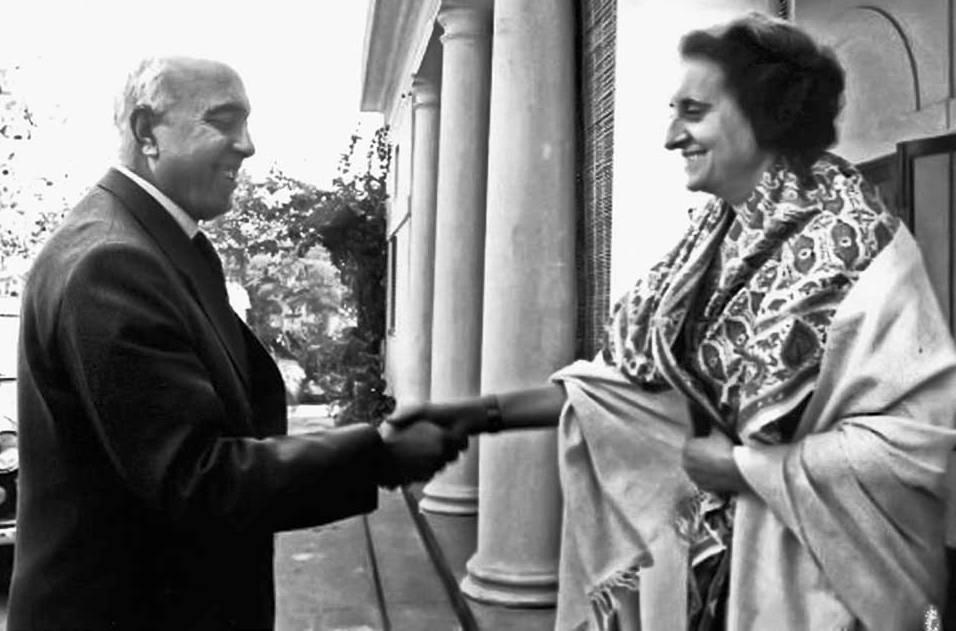
The Indira Gandhi–Sheikh Abdullah Accord restored Sheikh Abdullah as Chief Minister while accepting Jammu and Kashmir as an integral part of India.
1987
Assembly elections became highly controversial, with allegations of electoral malpractice.
Many analysts regard this election as one factor contributing to the rise of militancy in the late 1980s.
1990
Large-scale insurgency led to prolonged violence, migration of Kashmiri Pandits, and Governor’s Rule.
For decades, security concerns dominated governance in the region.
The Constitutional Changes of 5 August 2019
The Union Government implemented a three-step constitutional process.
Step 1: Presidential Order C.O. 272
Issued under Article 370(1), this order superseded earlier constitutional orders and extended almost the entire Constitution of India to Jammu and Kashmir.
It also modified the interpretation of Article 367 (the Constitution’s interpretation clause), enabling references to the “Constituent Assembly” in Article 370 to be read as the “Legislative Assembly.” At the time, the state was under President’s Rule, and Parliament exercised the powers of the Legislative Assembly.
Step 2: Parliamentary Resolution
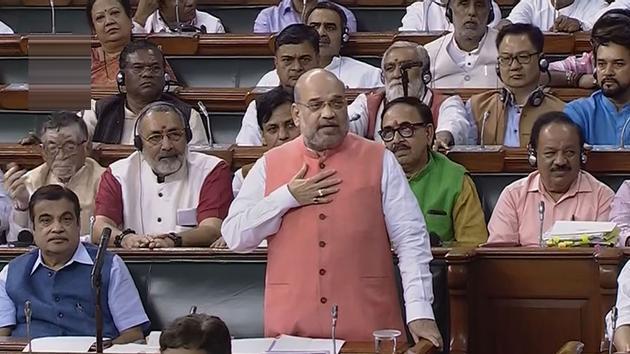
Based on this interpretation, Parliament recommended that the President declare Article 370 inoperative under Article 370(3).
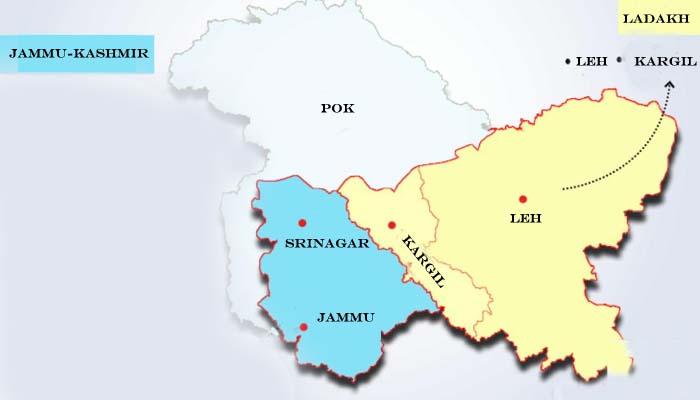
Step 3: Jammu and Kashmir Reorganisation Act, 2019
The state was bifurcated into:
· Union Territory of Jammu and Kashmir, with a Legislative Assembly
· Union Territory of Ladakh, without a Legislative Assembly
This was the first instance in independent India where a full-fledged state was reorganised into Union Territories.
Immediate Security Measures
The announcement was preceded and followed by extensive preventive measures:
· Additional deployment of security forces
· Temporary restrictions on public gatherings
· Suspension of internet and mobile communication in phases
· Detention of several mainstream political leaders under preventive laws
· Closure of educational institutions for a limited period
The Union Government stated these measures were necessary to prevent violence and maintain public order. Critics argued that the restrictions affected civil liberties and everyday life. Many restrictions were gradually eased over the following months.
Administrative and Legal Changes After 2019
The constitutional changes brought significant institutional reforms:
· All Central laws became directly applicable to Jammu and Kashmir.
· The separate Constitution of Jammu and Kashmir ceased to operate.
· The separate state flag lost official status.
· Central reservation laws were extended.
· Property laws were revised.
· New domicile rules replaced the earlier permanent resident framework.
· Panchayati Raj institutions and District Development Councils (DDCs) were strengthened.
Development Initiatives Since 2019
The Government has highlighted several areas of progress:
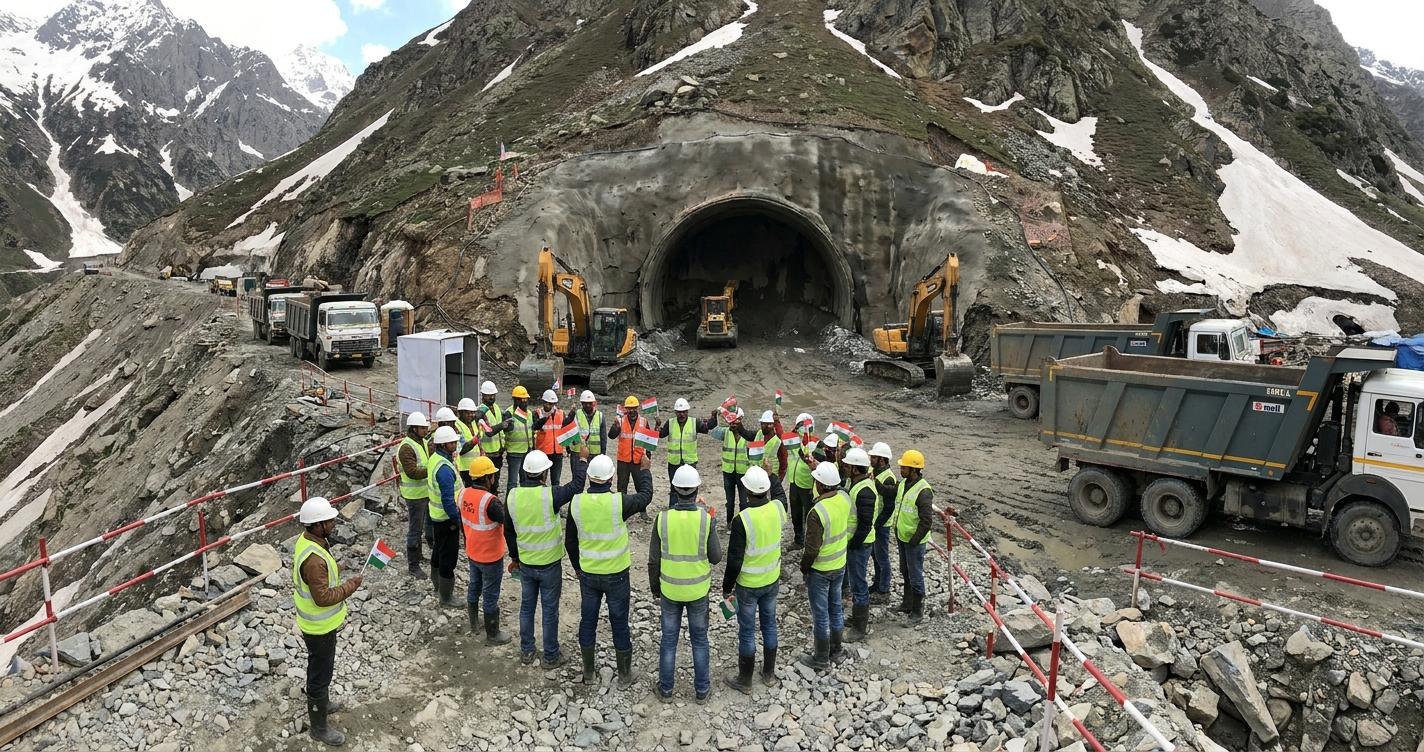
· Expansion of national highways and tunnels, including strategic road connectivity.
· Advancement of the Udhampur–Srinagar–Baramulla Rail Link.
· Growth in tourism, with record numbers of domestic visitors in recent years.
· Promotion of industrial investment through new policies.
· Expansion of healthcare infrastructure and educational institutions.
· Increased digital governance and e-governance initiatives.
· Development of horticulture, handicrafts, and renewable energy projects.
Supporters see these developments as evidence of deeper integration and improved governance, while analysts note that long-term economic outcomes will depend on sustained investment, employment generation, and political stability.
The Supreme Court’s Landmark Judgment (2023)
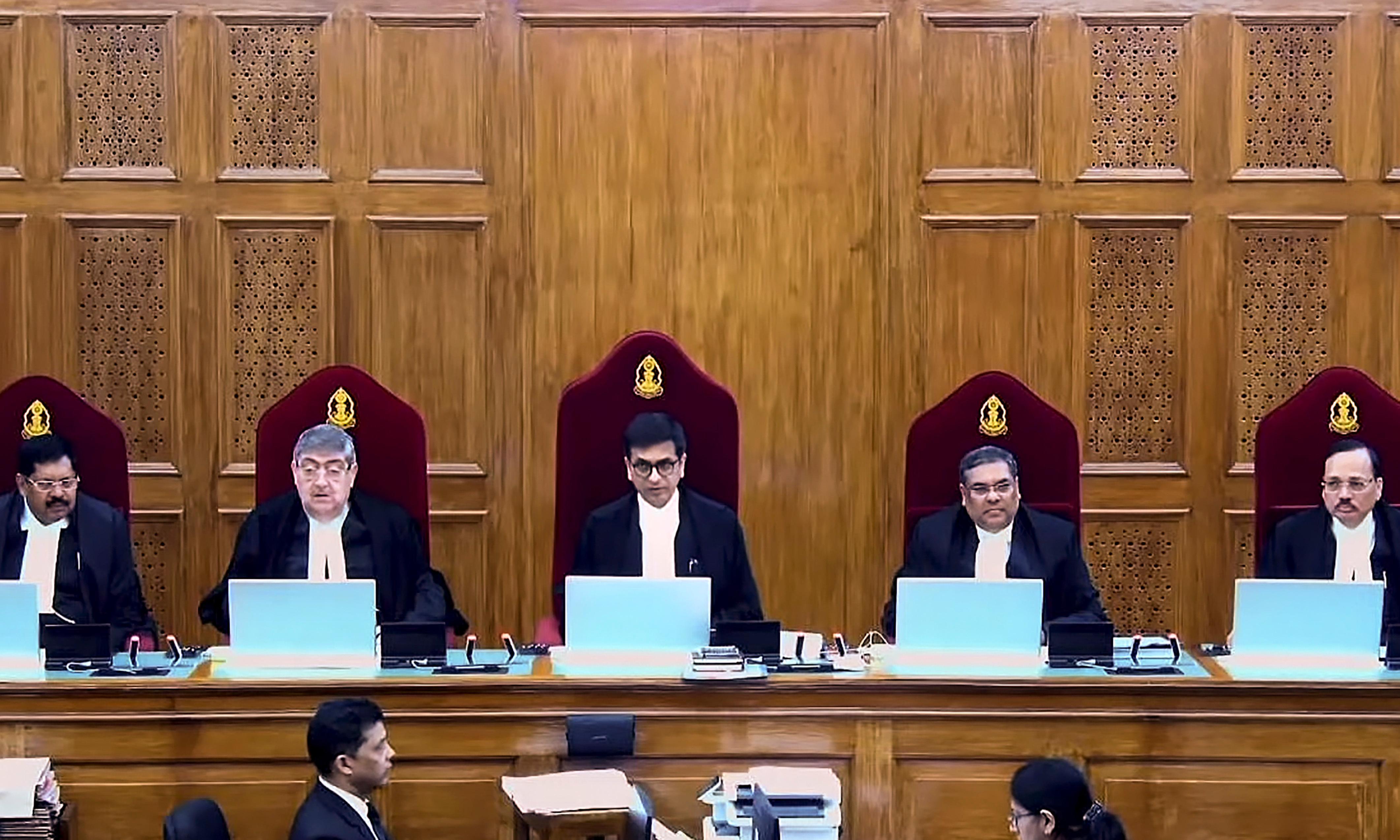
In December 2023, a Constitution Bench of the Supreme Court upheld the constitutional validity of the 2019 measures.
The Court held that:
· Article 370 was a temporary provision.
· Jammu and Kashmir had not retained a form of internal sovereignty after accession.
· The President was empowered to issue the constitutional orders in question.
· The reorganisation and related measures were constitutionally valid.
· Statehood for Jammu and Kashmir should be restored at the earliest feasible opportunity, while recognising Parliament’s authority over the process.
The judgment remains a significant precedent in Indian constitutional law, particularly on questions of federalism, executive authority, and the interpretation of transitional constitutional provisions.
Seven Years On: A Continuing Constitutional Journey
Seven years after the revocation of Article 370, Jammu and Kashmir stands at a new constitutional crossroads. The region has seen changes in governance, law, infrastructure, and administrative integration with the Union. At the same time, questions surrounding political representation, restoration of full statehood, security, and long-term reconciliation remain part of the national conversation.
Whether viewed as the culmination of India’s political integration or as a profound shift in Centre–State relations, the transformation of Article 370 has reshaped the constitutional landscape. Its legacy will continue to be studied not only for its legal implications but also for what it reveals about the evolving nature of Indian federalism, democracy, and nation-building.