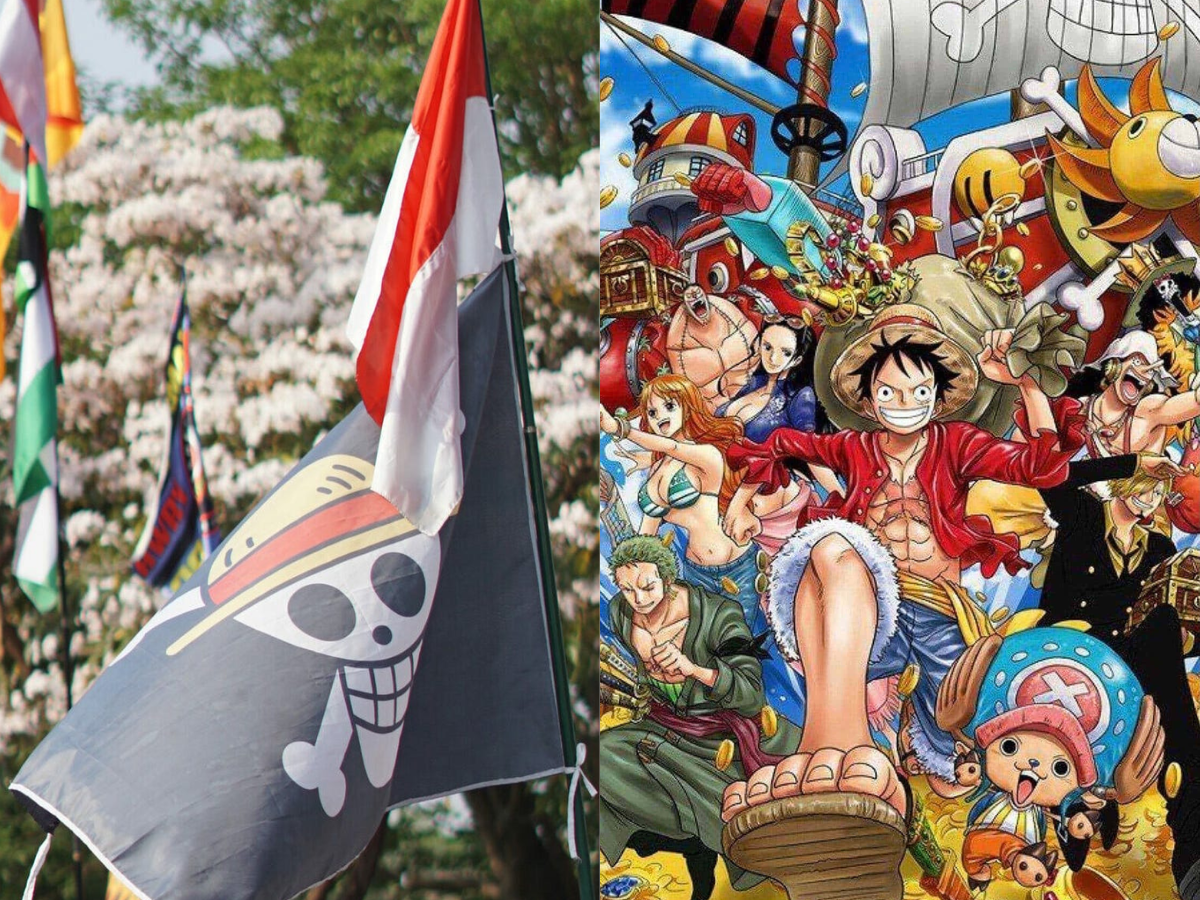
From the pages of manga to the streets of Indonesia, the black pirate flag of One Piece the Jolly Roger with a straw hat has become a bold emblem of political expression. Originally created by Japanese artist Eiichiro Oda in 1997, One Piece is not just a bestselling manga and anime franchise with over 520 million copies sold and more than 1,100 episodes it is now a symbol of civil discontent in Southeast Asia’s largest democracy.
The flags are being flown across Indonesia in front of homes, on cars, and painted on city walls echoing the spirit of Monkey D. Luffy and his Straw Hat Pirates, who rebel against authoritarianism in pursuit of freedom and justice.
From Fiction to Reality: Luffy’s Dream Resonates with Indonesians
In the world of One Piece, the Jolly Roger signifies defiance against an oppressive regime. That narrative has found real-world meaning in Indonesia, where citizens are using the symbol to express dissatisfaction with President Prabowo Subianto’s leadership. His call in July for Indonesians to raise the national red-and-white flag ahead of Independence Day (August 17) was met with an unexpected counter-response: thousands chose the straw-hatted skull instead.
“The anime reflects the injustice and inequality that Indonesians experience,” said Ali Maulana from Jayapura, Papua. “Even though this country is officially independent, many of us have not truly experienced that freedom in our daily lives.”
Flag Demand Surges After Presidential Call
President Prabowo’s patriotic appeal “Raise the red and white flag wherever you are” ironically helped boost the popularity of the pirate flag. Since that speech, sales of Jolly Roger flags have exploded.
“Since the end of July, I received hundreds of orders a day from all over Indonesia,” said Dendi Christanto, owner of the Wik Wiki apparel store in Central Java.
A Divisive Symbol, or Democratic Expression?
While many view the anime-inspired flags as a creative and peaceful form of dissent, top officials have voiced concern. Deputy House Speaker Sufmi Dasco Ahmad described the movement as “a coordinated attempt to divide the nation.” Another lawmaker, Firman Soebagyo, warned that it could even be considered treason.
Yet the president’s office struck a more tolerant tone. State Secretary Minister Prasetyo Hadi said Prabowo had “no objection” to the flags as “creative expression,” though he advised they not overshadow the national flag.
No Law Against Fictional Flags, but Close Scrutiny
Indonesian law doesn’t prohibit fictional flags, but if displayed alongside the national flag, the red and white must fly higher. Authorities have stated they are “monitoring the use of non-national flags and symbols that don’t align with the spirit of nationalism.”
The Jolly Roger is more than a fandom tribute it’s become a lens for civil frustration. “By treating a cartoon flag as a threat to national security, they have inadvertently validated the entire premise of the protest,” wrote Farhan Rizqullah on Medium. “They have shown that the dream of Monkey D Luffy… is the one thing they truly fear.”