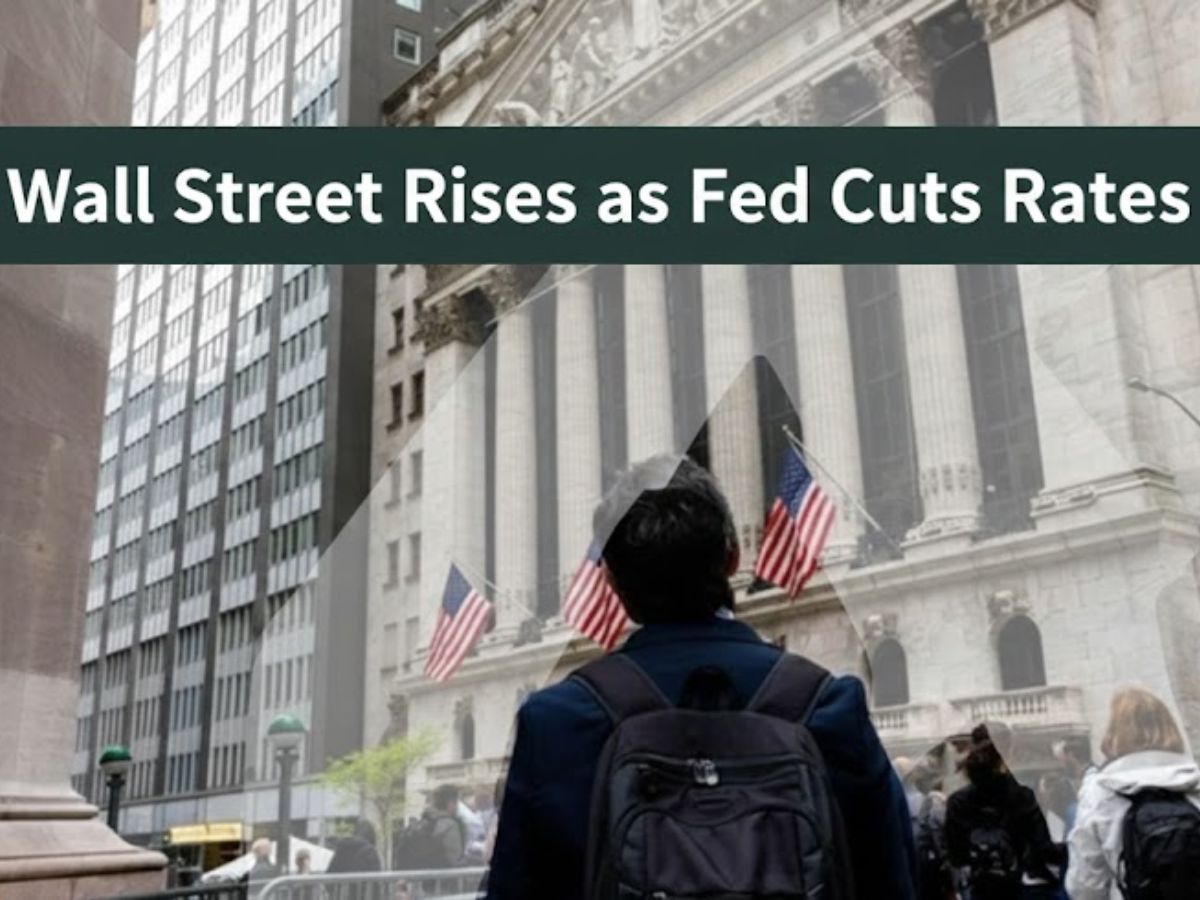
Wall Street closed higher on Wednesday as investors digested a widely expected interest rate cut from the Federal Reserve alongside new signals that policymakers may hold steady in the near future. The central bank’s decision, coupled with its assessment of a “solid” economy, provided enough confidence to lift major stock indexes, led by gains in industrial and energy sectors.
What Did the Federal Reserve Decide?
The Federal Open Market Committee (FOMC) unanimously decided to cut the federal funds rate by 25 basis points (0.25 percentage points), extending its easing cycle that started earlier in 2024. Financial markets had largely expected this decision.
More than the rate decision, the Fed’s statement highlighted a change in forward guidance. Policymakers said further rate cuts are likely on hold until there are “clearer signals” on the job market and inflation, which “remains somewhat elevated.” This suggests the Fed has entered a data-dependent pause to evaluate earlier moves.
How Did the Markets React?
The major stock indexes rallied on the news, shaking off pre-announcement jitters that the Fed might strike a more aggressive “hawkish” tone against future easing.
The closing numbers (preliminary data) were:
- Dow Jones Industrial Average: Rose 501.03 points, or 1.05%, to close at 48,061.32.
- S&P 500: Gained 46.30 points, or 0.67%, to end at 6,886.26.
- Nasdaq Composite: Advanced 72.41 points, or 0.33%, finishing at 23,654.40.
Edward Jones’ Mona Mahajan said, “When the Fed cuts rates and the economy is not moving toward an immediate downturn or recession, markets usually respond positively,” capturing the day’s optimistic mood.
What Were the Key Market Drivers?
Although gains were seen across the market, economically sensitive sectors stood out. The industrials sector topped the S&P 500, indicating confidence in continued economic activity.
One stock that stood out was GE Vernova, a leading energy equipment maker. Its shares jumped after it projected higher revenue for 2026, which investors saw as a signal of strong demand for AI-driven data centres and power infrastructure.
What is the Debate Over the Fed’s Pause Signal?
While the market overall welcomed the decision, some investors parsed the Fed’s language differently.The Fed’s statement cited “weakness in the labour market” as a reason for the rate cut. Michael Rosen of Angeles Investments said this emphasis kept hopes of future easing alive, noting that “the market has picked up on” the point, suggesting room for more cuts in 2026 despite the planned pause.
Your Questions Answered: Fed Rate Decision FAQs
Q: Why did the Fed cut rates if the economy is “solid”?
A:The Fed appears to be using “insurance” easing, cutting rates in advance to protect against a possible economic slowdown, especially in the labour market, while inflation remains fairly contained and the economic cycle is extended.
Q: What does “data-dependent” mean now?
A: This means the Fed has dropped any fixed timeline for its next decision. Rather than signalling another rate cut, it will wait for solid data on jobs, wage growth, and inflation over the coming months before choosing to cut again, hold steady, or even raise rates.
Q: Did the Fed’s economic projections (“dot plot”) change?
A: The summary did not spell out changes to the “dot plot,” which reflects policymakers’ rate projections. However, the strong emphasis on a pause suggests the median outlook likely points to fewer rate cuts in 2025 than markets had expected, reinforcing the “higher for longer” view.
Q: How does this affect consumer loans and savings?
A: When rates are cut, borrowing becomes cheaper over time for things like credit cards, home equity lines, and auto loans. However, savers usually see lower interest earnings on savings accounts and CDs.
Q: What are the risks if the Fed pauses for too long?
A: The key danger is that economic conditions deteriorate more than forecast, making the Fed’s response seem delayed. Meanwhile, a return of inflation could prompt rate increases, which markets would react to negatively.
Also Read: Oil Prices Tick Up as US Forces Seize Tanker in Venezuela Maritime Showdown