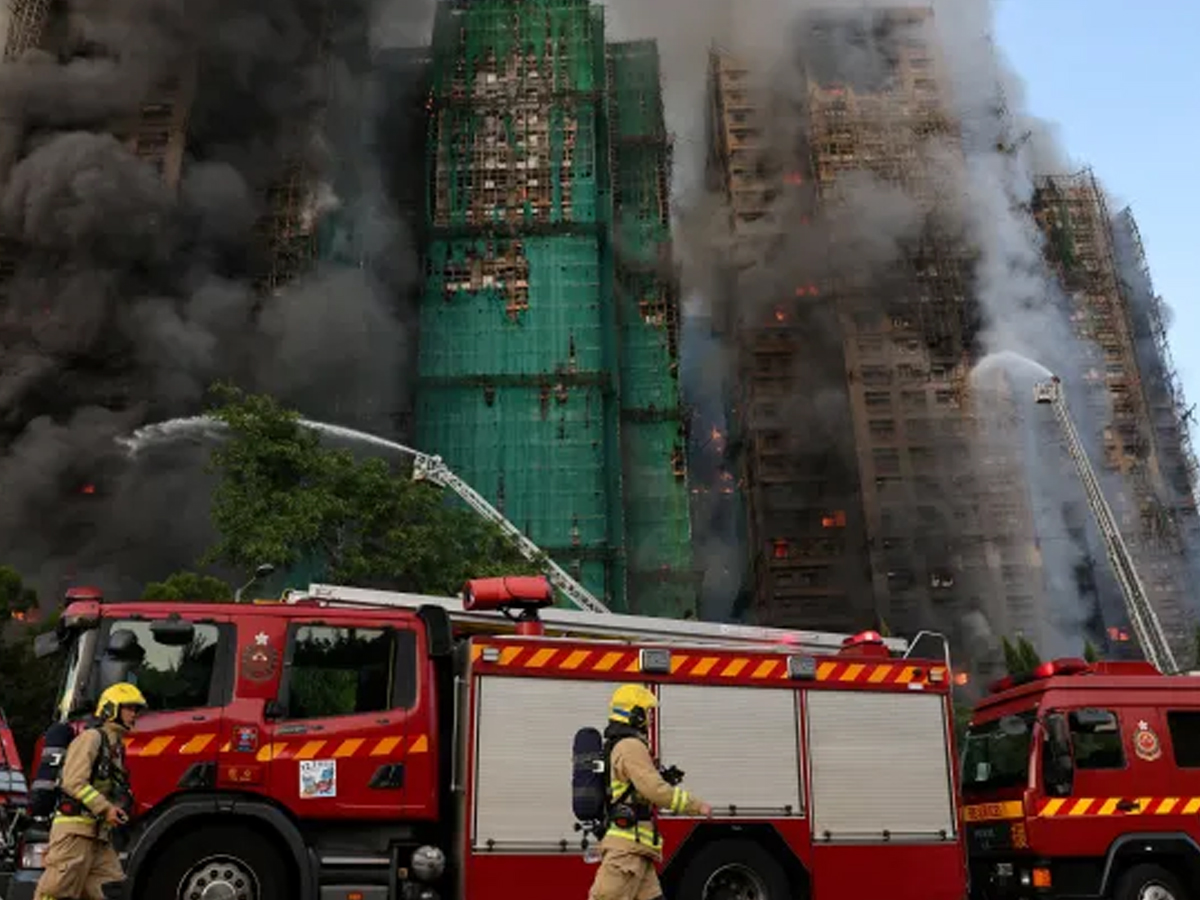
A devastating fire tore through the Wang Fuk Court housing estate in Hong Kong’s Tai Po district on Wednesday, leaving at least 55 dead, with nearly 300 people unaccounted for. The blaze engulfed multiple high-rise apartment towers, turning a quiet residential complex into a scene of horror and heartbreak.
Rescue workers continue their search in thick smoke and debris. Flames spread fast, fed by scaffolding, flammable nets, and renovation materials, underscoring serious concerns about building safety standards.
$1,200 Relief per Household, $38.5 Million Aid Fund for Fire-Affected Residents
In response to the devastating fire at the Wang Fuk Court housing estate, the Hong Kong government has announced significant financial assistance for those impacted. Each affected household will receive 10,000 Hong Kong dollars (approximately $1,200) to help cover immediate needs such as temporary shelter, clothing, and daily essentials.
Additionally, the government has set up a larger assistance fund of 300 million Hong Kong dollars (around $38.5 million) to support long-term recovery efforts, including rebuilding homes and providing resources for displaced residents.
Chief Executive John Lee emphasized that the aid package aims to help victims recover as quickly as possible while ensuring that families have the support they need in the aftermath of the tragedy.
A Shelter of Towers Turned into a Death Trap
Wang Fuk Court housed around 4,600 residents in eight residential towers, many of them low-income families and elderly people. On Wednesday afternoon, just after 2:50 PM local time, the fire erupted. Within hours, the blaze engulfed seven of the eight buildings, prompting a “level 5” emergency — the highest alert.
Authorities suspect the fire began in bamboo scaffolding and renovation nets outside the buildings. These materials — though still widely used — are increasingly criticized as dangerous under high-wind conditions. The fire’s rapid spread exposed how vulnerable many Hong Kong high-rises remain.
Rescue efforts mobilized over 140 fire engines, more than 60 ambulances, and hundreds of firefighters. Still, heavy smoke and structural risks made it difficult to reach upper floors. At least one firefighter lost his life in the effort.
Aftermath: Thousands Homeless and a City in Shock
With entire towers reduced to charred shells, hundreds of residents lost their homes overnight. Many remain unaccounted for, and local shelters have been set up for the displaced. Families grieve loved ones, while survivors worry about their next steps.
Authorities have already arrested three men, directors, and an engineering consultant from the construction firm responsible for the recent renovation work. Police allege “gross negligence,” pointing to unsafe building materials and poor renovation practices.
Why This Fire Matters: More Than Just a Tragedy
This is not just a disaster — it’s a stark reminder of Hong Kong’s housing crisis and building safety failures. Many public and low-income housing estates in the city are aging. Meanwhile, scattered, overcrowded, subdivided flats (often called “cage homes” or “cubicle apartments”) continue to house thousands, with little fire protection or proper safety infrastructure.
Wang Fuk Court was home to many such vulnerable residents — elderly, low-income workers, migrants — who rely on public housing. The disaster reveals how deeply systemic inequality and neglect can turn deadly in densely populated urban settings.
What Must Change: Safety, Transparency, Accountability
In response, the Hong Kong government announced it will launch a thorough investigation and review safety standards, especially for renovations and scaffolding practices. Officials say they will inspect similar estates across the city to prevent another catastrophe.
Construction firms and contractors must be held accountable. Renovation materials, scaffolding nets, and external coverings should meet strict fire‑resistance standards. Residents deserve transparent information about building status, safety audits, and evacuation plans.
This tragedy should also stir a larger conversation about housing — about providing safe, secure homes for people who cannot afford luxury, about ending reliance on unsafe subdivided flats, and about ensuring public housing meets basic safety norms and dignity.
This fire has killed dozens, displaced hundreds, and shaken the conscience of a city. But perhaps the greatest danger now is complacency. If lessons are not learned, and if safety remains optional, then homes will remain tombs waiting for the next spark.