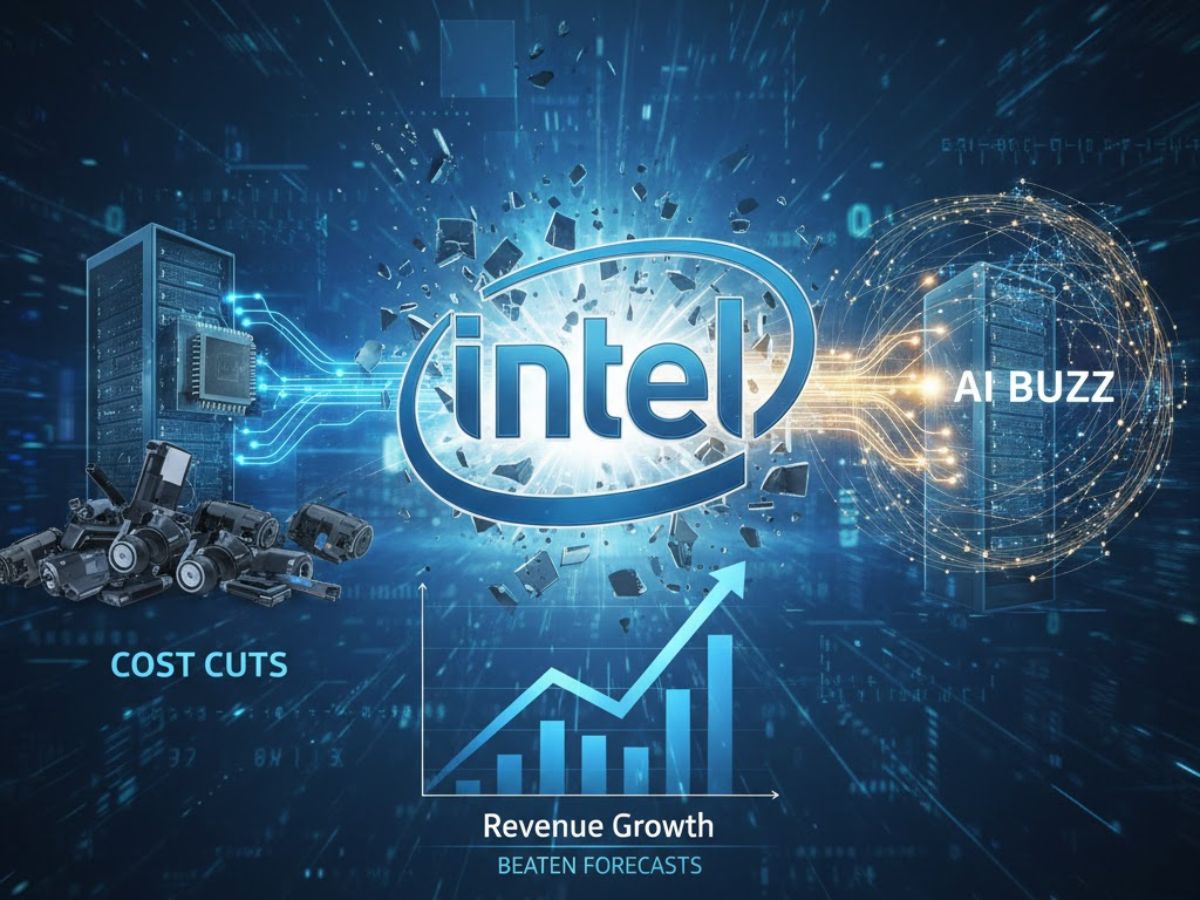
Intel (INTC) exceeded Wall Street’s profit expectations for the September quarter, sending shares up over 8% after hours. Strong results, driven by CEO Lip-Bu Tan’s cost-cutting, mark a key milestone. This is the first earnings report since major investments gave the company crucial support in a tough market.
A Surprise Profit and Improved Margins
So, how did Intel outperform expectations? The company posted an adjusted profit of 23 cents per share, dramatically beating the meager 1 cent per share analysts had forecast. Even more critical was the improvement in adjusted gross margins, which hit 40% compared to estimates of 35.7%. This margin expansion is a direct result of Tan’s drastic measures to shore up the company’s finances. With a workforce that is more than a fifth fewer than it was a year ago, the company is on course to complete the year with a major reduction in operating expenses.
Also Read: World Polio Day 2025: History of the Global Fight, Successes and Setbacks, the Future of Eradication
The $15 Billion Strategic Lifeline
What is fueling investor optimism beyond quarterly results? Intel has secured a massive cash infusion totaling $15 billion from powerful allies. This includes a $5 billion investment from its AI-chip rival Nvidia and $2 billion from Japan’s SoftBank, both received this quarter. The U.S. government also purchased a 10% interest for $8.9 billion, which was an unusual step. As a result of this financial support, Intel’s stock has increased by almost 90% in 2025, strengthening its balance sheet and indicating strong external trust in its turnaround plan.
Reversing Course on a Costly Strategy
Why were such deep cuts needed? CEO Tan’s strategy is a clear reversal of his ousted predecessor, Pat Gelsinger. Gelsinger’s ambitious and expensive plan to turn Intel into a contract manufacturer to compete with Taiwan’s TSMC led the company to its first annual loss since 1986. Tan has aggressively pared back these manufacturing ambitions, divested assets, and focused on core competencies. This shift away from a costly expansion is now showing positive results on the balance sheet.
Also Read: The Eternity of Israel Will Not Lie’: IDF Confirms Killing Noa Argamani’s Abductors
Strong Demand and a “High-Class Problem”
Is the demand for Intel’s chips still strong? According to Chief Financial Officer Dave Zinsner, demand was robust enough in the third quarter that the company is now “under shipping demand.” He explained that data center operators are realizing they need to upgrade their central processors (CPUs) to keep pace with advanced AI chips, which in turn boosts demand for Intel’s core products. Zinsner called the supply constraint a “high-class problem,” indicating that the company is selling more than it can immediately produce.