

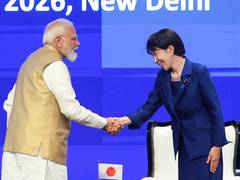
New Delhi [India], July 3 (ANI): India and Japan on Thursday unveiled a Joint Declaration on Economic Security Cooperation, agreeing to deepen collaboration across five strategic sectors – semiconductors, critical minerals, information and communication technology (ICT), clean energy and pharmaceuticals – while stepping up efforts to build resilient supply chains and counter economic coercion.
The India-Japan Joint Declaration on Economic Security Cooperation said the two countries would elevate their economic partnership by strengthening cooperation in critical technologies, supply chains and emerging industries.
“This declaration seeks to elevate our economic security partnership to a new level by providing strategic and practical guidance in a manner that strengthens, accelerates and reinforces India-Japan economic security partnership based on strategic autonomy and indispensability,” the declaration said.
The two countries also expressed concern over growing risks to global supply chains and unfair trade practices.
“Both sides reiterate their grave concerns over the use of economic coercion and non-market policies and practices (NMPPs), including arbitrary export restrictions that may lead to supply chain disruptions, particularly on critical minerals, and critical industrial sectors, and price manipulation,” the declaration said.
It added that India and Japan agreed on “the importance of maintaining a fair competitive global environment and establishing and safeguarding a resilient and reliable supply chain among like-minded partners to promote collective resilience.”
As part of the declaration, both countries committed to promoting project-based collaboration and public-private partnerships in five key sectors – semiconductors, critical minerals, ICT, clean energy and pharmaceuticals.
In semiconductors, the declaration said both sides will “strengthen and diversify supply chains in the manufacturing of semiconductors,” deepen cooperation in manufacturing, research, design and skill development, and welcome greater participation of Japanese companies under the India Semiconductor Mission 2.0 and Special Economic Zones (SEZs).
On critical minerals, the two countries agreed to promote technical cooperation between the Geological Survey of India and Japan Organization for Metals and Energy Security (JOGMEC) and establish an ecosystem for e-waste collection and recycling to improve recovery of critical minerals.
In the ICT sector, India and Japan agreed to facilitate business collaboration in advanced 5G technologies, All-Photonics Network (APN), data centres, submarine cables, Open RAN products and technologies beyond 5G and 6G.
The declaration also outlined an expanded agenda on artificial intelligence (AI), with both countries agreeing to “promote safe, secure, and trustworthy AI by fostering diversified, resilient, and trusted supply chains.”
Under the AI Strategic Dialogue and Economic Security Dialogue, the two countries will facilitate shared computing resources, support development of foundational AI models, promote talent exchange, collaborate on AI safety testing and governance, and address supply chain dependencies in AI technologies.
In clean energy, India and Japan agreed to jointly support a landmark clean ammonia project in Odisha while expanding cooperation in hydrogen, batteries, solar, nuclear energy, carbon credit trading, biofuels and biogas.
In pharmaceuticals, the declaration said both sides would explore alternative supply chains for Active Pharmaceutical Ingredients (APIs) and Key Starting Materials (KSMs), conduct supply chain vulnerability assessments and promote research collaborations in biopharmaceuticals and biosimilars.
Beyond the five sectors, the declaration said both countries would strengthen cooperation in critical and emerging technologies such as AI, quantum technologies, space science, supercomputing, advanced materials and data centres while promoting two-way talent mobility and deeper academic collaboration.
The declaration also noted that India-Japan economic security cooperation would complement broader multilateral efforts under the G7, G20 and Quad while contributing to greater economic resilience across the Indo-Pacific region. (ANI)
(The article has been published through a syndicated feed. Except for the headline, the content has been published verbatim. Liability lies with original publisher.)






