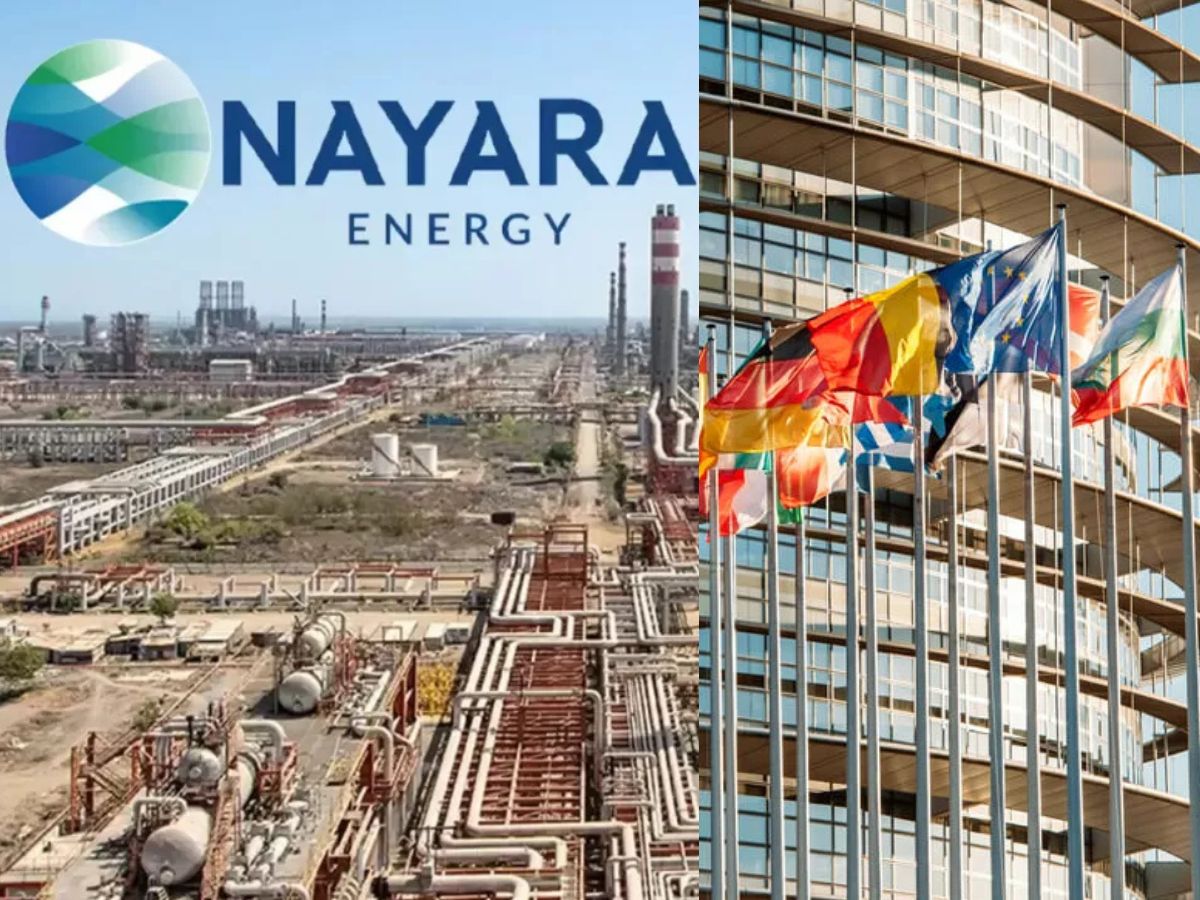
The European Union’s new sanctions—announced on July 18, 2025, as its 18th set against Russia—have caused shockwaves through India’s critical refining industry. For the first time, a large Indian refinery, Nayara Energy, has been listed because of its Russian connections, essentially prohibiting exports of petroleum products refined from Russian crude—even if it’s processed in India. This aggressive step by Brussels is being seen by Indian officials and energy executives alike as both a “bluff” and an overt threat to India’s energy security.
“Upfront Payments or No Transaction”, conditions Nayara Energy
Nayara Energy, which is partly owned by Russia’s Rosneft, quickly changed its commercial terms to international customers. The firm’s newest naphtha export tender, for 33,000–35,000 metric tons for August shipment, now demands advance payment or a documentary letter of credit prior to delivery—a departure from its typical open credit terms. Brokers cite this as a precautionary measure to shield cash flows since traders and shippers become increasingly cautious about transacting business with Nayara in the face of EU compliance risk.
The sanctions have compelled Nayara to reduce refinery runs to only 70–80% of capacity, a sharp reduction from more than 100% in previous months. Exporting difficulties have led to storage bottlenecks, with a minimum of two tankers skipping planned loading and Russian crude shipments being diverted, as reported by various trade sources. The firm, which owns India’s third-largest refinery and directly generates near 8% of national capacity, is now facing stern questions regarding the long-term sustainability of its overseas sales.
Indian Government: Retaliation and “Double Standards” Charge
India’s official reaction has been strong and blunt. India’s Ministry of External Affairs criticized the EU for “unilateral actions” and “double standards” regarding energy security, reiterating that New Delhi does not accept sanctions enforced outside United Nations contexts. “There should be no double standards, particularly when it comes to dealing with energy trade,” said a senior Indian foreign ministry official. Government officials reiterated that a secure energy supply for its 1.4 billion people is “a responsibility of the highest importance.”
New Delhi has also said that Indian refiners will expand their buyer base and look for new markets for exports if they are prevented from selling into Europe, taking a “don’t blink first” message to Brussels. Experts say that Europe’s own consumption of diesel and jet fuel may recover in winter, which would be tough to sustain in reality by imposing a complete embargo.
Wider Impact and Forward Path
The EU’s action is regarded by specialists as a step-up in the energy stand-off but not likely to have significant macroeconomic effects. India’s refining giants such as Reliance will switch shipments to Asia, Africa, and Latin America, though at slightly reduced profit margins. Sales of diesel and gasoline in India are strong domestically, softening the impact further.
Rosneft, in support of Nayara, has criticized the restrictions as “unjustified and illegal,” blaming the EU for breaching international law and India’s sovereign interests.
For the moment, the standoff highlights a new sore point in international energy politics as India digs in its heels, Nayara constructs financial bulwarks, and Europe struggles with the practical constraints of its sanctions regime. The next few weeks will prove who gives in first as flows, markets, and diplomatic ties adjust accordingly.