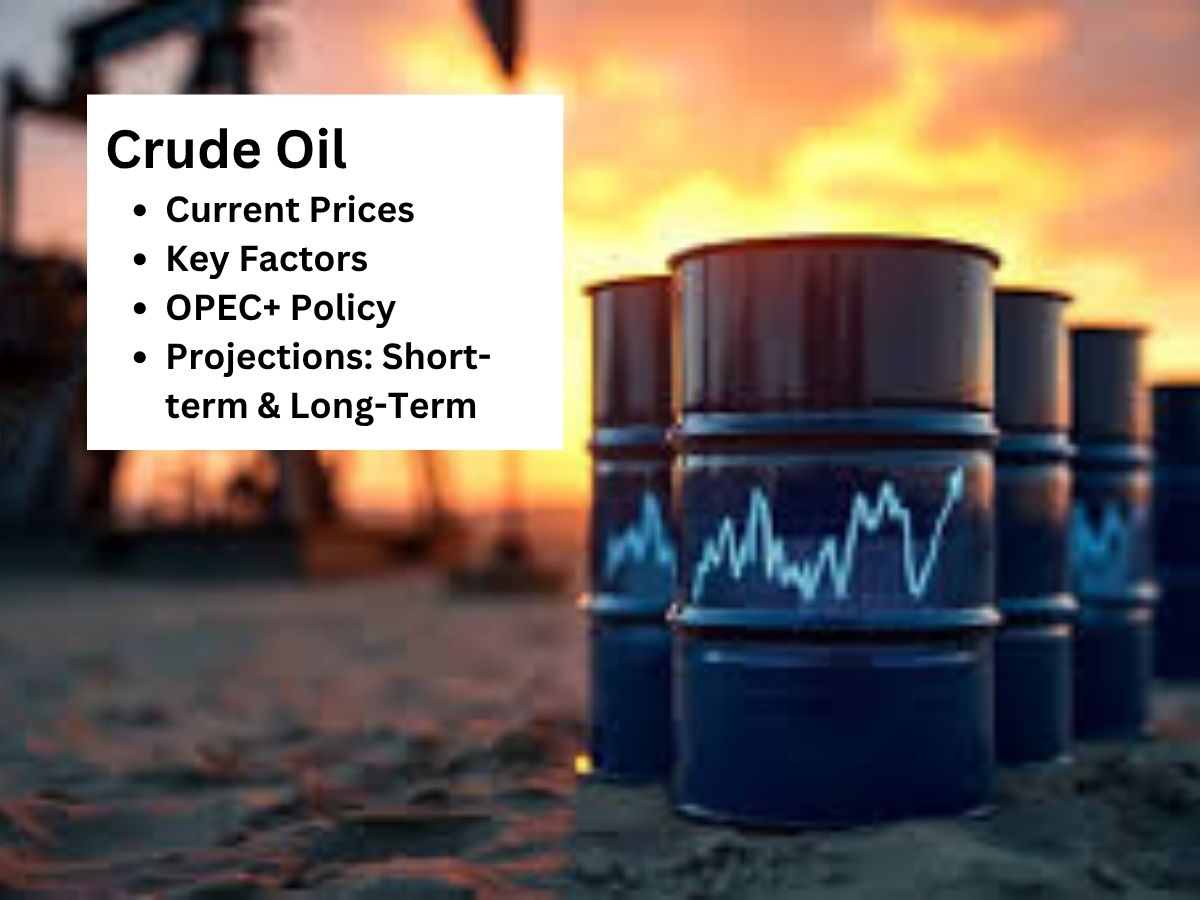
The prices of crude oil have remained under considerable pressure recently, reaching five-month lows as concerns regarding global oversupply and weak demand. WTI crude stays recorded at $58.88 a barrel and Brent crude at around $62.67, marking a significant year-on-year fall of 16-18%.
Key Factors Pushing Crude Prices Down
- Supply Glut Fears: The International Energy Agency (IEA) predicted a huge global oil surplus of as much as 4 million barrels per day by 2026, about 4% of global demand. The oversupply is due to OPEC+ nations unwinding production curbs more rapidly than expected. Saudi Arabia and Russia said they would double their November production boost to 137,000 barrels a day, heightening concerns of stockpiling.
- Strong Non-OPEC Production: U.S. crude output continues to be strong, with production slated to reach a 2025 record of approximately 13.59 million barrels a day. Robust growth from the Americas, particularly from Canada and Brazil, is again contributing to pressures on supply worldwide. U.S. crude inventories jumped 7.4 million barrels last week, the biggest weekly gain since July, adding to demand worries.
- Weak Demand Growth: The IEA has reduced its global oil demand growth forecasts to around 700,000 barrels a day for both 2025 and 2026, lower than previously estimated. Weaker-than-anticipated economic rebound in large consuming countries, sticky high interest rates, and recurring U.S.-China trade tensions continue to obscure the consumption outlook.
- U.S.-China Trade Tensions: Increasing trade tensions between the world’s two biggest economies are further worrying about the outlook for oil demand. Extra U.S. port tariffs and Chinese export controls on Chinese products have taken a big toll on market sentiment. Uncertainty in trade has cooled manufacturing output and industrial activity, lowering fuel consumption forecasts.
- OPEC+ Policy Shifts: OPEC+ started unwinding 2.2 million barrels a day of voluntary cuts in April 2025 and sped up the timeline to eliminate the majority of the restrictions by September 2025. Regardless of good compliance throughout the pact, the more rapid-than-anticipated production recovery has built downward pressure on prices as inventories worldwide keep adding up.
Expert Forecasts and Market Outlook
Short-Term Projection (Q4 2025): The U.S. Energy Information Administration (EIA) predicts that Brent crude will be averaging close to $62 per barrel during Q4 2025 with possible lows to $58 per barrel by the end of 2025. WTI crude is predicted to stay in the late-$50s by year-end. A Reuters survey of 31 analysts forecasts WTI will average $64.65 per barrel in full-year 2025, with Brent averaging $68.20.
Long-Term Outlook (2030 and Later): The EIA and Fitch Ratings expect prices to stabilise at $60-$73 levels up to 2030, underpinned by balanced demand growth in developing countries in the face of energy transition pressures. McKinsey’s equilibrium model, however, has updated long-term oil price projections downward to $50-$60 per barrel, blaming this to flat cost curves for production and the speedup in renewable energy and electric vehicle uptake.
Investment Implications for India
Lower prices are a mixed blessing for India, which imports more than 80% of its crude oil needs. Low oil prices can help address inflationary pressures, enhance the current account deficit, and make the rupee stronger. Several industries like aviation, paints, transportation, and petrochemicals gain from cheaper input prices. On the other hand, explorers and refiners could suffer margin erosion due to persistent price weakness.
Nutshell
Market analysts warn that while short-term volatility will likely continue due to geopolitical events and inventory release announcements, the underlying bearish trend based on oversupply and low demand growth will continue to overrule crude oil markets during 2026. Investors need to keep a close eye on OPEC+ compliance, U.S. production trends, and worldwide inventory levels to watch for evidence of market rebalancing.