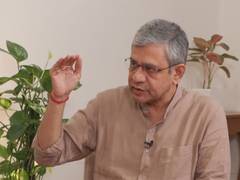
New Delhi [India], June 8 (ANI): India may be a relatively new entrant in semiconductor manufacturing compared to Taiwan and South Korea, but widespread adoption of artificial intelligence (AI) across sectors and the next phase of the country’s semiconductor mission will help it build a strong position in the global technology landscape, Union Minister for Electronics and Information Technology Ashwini Vaishnaw said on Monday.
In an exclusive interview with ANI, Vaishnaw said comparisons with countries that have spent decades building semiconductor ecosystems should be viewed in the proper context.
“Korea has had a very strong semiconductor industry for decades. Taiwan practically 40 percent of the economy comes from electronics and semiconductors. These countries have built that entire ecosystem over four-five decades. We started this journey few years ago. So, certainly the comparison with those countries on the semiconductor or the AI field would suddenly be I would say not very accurate,” he said.
The minister, however, emphasised that AI adoption across industries could become a major advantage for India.
“The countries which use AI for increasing their productivity, the countries which have huge amount of AI diffusion, they are the ones which are going to have significant benefits coming from this new wave of technology,” Vaishnaw said.
According to him, AI is already being used across sectors in India. He said industries are increasingly using AI models and tools made available under the government’s AI Mission.
“From what I hear from the industry, practically every sector in India is today using AI in a very big way,” he said, adding that around 700 small AI models have been made available free of cost through the AI Mission.
Highlighting progress under the Semiconductor Mission, Vaishnaw said India has already started commercial semiconductor production at two facilities.
“These are the first two chips which are commercially manufactured in India. This one is Micron which started commercial production on 28th February 2026. And this is chip by Kaynes which started commercial production 31st March this year,” he said.
According to the Minister, 12 semiconductor plants have been approved under the mission, of which two have started commercial production. A third facility, CG Semi, is expected to begin commercial production in July, while four units are expected to be operational by the end of this year.
Vaishnaw also outlined the priorities for the upcoming Semicon 2.0 programme.
“In the first version of the semiconductor machine, we could get about 40 startups which design semiconductor chips and they are getting VC funding now. That is the deep tech part of the startup world and it has made very good progress. In Semicon 2.0, we would have design as the number one priority, design number one priority,” he said.
Defending the broader Make in India programme, Vaishnaw said India’s electronics sector has expanded significantly over the last decade.
“Our electronics production has grown six times in the last decade and exports have grown eight times in the last decade,” he said.
According to the Minister, electronics emerged as India’s third-largest export category in 2025, while mobile phones became the country’s single-largest exported item last year.
He added that around 25 lakh new jobs have been created in the electronics sector in recent years.
Looking ahead, Vaishnaw said global interest in India’s electronics and semiconductor ecosystem is growing rapidly.
“The world certainly will be coming up in much larger numbers in the second version,” he said, referring to Semicon 2.0 and future investments in India’s semiconductor ecosystem. (ANI)
(The article has been published through a syndicated feed. Except for the headline, the content has been published verbatim. Liability lies with original publisher.)