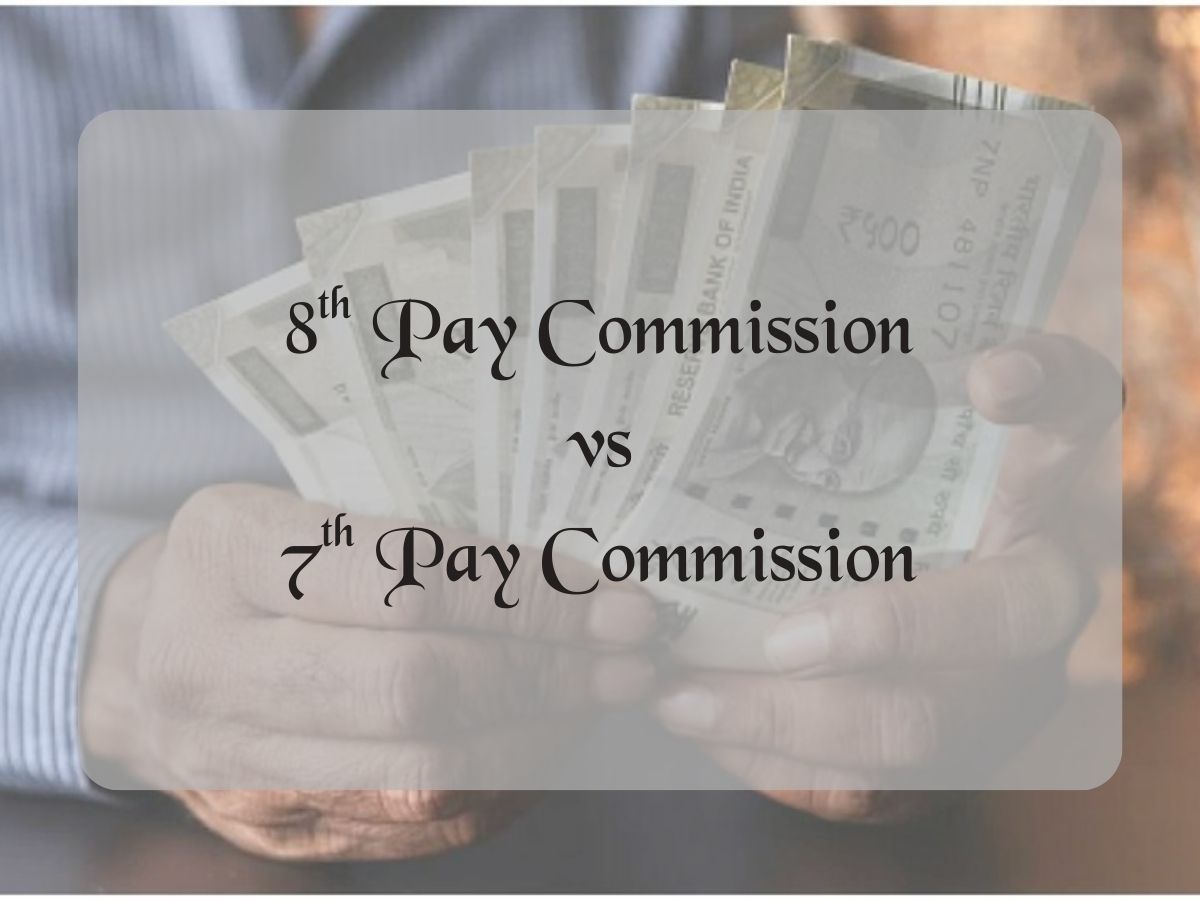
The 7th Pay Commission and upcoming 8th Pay Commission play a crucial role in defining the structure of salaries and pensions for central government employees and pensioners in India, impacting millions of people and families across the country. Their comparison shows major changes towards controlling inflation, altered economic conditions, and employee benefits.
7th Pay Commission vs 8th Pay Commission: Implementation Timeline and Coverage
The 7th Pay Commission came into effect on January 1, 2016, for more than 50 lakh central government employees and some 65 lakh pensioners by revising the salary, pension, and allowances. Its term runs through December 2025. The 8th Pay Commission has also been approved in early 2025, with the recommendations likely to be effective from January 1, 2026, continuing to affect the same population segment.
ALSO READ | EPFO 3.0: The Much-Awaited Overhaul May Arrive Soon..
7th Pay Commission vs 8th Pay Commission: Fitment Factor
One of the key features of every pay commission is the fitment factor, a factor over the existing basic pay which is used to multiply in order to recalculate. The 7th Pay Commission established this at 2.57, which increased minimum basic pay from ₹7,000 to ₹18,000. According to reports, the 8th Pay Commission is expected to suggest a fitment factor of 2.28 to 2.86, and hopes that the lowest basic pay will rise to between ₹41,000 and ₹51,480, representing a possible hike of more than 100% at the bottom.
7th Pay Commission vs 8th Pay Commission: Salary Hike and Pension Revision
The 7th Pay Commission resulted in a 23% mean salary increase and increased pensions from ₹3,500 to ₹9,000 per month. It also brought in a transparent pay matrix to rationalise the pay design. The 8th Pay Commission is expected to provide an increase of 20%-35% salary, based on the selected fitment factor and grade, considerably enhancing the economic well-being of government servants. Pension amendments under the 8th Pay Commission are expected to be stronger, with higher minimum values and more regular payments.
ALSO READ | Indian Exports worth $10 bn from this segment stand Tariffs-Exempted
7th Pay Commission vs 8th Pay Commission: Allowances, DA, and Welfare Measures
The 7th Pay Commission revised several allowances, including Dearness Allowance (DA), House Rent Allowance (HRA), and Travel Allowance (TA) to match economic conditions and introduced a health insurance scheme. Its DA, however, concluded at 58%, lower than in previous commissions. Under the 8th Pay Commission, DA will be brought down to zero and then re-calculated with the new basic pay, which could lead to a slightly lesser effective hike in the early phase, but the consolidation with basic pay will ultimately prove advantageous to employees.
ALSO READ | 8th Pay Commission: The Delay in the Notification Raises Eye-brows
7th Pay Commission vs 8th Pay Commission: Nutshell
In short, whereas the 7th Pay Commission had witnessed a significant increase in salaries, pensions, and allowances, the 8th Pay Commission is going to provide a much greater boost with minimum basic pay almost doubling and strong provisions for welfare and inflationary adjustment. The changing fitment factor and new pay matrix are likely to make government employees keep up with economic growth as well as increasing living expenses.