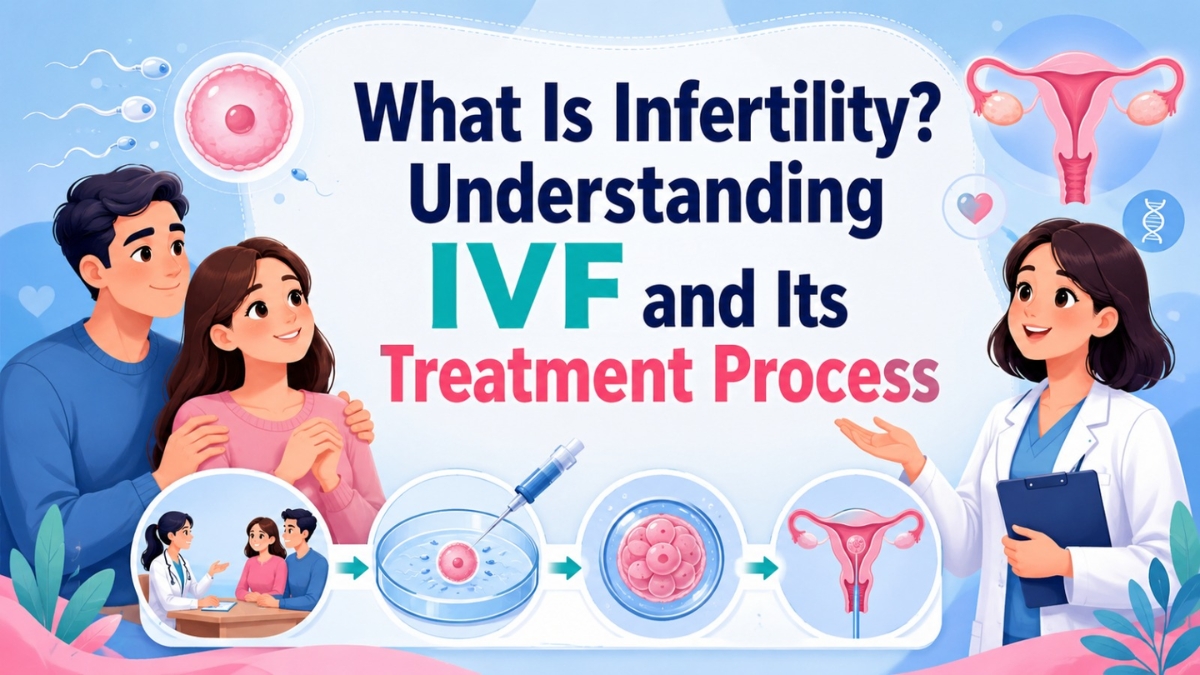
Starting a family is an important decision, but pregnancy does not always happen as quickly as expected. Some couples conceive within a few months, while others may need more time or medical support. When pregnancy does not occur after regular, unprotected intercourse for a certain period, fertility evaluation may be recommended.
Infertility can affect either partner, and in some cases, factors involving both partners may contribute. Age, reproductive health, lifestyle, hormone levels and certain medical conditions can all influence fertility. Understanding the possible reasons behind difficulty conceiving is the first step towards choosing an appropriate treatment.
People who have been trying to conceive without success can consider consulting a fertility specialist at the best IVF centre in Punjab for evaluation and personalised guidance. Depending on the diagnosis, treatment may range from lifestyle changes and medication to assisted reproductive techniques such as IVF.
What Is Infertility?
Infertility generally refers to difficulty achieving pregnancy despite having regular unprotected intercourse. It does not necessarily mean that a couple can never have a child. Many fertility problems can be managed once their underlying cause has been identified.
Female fertility may be affected by ovulation problems, blocked fallopian tubes, endometriosis, reduced ovarian reserve or abnormalities involving the uterus. Age is another important factor because both the number and quality of eggs naturally decline over time.
Male infertility can be related to low sperm count, reduced sperm movement, abnormal sperm shape, hormonal problems or conditions affecting sperm production and delivery.
Sometimes, routine fertility tests do not reveal a clear reason for the problem. This is commonly described as unexplained infertility.
What Is IVF Treatment?
IVF stands for In Vitro Fertilization. It is one of the most commonly known forms of Assisted Reproductive Technology, or ART.
During IVF, eggs are collected from the ovaries and fertilised with sperm in a laboratory rather than inside the woman’s body. The fertilised eggs are monitored as they begin developing into embryos. Depending on the treatment plan and embryo development, a suitable embryo may then be transferred into the uterus.
After embryo transfer, time is allowed for possible implantation. A pregnancy test is performed later to determine whether the treatment has resulted in pregnancy.
IVF is not a single procedure. It involves several carefully planned stages, and every patient’s treatment schedule may be slightly different.
Why May IVF Be Recommended?
A fertility specialist may consider IVF when natural conception is difficult or when other fertility treatments have not been successful.
Some situations in which IVF may be considered include:
- Blocked or damaged fallopian tubes
- Ovulation-related fertility problems
- Endometriosis
- Reduced ovarian reserve
- Low sperm count or poor sperm quality
- Certain problems affecting the uterus or reproductive system
- Risk of passing specific inherited conditions
- Unexplained infertility
- Fertility preservation in selected situations
IVF may also form part of a fertility plan for individuals or couples who require donor eggs, donor sperm or other assisted reproductive options, depending on their circumstances and applicable medical guidance.
The decision to undergo IVF should ideally be made after discussing test results, available alternatives, expectations and possible outcomes with a fertility specialist.
What Happens During the IVF Process?
Although treatment differs from person to person, IVF commonly involves several stages.
Ovarian Stimulation
Medicines may be prescribed to encourage the ovaries to develop multiple eggs during one treatment cycle. The ovaries are monitored through scans and, when required, blood tests.
Egg Retrieval
When the eggs have developed sufficiently, they are collected from the ovaries during an egg retrieval procedure performed under medical supervision.
Fertilisation
The collected eggs are combined with sperm in the laboratory. In certain cases, a technique called ICSI, in which a single sperm is introduced into an egg, may be considered.
Embryo Development
Fertilised eggs are monitored over the following days as they develop. The fertility team assesses embryo development before deciding which embryo may be suitable for transfer or freezing.
Embryo Transfer
A selected embryo is placed into the uterus. The procedure is generally straightforward and is performed according to the patient’s individual treatment plan.
Pregnancy Testing
A pregnancy test is usually performed after an appropriate waiting period following embryo transfer. The fertility specialist may recommend further testing or scans if pregnancy is confirmed.
How Should You Prepare for IVF Treatment?
Preparation for IVF starts well before egg retrieval. Both partners may undergo fertility testing so that the doctor can understand the possible cause of infertility and plan treatment accordingly.
Your evaluation may include:
- Medical and reproductive history
- Semen analysis
- Ovarian reserve assessment
- Ultrasound examination
- Blood and hormone tests
- Screening for certain infections
- Genetic testing when medically indicated
Lifestyle also deserves attention. Maintaining a balanced diet, getting regular physical activity, sleeping adequately and managing stress can support general reproductive health. Smoking should be avoided, and alcohol intake should be discussed with your healthcare provider.
People with existing conditions such as thyroid disorders, diabetes or hormonal problems should also discuss their health management with their doctor before beginning fertility treatment.
How Long Does IVF Treatment Take?
An IVF cycle usually involves several weeks of appointments, medication, monitoring, egg retrieval, fertilisation and embryo transfer. The exact duration depends on the treatment protocol and the patient’s response to medication.
Some patients may require more than one treatment cycle. IVF outcomes can vary considerably according to age, egg and sperm health, embryo quality, underlying fertility problems and other individual factors. For this reason, no fertility treatment can guarantee pregnancy.
Conclusion
Infertility can be emotionally challenging, but difficulty conceiving does not mean that there are no options available. Modern fertility evaluation can help identify possible causes and guide couples towards treatments that are suitable for their situation.
IVF is an advanced fertility treatment in which eggs and sperm are brought together in a laboratory before a developing embryo is transferred into the uterus. Whether IVF is the right option depends on your medical history, age, test results and reproductive goals.
If you have been trying to conceive without success, consulting an experienced fertility specialist at an IVF Centre in Punjab can help you understand your fertility health and explore appropriate treatment options. A personalised medical assessment, realistic expectations and the right support can make the fertility journey better informed and easier to navigate.