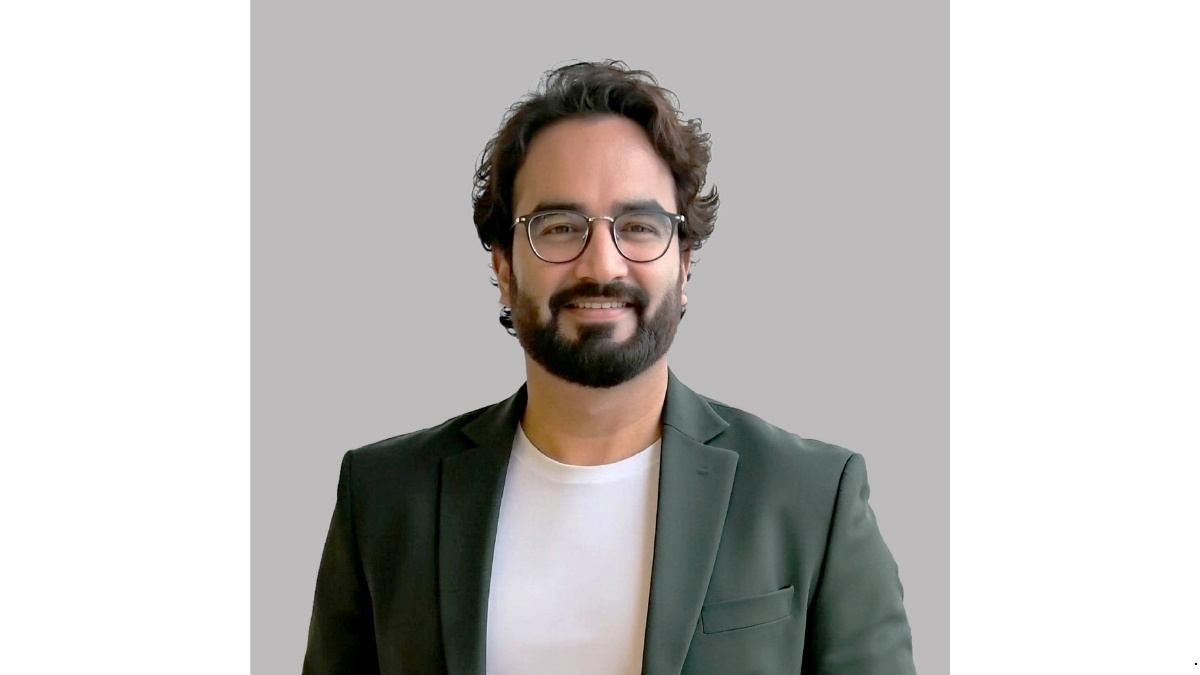
Every year, Indian universities spend more to fill the same number of seats. Digital ad costs have climbed and admission cycles that once ran on word-of-mouth now run on performance marketing budgets that keep growing without a matching rise in returns. It is against this backdrop that Ankit Khare has built his second act in the education business — not as another marketing vendor promising more leads, but as someone trying to convince universities that leads were never the problem in the first place.
Khare’s relationship with the sector goes back to 2012, when he co-founded Unipro Education, a digital marketing company built exclusively around the needs of schools, colleges, and universities. The business ran for nearly 14 years before merging with CollegeDekho, one of the country’s larger higher-education platforms. Khare stayed on as Chief Business Officer for the vertical for close to three years — a stretch that put him inside the machinery of large-scale student recruitment at a level most consultants never see.
It was what came after that reshaped his thinking. A consulting assignment with a Bengaluru-based online education technology company put Khare face to face with a recurring problem: universities that had regulatory approval to run online degree programmes but no real way to build or scale them. They had the permission; they didn’t have the machinery. In that gap, Khare saw the outline of a business.
That business became UniBridge Consulting, launched in 2025 with a small founding team. Its premise is deliberately narrow: don’t just tell universities what to fix, stay and fix it. UniBridge calls this a Build, Operate, Transfer model. Where a university has approval but no functioning online programme, UniBridge builds one from scratch. Where a university has approval but no functioning online programme, UniBridge builds one from scratch. Where a programme already exists but is underperforming, UniBridge operates and strengthens it, then continues working alongside the institution’s own team as an extended growth partner. The firm now operates from Pune, Bengaluru, and Gurgaon, working across marketing, admissions, CRM systems, and technology infrastructure — not as separate services, but as parts of one growth engine.
What sets Khare apart from the standard admissions-consulting playbook is his insistence that enrollment numbers, on their own, mean almost nothing. A university moving from 5,000 to 10,000 admissions looks, on paper, like a success story. Khare’s question is blunter: what did each of those students cost to acquire, and did the programme they enrolled in actually make money once that cost is accounted for? Most institutions, he has found, cannot answer that question with any precision — because nobody is tracking customer acquisition cost against programme-level profitability in the first place.
UniBridge’s fix is unglamorous but effective: mapping acquisition cost across every channel and programme, and feeding those numbers directly into a university’s profit-and-loss statement. The institutions that do this, Khare argues, stop optimising for the number that looks good in a board presentation and start optimising for the one that actually protects their margins. Across its client engagements, UniBridge points to admissions or revenue growth of close to 30 percent, alongside profitability gains of 20 percent or more in some cases — evidence, Khare says, that discipline and growth are not opposing forces.
Having worked with over 200 universities, Khare is now watching the sector split into two camps: a small group moving quickly toward structured, AI-enabled operations, and a much larger group still running on manual processes and instinct. UniBridge’s newest bet is on artificial intelligence — using it to follow up with and nurture leads at a speed no human counselling team can match. But the underlying philosophy hasn’t changed since his Unipro days: technology is only useful if it sits inside a process someone has actually thought through.
For Khare, the future of Indian higher education won’t be won by whichever institution shouts its admission numbers the loudest. It will belong to the ones willing to ask the less comfortable question — what did that growth actually cost — and build the systems to answer it honestly.