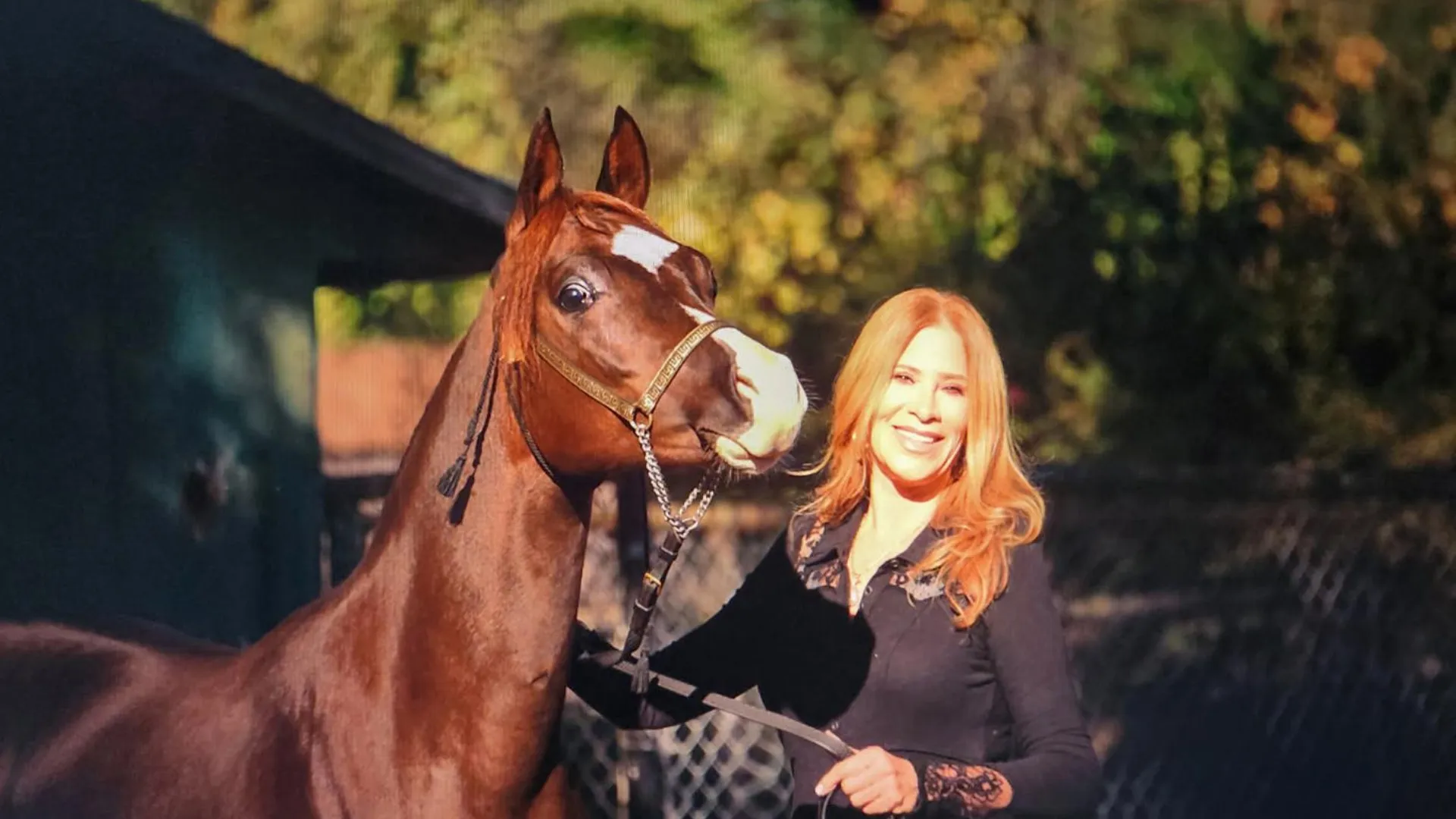
For philanthropist and former radio host Ann Lesley Smith, true purpose came to her later in life. As she enters her seventies, an affinity for horses has led her to discover some life lessons and simple truths.
One horse in particular, Smith’s prized Arabian stallion Amir Fadjur Salaam, has been especially inspirational. A direct descendant of The Fabulous Fadjur, one of the most celebrated Arabian horses in recent history, Amir carries a storied legacy that has been an engine for Smith’s dreams and ambitions.
Like many people, Smith’s life has been a series of highs and lows. When her husband, musician and mogul Chester Smith, passed away in 2008, she retreated to the California equestrian estate they had shared, finding solace and serenity among the vineyards and collection of free-roaming Arabian horses. When Amir came to the estate, Smith found a renewed purpose and insight into finding peace that she never expected.
Motivated by Amir’s unique empathy and understanding — a calling card for the Arabian breed — Smith decided to open up her estate to others in hopes of helping them find the peace and clarity she discovered through her connection with Amir and communion with the land.
The special bonded relationship between human and horse
Humans and horses have always had a working relationship throughout history. Horses have carried humans into battle, helped them traverse lands far and wide, and provided the muscle behind building farmland and cities. But it is the Arabian horse that stands out among the rest for its distinctive personality. Bred over thousands of years by Bedouin tribes to be more companion than workhorse, Arabian horses have been given as gifts symbolizing goodwill between nations and used in equine therapy in modern times.
“When you look at Amir, you can see it in his eyes. He understands you,” says Smith. “Arabian horses have a human-like empathy that is unlike any other animal.”
When people come to Smith’s estate seeking rest and a break from the hustle and bustle of daily life, they can spend time with horses like Amir and her other Arabians. The authenticity of the animals can often be what is most transformative for guests at her estate.
“We live in a world that can be very synthetic. A lot of our interaction is online, and AI is becoming more popular. We are used to the artificial,” Smith explains. “People are not used to the authenticity that Arabian horses bring to the table. It can be life-changing.”
By riding the horses or simply observing them roam freely around Smith’s estate, people can learn a bit about being still, quiet, and embracing empathetic relationships.
A lesson for a technological era
In addition to being symbols of peace and goodwill, Smith strongly believes Arabian horses could be viewed as a “workbench” for modern technology developers.
“Today’s assistive AI technology is incredible, but developers still haven’t quite figured out how to give that technology empathy and true human connection abilities,” she says. “If the Bedouin tribes thousands of years ago could figure out how to instill those attributes into Arabian horses, I think looking at these horses could be beneficial for today’s developers.”
Smith imagines a future where AI assistants not only help people with tasks but also act as emotionally aware companions, just like Arabian horses have been for thousands of years.
Lessons in kindness, listening, and love from an Arabian horse
The primary lessons Smith wants to take away from her connection with Amir and her other horses are that peace, serenity, and kindness are possible, even in times that may seem hopelessly divided. For Smith, empathy is not a novel concept, but one that could be life-changing for the people who visit her estate and for people around the world.
“I often turn to Amir for empathetic support when the world gets too heavy,” she says.
Ultimately, the connection between Smith and her stallion Amir illustrates how life lessons can sometimes be found in the most unexpected places. They can emerge in the quieter moments in life, between the noise, the bustle, the technology, and the often synthetic interactions we have day to day.
For Smith, her horses have been a personal source of healing as well as a model for how she would like to live her life going forward — with more understanding and empathy. Whether it’s guests coming to her estate for a much-needed rest or it is a developer seeking to change the face of AI technology, Arabian horses like Amir offer an invitation to slow down, to pay attention, and to live our lives with more authenticity.