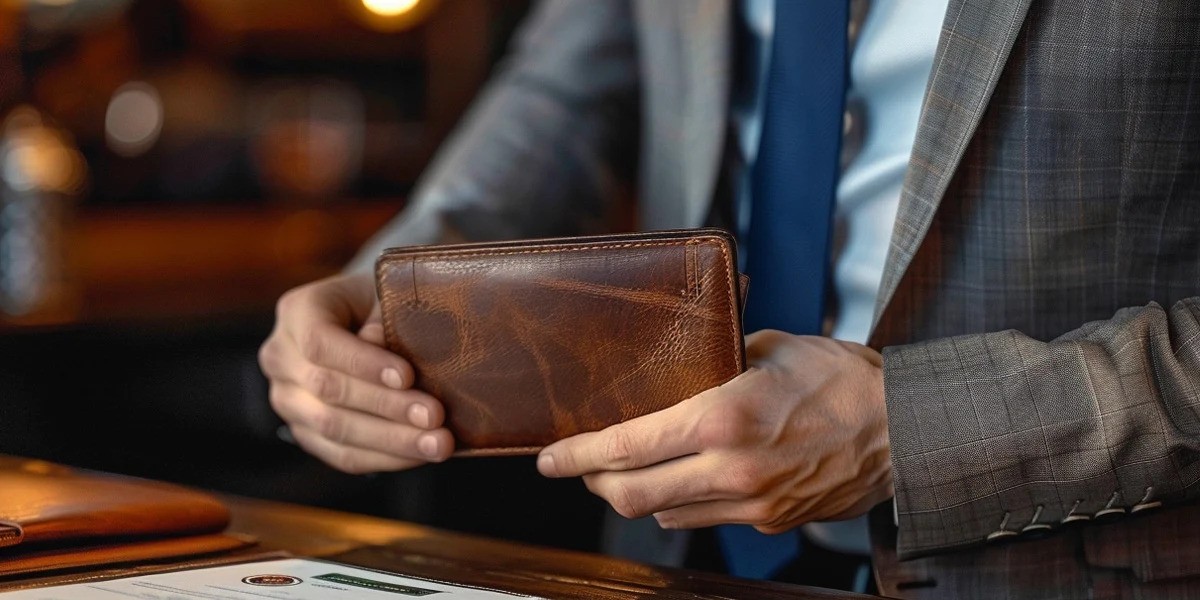
The right wallet should last ten years or more. However, most people throw theirs away every two or three. The difference comes down to leather quality, stitching method, hardware, and a few simple durability checks you can run in any store or online.
What if the wallet sitting in your pocket right now is silently costing you hundreds of dollars over your lifetime? Cheap wallets fall apart, get replaced every couple of years, and end up costing you more than one quality piece.
A real leather wallet built to last is the smartest small investment you can make for your daily life.
How Can I Pick the Right Wallet That Lasts for Decades?
A wallet built for decades comes down to material, construction, and maker transparency. Use this checklist before any purchase:
● Full grain leather only: Never bonded, genuine, or top grain layered with synthetics.
● Tight, even stitch spacing: Uneven gaps signal cheap mass-production shortcuts.
● Burnished or hand-finished edges: Raw or painted edges crack and peel within months.
● Strong metal hardware: Solid brass, copper, or stainless steel rather than plated alloys.
● Maker transparency: Clear sourcing details on tannery, hides, and country of origin.
A great example of a wallet built around all of these durability principles is the Houstonian long wallet by Bull Sheath Leather. It’s made from American full-grain leather and carries a lifetime guarantee. This kind of warranty is rare and shows that the maker is willing to stake their whole business on the build quality.
What Materials and Construction Methods for Your Wallet Matter?
Most wallet shoppers focus on style and miss the structural details that determine how long the wallet actually lasts. Full-grain leather is the strongest grade available.
A wallet made with full-grain leather includes the outermost layer of the hide, complete with natural fiber density and grain character. This layer is what develops patina over the years of use.
Construction also matters. Saddle stitching uses two needles working from opposite sides, locking each stitch independently. If one thread breaks, the wallet holds together, unlike wallets made by chain-lock machine stitching used in mass production.
Edge finishing is the third important pillar. Wallets with burnished or beeswax-treated edges seal the leather against moisture and friction, while raw cut edges fray and crack with daily wear.
Quick at-home durability tests to run on your wallet include:
● Bend test: Fold the wallet sharply and watch for cracking or whitening at the crease.
● Smell test: Full-grain leather smells rich and earthy, not chemical or plastic-like.
● Stitch tug: Gently pull at a stitch end and check for resistance and even tension.
● Edge scratch: Run a fingernail along the edge and look for paint flaking or fiber shedding.
● Patina forecast: Flex the leather to see if natural color variation appears under stress.
These five tests take 60 seconds and tell you more about a wallet’s lifespan. Try these tests to help you pick the right wallet.
How Is Luxury Fashion Shifting Toward Better-Built Wallet Pieces?
The wallet market is just one corner of a much bigger movement reshaping how consumers think about everyday accessories. The shift across luxury fashion is moving away from fast trends and toward a buy-less, buy-better mindset. Consumers are now looking into craftsmanship, longevity, and maker transparency before buying wallets.
Independent leather workshops, handmade craft houses, and small-batch artisans are taking real market share from mass-production brands. Buyers know that paying more once beats paying less repeatedly. The same logic shaping bespoke tailoring and heritage menswear is reshaping how serious buyers approach wallets, belts, and bags.
What Does the Modern Wallet Market Look Like?
The wallet market is bigger and more competitive than most shoppers realize. According to Market Growth Reports, the global leather wallet market was valued at $50.3 billion in 2026. This trend continues to grow as buyers shift toward premium, long-lasting pieces over disposable alternatives.
The growth tells you the disposable wallet era is ending. Premium independent wallet makers are winning more shelf space, online attention, and consumer loyalty. If you’re a buyer, you have to learn how to filter real quality from clever marketing when you’re looking for a wallet.
Buy the Right Wallet for Your Needs
The right wallet is one of the few accessories you’ll touch every single day. The one you choose says something about how you handle your money, your time, and your standards. A cheap wallet can negatively affect your style.
On the other hand, a well-made quality shows you have good taste and an eye for things that last. To get more tips on buying quality products, subscribe to our newsletter.