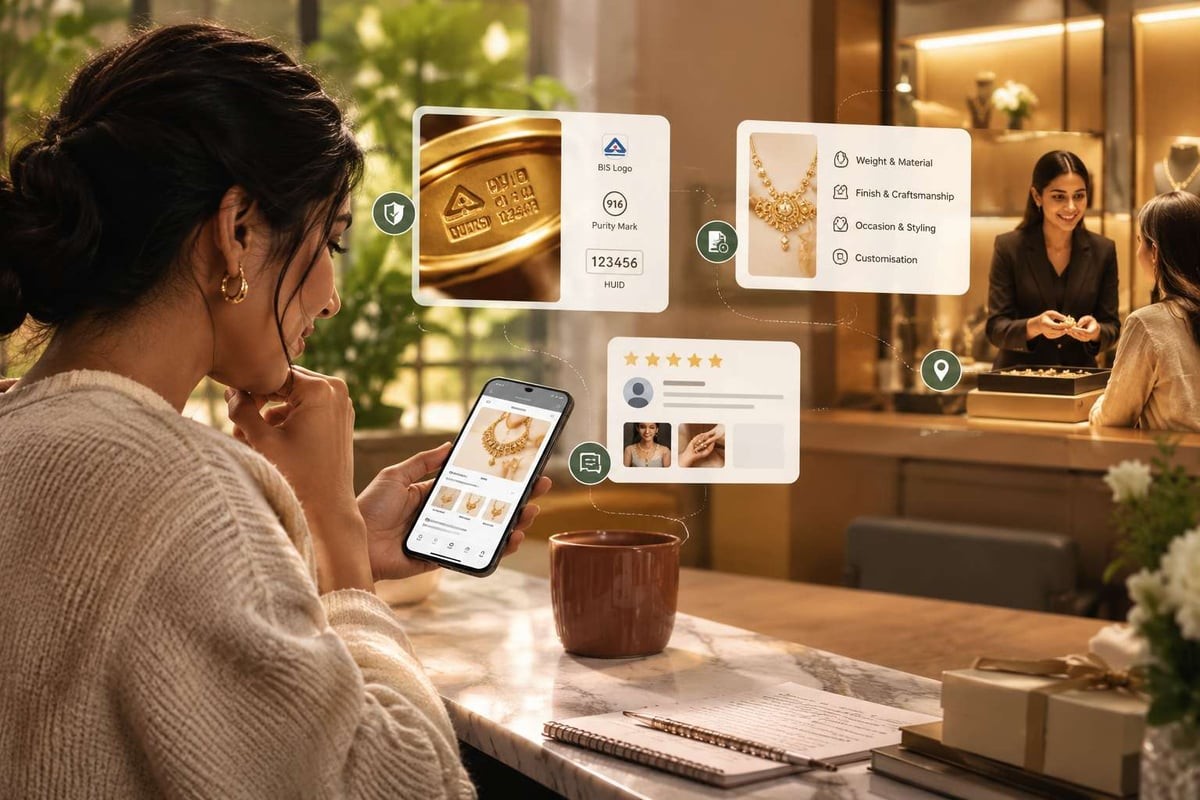
A customer may save a necklace from an Instagram post, compare it with two others and ask a relative for an opinion before deciding to visit a showroom. What a jewellery brand does during that interval can decide whether it earns serious consideration.
Trust Goes Beyond Attractive Photographs
Good photographs create awareness. They rarely settle a buyer’s concerns about purity, price, craftsmanship and the seller’s reputation. Behaviour varies with occasion, budget and product category, so no single pattern fits every customer, but the pre-purchase stage clearly matters. In KPMG India’s CX Report 2025 on fine jewellery, 47 per cent of surveyed customers named that stage as the most impactful in shaping their experience with a brand. The figure describes that survey sample, not every Indian buyer.
Make The Important Details Easy To Find
Make the Important Details Easy to Find
Authenticity comes first. The Bureau of Indian Standards (BIS) says a gold jewellery hallmark carries three marks:
- BIS logo: Identifies the BIS hallmark.
- Purity mark: Shows the gold’s carat and fineness.
- HUID: A unique six-digit alphanumeric code customers can verify through the BIS Care app.
Jewellers can build confidence by explaining these marks online, showing where to find them on a piece and clarifying the details included on the invoice.
Since mandatory hallmarking requirements can vary by district, jewellers should check the latest BIS notifications. A photograph of a hallmark helps customers know what to look for, but it does not replace genuine certification.
Product photographs need useful details too: Customers need more than an attractive image to make an informed decision. They may want to know:
- Weight and material: What is the piece made of and how much does it weigh?
- Finish and craftsmanship: What makes the design distinctive?
- Occasion and styling: Is it suitable for a wedding, everyday wear or gifting?
- Customisation: Can the design be adjusted to suit their preferences?
The KPMG India CX Report 2025 on Fine Jewellery also highlights pairing suggestions, detailed product information, clear terms and easy store discovery as important parts of the pre-purchase experience.
A well-organised website with clear product details, accurate store information and simple visit or appointment options helps customers move from browsing to considering a visit.
Make Customers Feel Valued Before They Arrive
“In jewellery, the decision to buy often begins long before a customer enters the showroom. The brands that understand this use digital platforms to do more than showcase products. They answer questions, build confidence and give customers a reason to choose them. Attention is easy to win for a moment. Earning trust before the first visit is what creates a real business advantage.”
Says Vasim Samadji, Co-founder of Flora Fountain, an Ahmedabad-based digital marketing agency that works with multiple jewellery brands.
In practice, this means letting customers browse by occasion and budget, which shows the brand listened. It means product details that explain material, craftsmanship and variations, and replies that are patient and clear, with a styling idea or recommendation that fits the occasion.
One survey respondent said a brand’s willingness to create a piece just for them made them feel valued. The same instinct applies before the visit. Invitations should stay open rather than pushy, with an appointment or a conversation about preferences on offer but no demand for personal details and no repeated follow-ups. An early enquiry begins a relationship and does not guarantee a sale.
Let Real Experiences Build Confidence
First-time visitors look for evidence that others have had a good experience. Genuine reviews, feedback and customer stories supply it, provided the brand asks permission before sharing them and never fabricates or edits testimonials to mislead. Consistency counts as well. If the Instagram profile promises personal attention, the WhatsApp reply and the showroom team should deliver it.
Reduce Uncertainty, Then Invite The Visit
Good digital marketing for jewellery brands answers doubts early through clear authenticity information, useful context, honest social proof and attentive replies. A customer who arrives feeling respected can start the showroom conversation with the piece, not with suspicion.
In The End
A jewellery purchase rarely begins in the showroom. It begins with a saved post, a comparison and a conversation with family, and trust takes shape during that stretch. Clear hallmark information settles the question of authenticity. Detailed product context helps a customer picture the piece. Patient replies make them feel valued, and honest reviews show that others have had a good experience. Good digital marketing for jewellery brands joins these pieces so the care a customer meets online matches the care waiting in the showroom. A customer who arrives feeling respected can start the conversation with the piece, not with suspicion.