The UAE has staked its future on one of the most ambitious sustainability targets in the world. Under the Net Zero 2050 strategy, the country is committed to achieving carbon neutrality across its economy within a generation, a target that places the built environment squarely at the centre of national policy. Buildings in the UAE account for the majority of national electricity consumption, with cooling systems alone representing the single largest driver of energy use in a country where summer temperatures routinely exceed 45 degrees Celsius. Meeting net-zero commitments will require not only new construction standards but a fundamental transformation in how the mechanical, electrical, and plumbing systems that govern every building’s performance are designed, installed, and maintained.
The UAE’s Energy Strategy 2050, updated in 2024, targets a 42 to 45 percent improvement in energy efficiency by 2030 and aims to triple the country’s contribution of renewable energy, mobilising investments of between AED 150 and 200 billion in the process. Green building regulations, mandatory in Dubai since 2014 and embedded in Abu Dhabi’s Estidama Pearl Rating System since 2010, are already reshaping project specifications across the Emirates. The Northern Emirates, including Ajman, are experiencing some of the fastest construction growth in the country, with the region registering a CAGR of 7.65 percent through 2030.
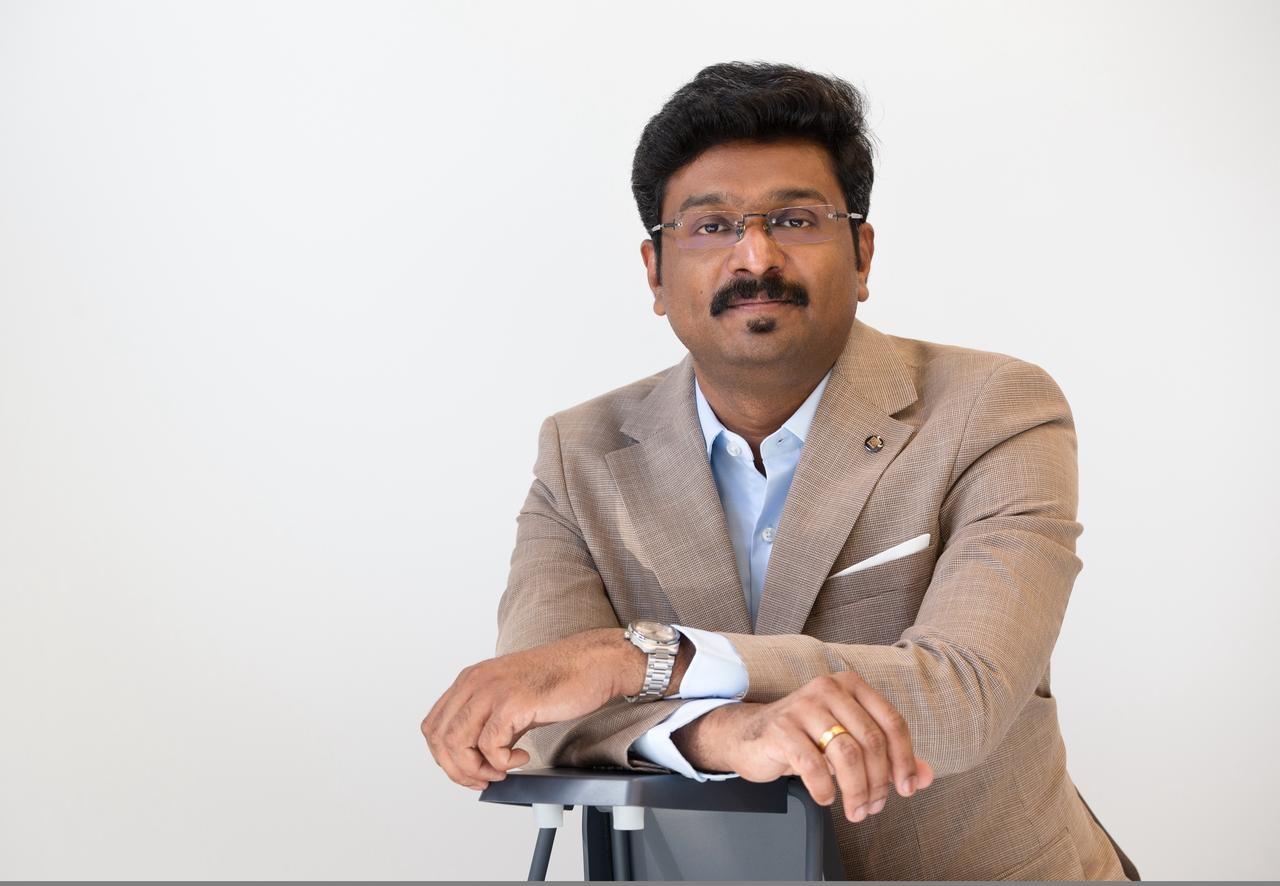
It is within this context that MEP engineers have become central, rather than peripheral, to the UAE’s development story. Paulson Geo Philip, a Project and Maintenance Manager at UAE Television and Radio, Channel 4 Group in Ajman, has spent more than 13 years working across India and the UAE on precisely these challenges: how to design and deliver MEP systems that perform to the highest technical standards while meeting the sustainability, safety, and cost demands of an industry in transition. We spoke to him about the pressures and opportunities facing the sector, and the leadership qualities it will take to meet them.
The Guardian: You have an electrical and electronics engineering background, followed by an MBA in Project Management and then the PMP and PMI-ACP. What has been the role of engineering, business, and project management training in your leadership approach in a construction environment characterised by larger projects, increasing sustainability expectations, and heightened stakeholder demands?
Paulson Geo Philip: Not on its own, no, and I recognised that early. Engineering school teaches you how systems work. An MBA teaches you how organisations work, how decisions get made, how to read a risk register and understand what it means for a client’s balance sheet. In the current environment, where every dirham of capital expenditure is being scrutinised and every project is expected to deliver measurable sustainability outcomes, a project leader cannot function effectively unless they understand both dimensions. The PMP gave me a rigorous framework for managing large, multi-year programmes. The PMI-ACP gave me tools for adapting when conditions change, and in MEP, conditions always change.
The Guardian: At Channel 4 Group, you manage the full lifecycle of MEP projects on large-scale media and infrastructure projects, from design-phase input through procurement, execution, testing, commissioning, and handover. You also manage multidisciplinary teams of engineers, supervisors, and specialist contractors across multiple phases of a project, sometimes simultaneously. How do you manage these multi-phase MEP programmes to avoid being office-bound as projects increase in size and complexity?
Paulson Geo Philip: I am on-site. That is the short answer. Leadership in this industry is not about issuing instructions from a distance, it is about being present enough to see what is actually happening, not just what is being reported. When a team is working through the precise alignment of a large chiller, or troubleshooting an unexpected fault in a firefighting main, the quality of the outcome depends on whether the person leading them understands the physics of the problem and is willing to work through it alongside them. That credibility — earned through presence and competence, not through hierarchy, is what determines whether a team functions well under pressure.
The Guardian: Channel 4 Group operates within an extremely challenging media infrastructure environment where technical reliability, uninterrupted operations, and regulatory compliance are essential. What has working in such a reputable organisation taught you about the MEP profession?
Paulson Geo Philip: It has educated me that reliability is not an option. In media infrastructure, failure is immediately visible because the standards go beyond basic compliance. Each and every system must be planned, tested as well as maintained with continuity, safety and accountability.
The Guardian: The UAE is rapidly developing, and the demand for specifications is increasing as green building codes become compulsory. It can be a requirement for large-scale projects involving MEP components such as industrial chillers, large air-handling units, smoke-extraction systems, firefighting networks, and electrical distribution systems, where failures are unacceptable. How do you think the changing environment will affect the technical issues that MEP engineers are dealing with on the ground?
Paulson Geo Philip: It raises the stakes significantly. You are dealing with larger, more complex systems, industrial chillers, high-capacity air-handling units, smoke-extract systems that have to perform perfectly in an emergency, and electrical distribution networks serving facilities with near-zero tolerance for downtime. And you are doing this under increasingly stringent compliance requirements, with client expectations around energy performance that were not standard even five years ago. The margin for error has narrowed considerably, which means you have to bring your technical preparation forward. You have to identify the clashes, where an HVAC duct intersects with a structural beam, where a cable tray route conflicts with a plumbing riser, before a single component has been procured. That is where experience becomes the decisive factor.
The Guardian: You have been working extensively with AutoCAD, Autodesk Revit, and Building Information Modelling to resolve technical conflicts prior to construction and use Primavera P6 for programme management, resource levelling, and critical path analysis. How do these tools help you reduce risk before it becomes a costly issue on the site?
Paulson Geo Philip: They allow risk to be recognized before it actually reaches the site. BIM assists in detecting clashes early, whereas Primavera P6 supports sequencing, resource planning and critical path control. All together, they help reduce rework, delays and avoidable costs during execution.
The Guardian: You were also an Official Judge and Expert Board Member at the AITEX Summit Winter 2026, “From Insight to Action.” This was a large international conference on innovations centered around the theme of artificial intelligence, data analytics, business intelligence and applied technology. In what way did the evaluation of submissions from industry professionals change your perspective on engineering leadership?
Paulson Geo Philip: It made me understand that innovation becomes valuable only if it survives the analysis and implementation. At AITEX, I was evaluating submissions in the sphere of product, operational, business and open analytics, considering methodology, scalability, practical applicability and impact of the project. This is very similar to my work with MEP system, the idea itself might be good, but what matters the most is whether it works well within the given limitations. The best submissions had two qualities: the first one was the level of technology used, and the second one was the way the ideas connect the data, processes and decisions to make the business and infrastructure better. Being a judge helped me understand how industry professionals use analytics and AI in order to resolve operational issues. For me, engineering leadership goes further than providing the system.
The Guardian: You’ve worked on commissioning projects across media infrastructure, commercial facilities, and institutional developments, both at Channel 4 Group and in your previous roles. How have your practice areas and project environments influenced your approach to a new project?
Paulson Geo Philip: Every project teaches you something. The media infrastructure environment at Channel 4 Group is unforgiving in terms of operational continuity; systems have to work, and they have to work reliably, because the cost of failure is immediate and visible. That standard has shaped how I approach every project, regardless of the sector. I apply the same discipline to commissioning a fire alarm system in a commercial building as I do to the power infrastructure in a broadcast facility. The building code sets the floor. My standard is higher than the floor.
The Guardian: The UAE has a significant building stock which will still exist in 2050, making the retrofit, upgrade, and optimisation of these MEP systems as much of a necessity as new construction. Given your experience not only in maintenance, but also in project delivery and commissioning, how have client and developer expectations shifted in terms of specifying MEP requirements in the UAE with the advent of Net Zero 2050?
Paulson Geo Philip: It has changed the conversation fundamentally. Five years ago, sustainability in MEP was largely about satisfying a rating system or meeting a regulatory threshold. Today, sophisticated clients are asking about operational energy costs over a 20-year horizon, about the carbon profile of the systems being installed, and about how a building’s MEP infrastructure can adapt as technology and regulations evolve. Variable refrigerant flow HVAC systems, intelligent lighting controls linked to occupancy and daylight sensing, and Building Management Systems that optimise energy use in real time, are no longer premium options. They are becoming the expected baseline on projects of any serious scale.
The Guardian: As you have worked in a variety of organisations and project environments, have you noticed that more clients are willing to invest initially in high-performing MEP systems once the operational savings, energy efficiency, and asset resilience are clearly demonstrated?
Paulson Geo Philip: Increasingly, yes, and the conversation has shifted from cost to value. When you can show a client that an energy-efficient HVAC specification will reduce their operational energy expenditure by a meaningful percentage over the life of the asset, the calculation becomes straightforward. The UAE’s Energy Strategy targets a 42 to 45 percent improvement in energy efficiency by 2030. Clients who are building assets that will be in service through 2040 and beyond cannot afford to ignore that trajectory. The buildings that will perform well in that environment are the ones whose MEP systems are designed with long-term performance, not just construction-phase economics, in mind.
The Guardian: MEP includes life-safety systems such as fire protection, emergency power supply, smoke extraction, and critical electrical components. How do you ensure the level of safety discipline necessary for systems where failure is unacceptable across a multi-contractor site, where works are at varying stages of completion and may be under pressure?
Paulson Geo Philip: You build a culture, not a checklist. Compliance is the minimum — it tells you what you must not fail. Safety culture tells you what you must always do, whether anyone is watching or not. On every project I manage, we conduct regular drills, rigorous site inspections, and structured induction training for all personnel. But the more important thing is consistency from the top. If the people leading a project take safety seriously — visibly and without exception, the teams working under them internalise that standard. A safe site is invariably also an efficient site. The two reinforce each other.
The Guardian: Your projects must comply with UAE Civil Defence and FEWA requirements. How do you ensure that compliance is not treated as a last-minute formality but is embedded throughout design, execution, inspection, and commissioning?
Paulson Geo Philip: Compliance must be built into a project from the very beginning. I treat FEWA and Civil Defence requirements as part of the design review, material approval, installation, testing, commissioning and inspection, not just as mere paperwork at the end.
The Guardian: You are an active member of the Society of Engineers in the UAE and mentor junior engineers and project managers pursuing certifications such as the PMP. In a time when the UAE needs more experienced talent in the field of MEP, what is mentorship for you: a responsibility or a personal choice?
Paulson Geo Philip: Both. The industry cannot build what it needs to build, the kind of infrastructure that meets Net Zero 2050 standards, that performs reliably in a demanding climate, that serves communities for generations, unless the talent pipeline is healthy. That requires experienced practitioners to invest in the people coming through behind them, not just in their own next project. I was the beneficiary of people who were willing to do that for me. I take that responsibility seriously. What I look for in engineers I mentor is not merely technical competence but also intellectual curiosity as well as professional integrity. With the necessary skills, these are the things that the industry requires the most.
The Guardian: The UAE has some of the most ambitious infrastructure targets in the world – across transport, energy, housing and commercial development. What does it mean for the MEP sector in the next 10 years as green building compliance, operational efficiency and lifecycle performance become increasingly crucial?
Paulson Geo Philip: It means the pressure on quality, sustainability, and delivery performance is only going to increase. The projects being commissioned now, the ones that will define the built environment of the UAE through 2040 and beyond, are technically demanding in ways that require a different calibre of MEP leadership than the industry has historically needed. You cannot approach a net-zero-rated facility, or a high-specification media infrastructure project, or a large-scale commercial development with mandatory green building compliance, using the same methods that worked fifteen years ago. The industry is evolving, and the professionals leading MEP in the next decade will need to evolve with it.