
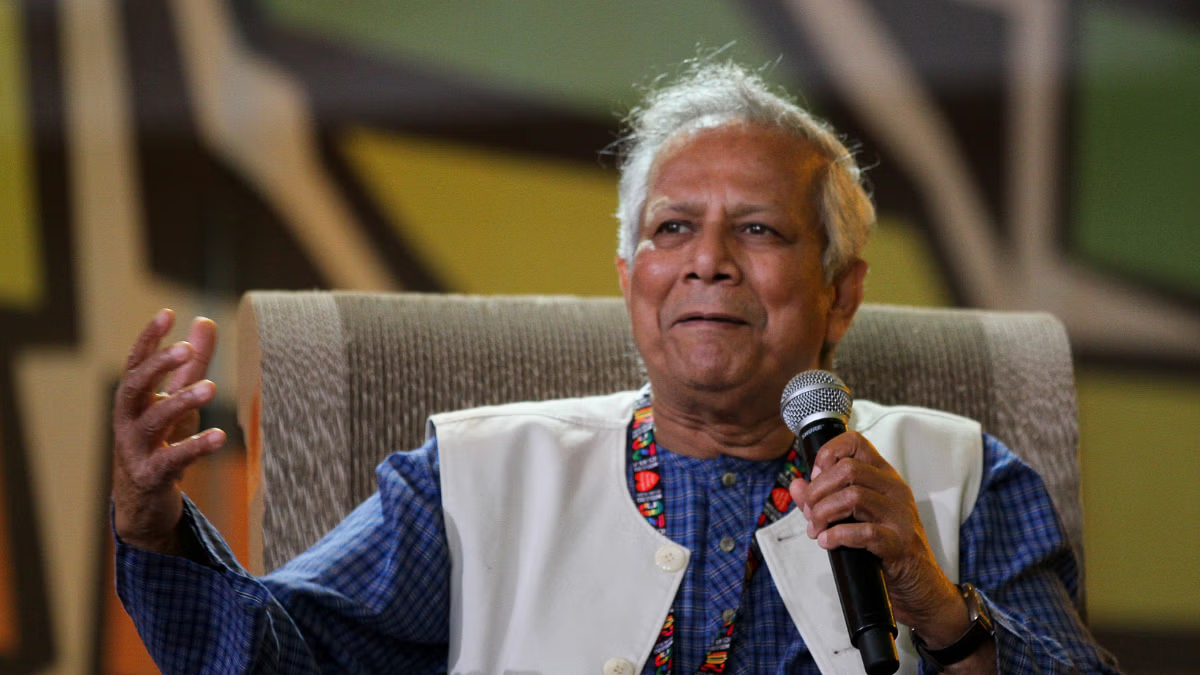
Bangladesh’s interim government under Nobel laureate Muhammad Yunus has formed a five-member commission to investigate allegations of irregularities, corruption, and administrative bias in the last three national elections of the country wherein all were won by Sheikh Hasina’s Awami League – in 2014, 2018 and 2024.
The commission, headed by retired High Court Justice Shamim Hasnain, includes former senior bureaucrats, election experts and legal scholars. Shamim Al Mamun, Kazi Mahfuzul Haque Supan (law professor), Barrister Tajrian Akram Hossain and Dr. Md. Abdul Alim are among the members.
Formally appointed by the Cabinet Division through an official gazette published on July 30, 2025, this commission follows an earlier panel established in June. Its membership and terms remain the same however, the submission deadline has changed from September 30 to October 31, 2025.
A Cabinet Division gazette notice published Tuesday evening, July 29, states that the commission’s duties include examining allegations of voting irregularities and suggesting changes to guarantee “credible and participatory polls” going forward.
Mandate and Focus
The commission will probe the allegations that the Awami League has rigged elections by disenfranchising voters and thwarting the process of democracy-by domestic opposition and international watchers.
Reports insist on very flawed turnout figures 41.8% in 2024-and accusations of boycotts and ballot stuffing by government-linked groups or dummy candidates.
It will also scrutinize the conduct of former Chief Election Commissioners and other officials connected to the management of the electoral process from the prior government, a way to create personal culpability.
Yunus’s crackdown on political dissent in Bangladesh
Meanwhile, questions have been raised concerning democratic freedoms. Human Rights Watch (HRW) issued a warning in May that the interim administration in Bangladesh’s recent legislative actions run the risk of compromising fundamental rights.
The government’s efforts to “suppress the rights” of followers of Sheikh Hasina, the ousted leader of the Awami League, were criticized by the organization.
Using new authority granted by a contentious modification to the Anti-Terrorism Act, the interim administration placed a “temporary” ban on the Awami League on May 12.
Political Implications
Forming such a commission is expected to go along with Yunus’s broader reform agenda to dismantle what he termed a fascist and authoritarian legacy, restoring democratic institutions and hopefully ensuring credible elections in future. And as tensions rise concern in polling time-while parties like Bangladesh Nationalist Party demand elections by December 2025, Yunus has indicated a wider window even into the middle of 2026-the findings of the panel could prove critical in demarcating the electoral roadmap.
Yunus has called out free and fair elections for constitutional imperative and preventative measures to ensure the reappearance of authoritarianism. He also remarked on growing support from rival parties for accountability against those who oversaw the controversial elections, arguing that this must be done to protect voting rights of citizens in future.
The commission probes into the elections where Sheikh Hasina and her party find themselves politically off track-from her asylum in India and her party’s registration being suspended. However, it is expected that the inquiry will have legal as well as integrative repercussions on reforms possibly effective in the construction and regulation of elections in the future.