
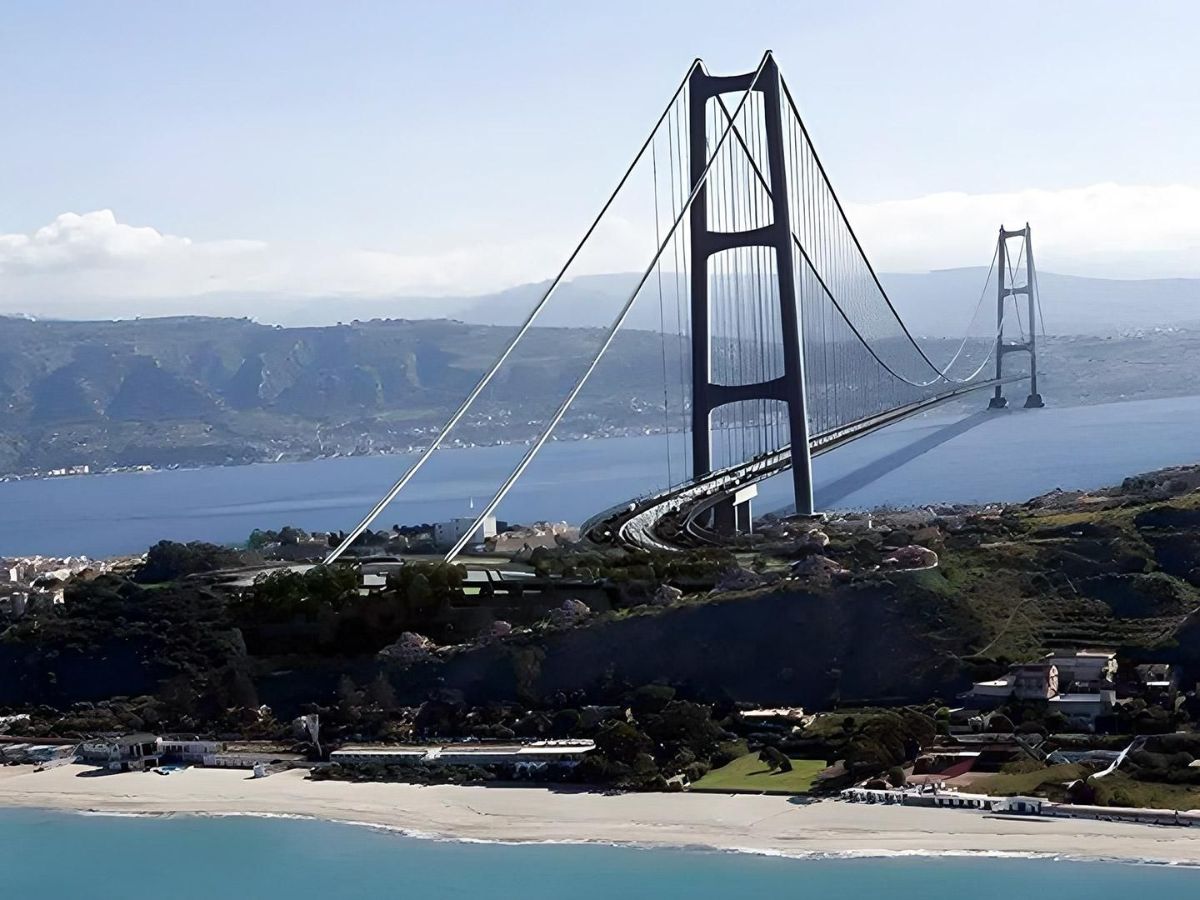
Italy’s ambitious plan to construct a monumental bridge to Sicily has suffered a critical setback. The country’s powerful Court of Auditors has rejected the current proposal for the 13.5 billion euro ($15.6 billion) project, citing serious procedural and environmental flaws. The ruling has sparked a political clash, pitting Prime Minister Giorgia Meloni and Infrastructure Minister Matteo Salvini against the judiciary and raising fundamental questions about the feasibility of one of Europe’s most debated infrastructure dreams.
Why Did the Court Block the Bridge?
The Court of Auditors’ rejection in October validated earlier, ignored warnings from technical experts within the infrastructure ministry. The court highlighted a series of critical issues with the government’s rushed approval in August.
Key problems listed by the judges include:
- Significant gaps in required documentation and procedural shortcuts.
- A failure to convincingly justify overriding major environmental concerns for Sicily and Calabria’s coastal areas.
- Possible non-compliance with European Union rules on environment and public procurement.
- Uncertainty over the final cost and financing, which may legally require a fresh international tender.
The government had attempted to bypass a lengthy new tender by reviving a 2005 contract originally worth just 3.8 billion euros—a move the court found legally precarious.
What Are the Political Stakes?
The bridge is a flagship project for Infrastructure Minister Matteo Salvini, whose political stature has been declining. Failure to deliver it could significantly damage his image and signal to investors that the government struggles to execute large-scale projects.
“This has been quite embarrassing,” said Francesco Galietti of Policy Sonar. “It remains to be seen whether Meloni is prepared to fall on her sword for Salvini.” While PM Meloni issued an angry statement accusing the court of overreach, the ruling exposes tensions within the governing coalition. The cabinet could theoretically force approval ‘with reservations,’ but this would invite endless legal challenges.
Also Read: US Pauses Green Card, Halts All Immigration Processing From 19 Nations; Cites National Guard Attack
What Do Supporters and Critics Say?
Supporters, led by Minister Salvini, argue the 3.7-kilometer bridge would be a transformative economic engine. Government forecasts claim it would:
- Boost Italy’s GDP by over 23 billion euros (roughly 1%).
- Create 36,700 new jobs.
- Cut the crossing time from hours by ferry to just 10-15 minutes, revolutionizing transport.
Critics counter that the project is a costly boondoggle. They argue it would:
- Cause severe environmental damage to the Messina Strait.
- Divert crucial funds from more urgent local infrastructure needs in Italy’s underdeveloped south.
Lack a sound economic or strategic rationale, with some dismissing the government’s recent NATO justification as a pretext. “The bridge is not a military infrastructure. At most, it is a military target,” said former environmental official Aurelio Angelini.
What Happens Next?
Salvini refuses to abandon the project, stating the government is working to address the court’s objections and hopes to start construction before its term ends in 2027, for a completion target of 2032. However, the path forward is fraught.
The main threat is the potential need for a new international tender—a process that could delay the project by years and increase costs dramatically. The existing consortium, led by Italy’s Webuild, has a 700-million-euro compensation claim pending from the project’s last cancellation in 2012, which would only be withdrawn if work finally begins.
Your Questions Answered: Sicily Bridge FAQs
Q: What exactly did the Court of Auditors rule?
A: The court rejected the present project approval, citing inadequate paperwork, procedural flaws, unfulfilled environmental criteria, and legal issues about costs and bids. It did not permanently kill the bridge but sent the government back to the drawing board.
Q: Why is this bridge so controversial in Italy?
A: It has been argued over for more than 50 years. Supporters view it as a sign of national unity and economic growth for the south. Critics call it an extremely costly, environmentally harmful vanity project that overlooks the region’s actual needs.
Q: Can the Italian government override the court’s decision?
A: Technically, yes. The cabinet could grant approval “with reservations,” though it’s seen as a high-risk political and legal decision that would bring further lawsuits and EU scrutiny, probably sinking the project.
Q: What is the biggest risk to the project now?
A: The requirement for a fresh international tender. This would restart the process, bring several years of delay, and push costs much higher, possibly making the project financially unworkable.
Q: What was the “NATO justification” mentioned?
A: The government recently argued the bridge might aid NATO troop movement, perhaps letting it qualify as defense spending. Critics mocked this as a clear tactic to defend the project by using an alternative set of rules.
Also Read: Fed’s ‘Deferred Asset’ Shrinks, Hinting at End of Unprecedented Loss Era