
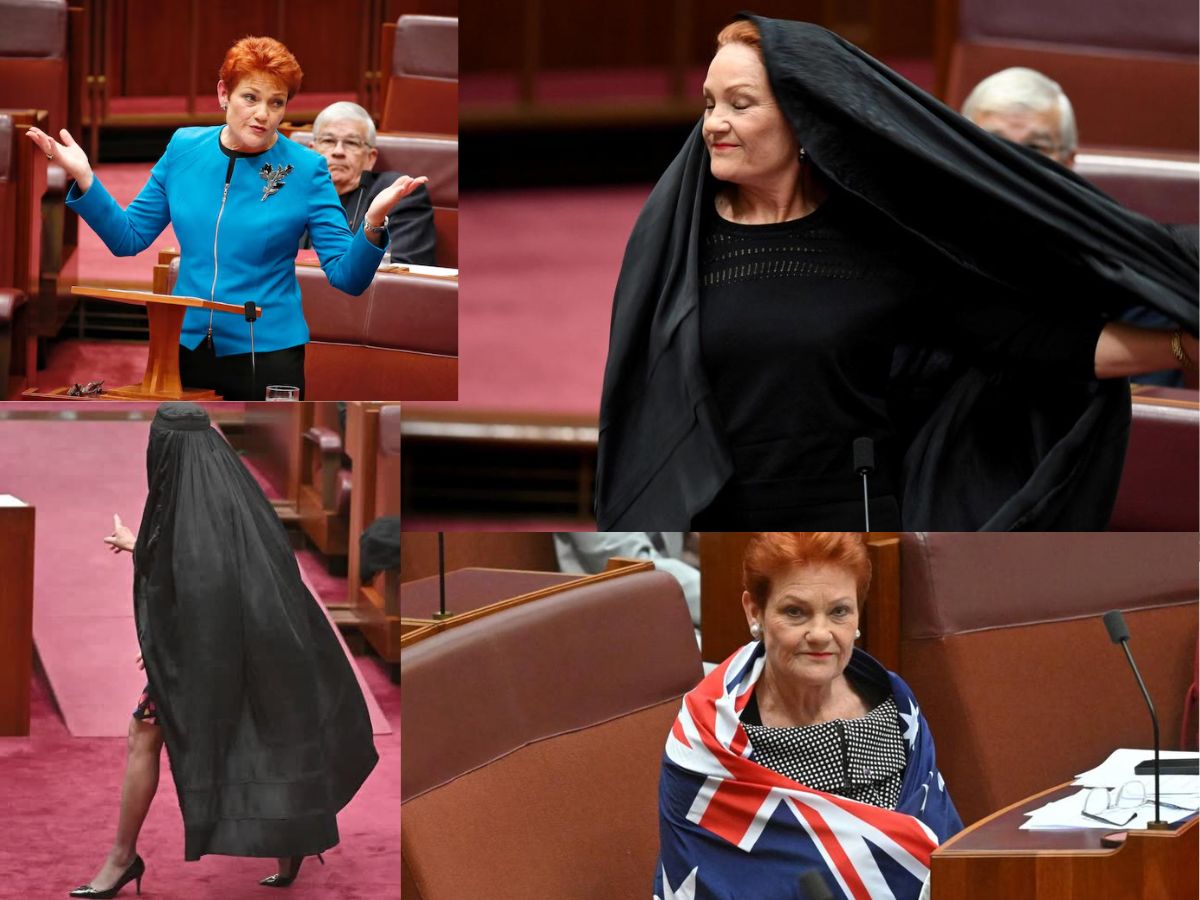
In a dramatic move that has gripped Australian politics, Senator Pauline Hanson was suspended from Parliament for seven sitting days. The punishment came after the far-right politician wore a full burqa into the Senate chamber. This act was a protest to support her own bill calling for a ban on the garment in public places. The move was condemned by her peers as a dangerous stunt that mocks a religious minority.
Who is Pauline Hanson?
To understand the controversy, one must first understand the politician at its center. Pauline Hanson is a 71-year-old senator from Queensland and the leader of Pauline Hanson’s One Nation Party. She is a divorced mother of four. Before entering politics, she was a small business owner, running a potato chip processing business and a fish-and-chip shop. Her political career began locally with a term on the Ipswich City Council. But what launched her onto the national stage? Her rise to prominence began in 1996 when she was elected to the House of Representatives. Her maiden speech warning that Australia was “in danger of being swamped by Asians” sparked a national debate and defined her controversial brand.
Also Read: India Issues NOTAM Over Bay of Bengal, Likely Missile Test Between December 6–8
Political Career
Pauline Hanson’s career has been marked by many ups and downs. She launched the One Nation party in 1997, and it grew rapidly. But she lost her seat in 1998 and then spent years out of federal politics, facing repeated election losses and a legal battle that ended with her fraud conviction being overturned. She made a comeback in 2016 when she became a Senator for Queensland. Re-elected in 2022, she continues to lead her party and remains a polarizing presence in national politics.
What Exactly Happened in Parliament?
The scene in the Australian Senate was unprecedented. Senator Hanson entered the chamber shrouded in a head-to-ankle black burqa. She did this just as the Senate was refusing to even debate her bill to ban the garment in public. So, what was her point? Hanson claimed her demonstration highlighted the need for the ban. However, her colleagues viewed it as a clear act of disrespect and abuse. After the stunt, a censure motion was passed, resulting in one of the toughest penalties imposed on a senator in recent years.
Why Was the Reaction So Severe?
The backlash from other senators was swift and forceful. But why was this particular act seen as so damaging? Malaysian-born Senator Penny Wong, who leads the government in the Senate, stated that Hanson had “mocked and vilified an entire faith.” She argued that such “hateful and shallow pageantry” weakens Australia’s social fabric and has “cruel consequences.” Afghanistan-born Senator Fatima Payman called Hanson’s use of the burqa “disgraceful” and “a shame.” They viewed the act not as political speech, but as an attack on a vulnerable community.
How Did Hanson Defend Her Actions?
After being suspended, Senator Hanson did not back down. In her media comments and social-media posts, she described the situation as a fight for free speech and democracy. “They didn’t want to ban the burqa, yet they denied me the right to wear it on the floor of Parliament,” she said, calling the situation “hypocritical.” She claimed that major political parties are fighting her One Nation party because it debates issues they avoid. She concluded that her political future would be judged by voters in the next election, not by “these gutless politicians.”
Also Read: ‘Indisputable Part of India’: MEA Slams China After Arunachal Woman Stopped at Shanghai Airport
Repeated Pattern of Protest
This is not the first time Senator Hanson has used such a tactic. Back in 2017, she wore a burqa in a similar protest but faced no formal punishment at that time. This history indicates a consistent strategy of using symbolic acts to push her political agenda on immigration and national identity. The significant penalty this time suggests a lowered tolerance within the Parliament for what they see as divisive and discriminatory behavior.