
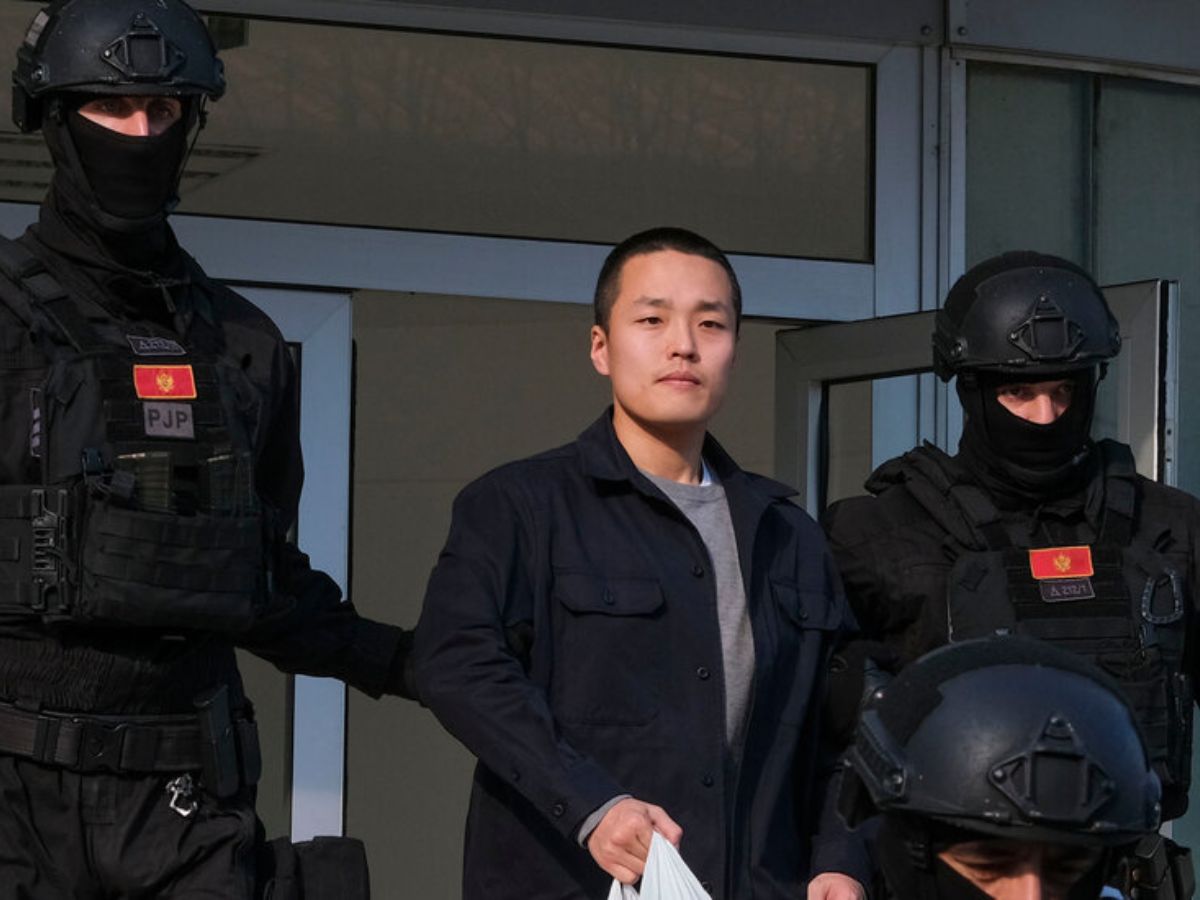
In a landmark ruling for the cryptocurrency industry, South Korean entrepreneur Do Kwon was sentenced to 15 years in a U.S. federal prison on Thursday for his role in the fraud that led to the catastrophic $40 billion collapse of the TerraUSD and Luna currencies in 2022. The sentence by U.S. District Judge Paul A. Engelmayer in Manhattan concludes a high-profile case that became emblematic of the excesses and fraud in the digital asset market.
Who Is Do Kwon?
Do Kwon (born Kwon Do-hyung), 34, was the co-founder and CEO of Singapore-based Terraform Labs. Before his downfall, he was a charismatic and polarizing figure in the cryptocurrency world, known for his bold predictions and combative online persona.
He achieved fame by creating:
- TerraUSD (UST): An “algorithmic stablecoin” marketed as always being worth $1.
- Luna (LUNA): A companion token whose value was meant to stabilize TerraUSD.
- Together, they formed a multi-billion dollar ecosystem that promised decentralized, stable digital money.
What Is Do Kwon Convicted Of?
Kwon, the 34-year-old co-founder of Singapore-based Terraform Labs, pleaded guilty in August to two felony counts: conspiracy to defraud and wire fraud. He admitted to making false statements to investors about the stability of his flagship product, the TerraUSD stablecoin.
The core of the fraud was the false promotion of TerraUSD as a “stablecoin” algorithmically pegged to $1. Prosecutors demonstrated that Kwon did not rely on the algorithm when the coin’s value fell below $1 in May 2021; instead, he covertly arranged for a trading company to purchase millions of dollars’ worth of the token in order to artificially support its price, a fact he concealed from investors.He later admitted in court, “I made false and misleading statements… What I did was wrong.”
Also Read: OpenAI Launches GPT-5.2 After ‘Code Red’ Sprint to Counter Google’s Gemini
How Severe Was the Collapse and Sentence?
In May 2022, TerraUSD and Luna collapsed, erasing about $40 billion in value overnight. This triggered a crypto downturn, causing bankruptcies across the industry and huge losses for retail investors globally.
Prosecutors wanted at least 12 years due to the scale of the fraud, while Kwon’s defense sought no more than 5 to return sooner to South Korea for other cases. Judge Engelmayer’s 15-year sentence went above and above what was anticipated, indicating that the court considered the crime to be extremely serious with significant structural and financial repercussions.
Your Questions Answered: Do Kwon Sentencing FAQs
Q: What exactly were TerraUSD and Luna?
A:TerraUSD (UST) was promoted as an “algorithmic stablecoin” meant to always stay at $1. Its sister token, Luna (LUNA), was volatile, and together they were supposed to keep the peg. When this system broke, both tokens crashed almost to zero.
Q: Why was this fraud considered so damaging beyond the $40 billion loss?
A: The crash destroyed investor trust in cryptocurrency for years. It caused other major crypto companies and lending platforms exposed to Terra/Luna to fail, creating a crisis that required government action in some places.
Q: Could he serve his sentence in South Korea?
A: Potentially, but not immediately. His plea deal allows for a potential international prisoner transfer after he serves half of his U.S. sentence (7.5 years). Approval would require agreement between the U.S. and South Korean governments.
Q: Were other Terraform executives charged?
A:The legal case focused on Kwon, the founder and public representative. Other staff may have been investigated, but Kwon’s plea and the company’s large SEC settlement are the main resolutions to date.
Q: What happens to the victims? Will they get money back?
A: Victim restitution is complex. The $4.55 billion SEC settlement is meant to include disgorgement of ill-gotten gains, but it’s unclear how much will be recovered and distributed to the millions of global investors who lost funds. The bankruptcy of Terraform Labs further complicates any recovery.
Also Read: White House Promises ‘Largest Ever’ Tax Refunds | Here’s All You Need to Know