
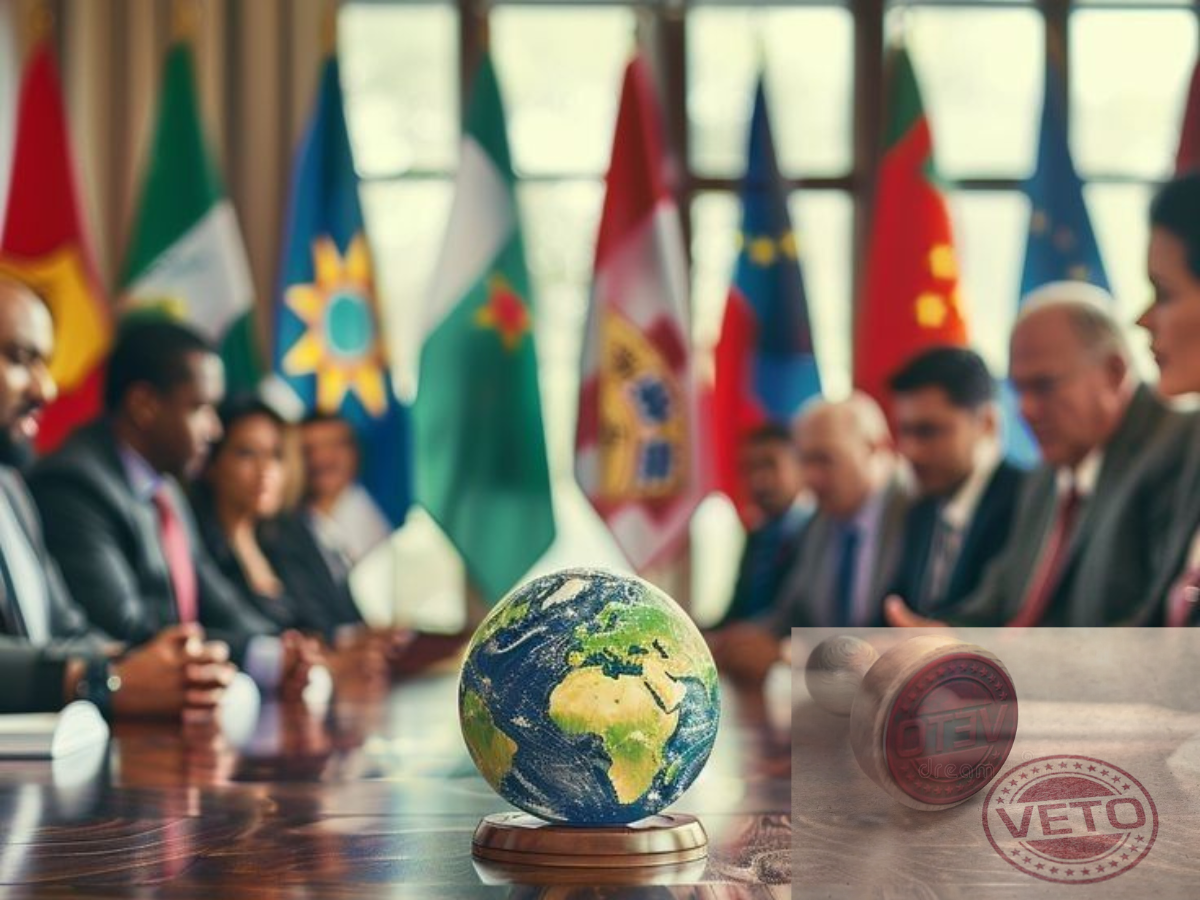
The long-time debate of the United Nations Security Council (UNSC) is concerned with international power dynamics and within the political domain in India.
The center of the debate was the veto power of the five permanent members of the UNSC namely China, France, Russia, the United Kingdom and the United States, through which they govern the rest of the world. Many Indians feel that, as a powerful nation and an important democracy, it deserves to be at that elite table.
What is the Veto Power?
The veto power can prevent any member of the permanent UNSC from acting to stop the adoption of all substantive resolutions regardless of the number of nations voting for it. One cannot move with a proposal that has been stopped by even a single permanent member.
This is how these superpowers are guaranteed to have control over most international decisions and procedures do not fall under veto and abstentions do not stop resolutions.
What is the Origin of Veto Power?
The veto power originates from Article 27 of the United Nations Charter which was created after World War II and it states that substantive decisions need nine votes including agreement from all five permanent members.
ALSO READ: Kabul residents decry severe outages, urge Afghanistan’s power utility to act
This clause was aimed at to prevent world conflicts for the major powers had a check on the most important decisions. It was not introduced in 1945, as part of the League of Nations where additional council members could get a veto right too about important issues.
Which Countries Holds the Veto?
The five permanent members have their way of exercising the veto according to themselves because they would consider what is beneficial for their country:
- Russia (USSR) has used the most 143 times and mostly over matters relating to Eastern Europe and the Middle Eastern countries.
- The U.S. defense for 83 rights vetoed against mostly the foreign allies, predominantly Israel.
- The veto was exercised in a more restrained manner by the UK and France.
- China is the most reserved which has exercised the power 16 times, mostly in recent decades.
Though post-Cold War, there was slightly diminished veto usage, Russia and China intensified their activity from 2011, around Syria and Ukraine related resolutions.
ALSO READ: Russian jets detected near Alaska for second time in a month, says US military
How Many Times has the Veto Power been Used?
- Russia/USSR on the top with 143 vetoes, which accounts for nearly half of all instances.
- Then comes the United States with 83 vetoes on 17 March 1970, many of which relate to the Israel-Palestine issue.
- The United Kingdom has used it 32 times with the first during the Suez Crisis in 1956.
- France showed it on 18 occasions, the first on 26 June 1946 with respect to the Spanish Question.
- China has resorted to a veto 16 times primarily after the 1970s, increasing use post 1997.
Since the end of the Cold War Russia and China have been the most active. Russia alone used the veto on 19 occasions since 2011, concerning Syria and Ukraine. Within that timeframe, China used its veto nine times mainly regarding Syrian and Venezuelan issues. The U.S., in that same period issued three vetoes all connected to Israel/Palestine.
What is India Position on Debate?
Much bigger and more visible role in global affairs has resurrected calls from within India for a permanent seat in the UNSC. Proponents say that reflective of the new multipolar world, a wider representation is needed but until that does occur in terms of structural reform, it retains its semblance of privilege and not equality which in turn informs international law, diplomacy and peacekeeping.
ALSO READ: Systematic Sabotage? Wave of Drone Incursions Over Danish Airports Raises Alarm in NATO
Disclaimer: This article is for educational purposes only and reflects public data and historical records on UNSC structure and veto usage up to current knowledge.