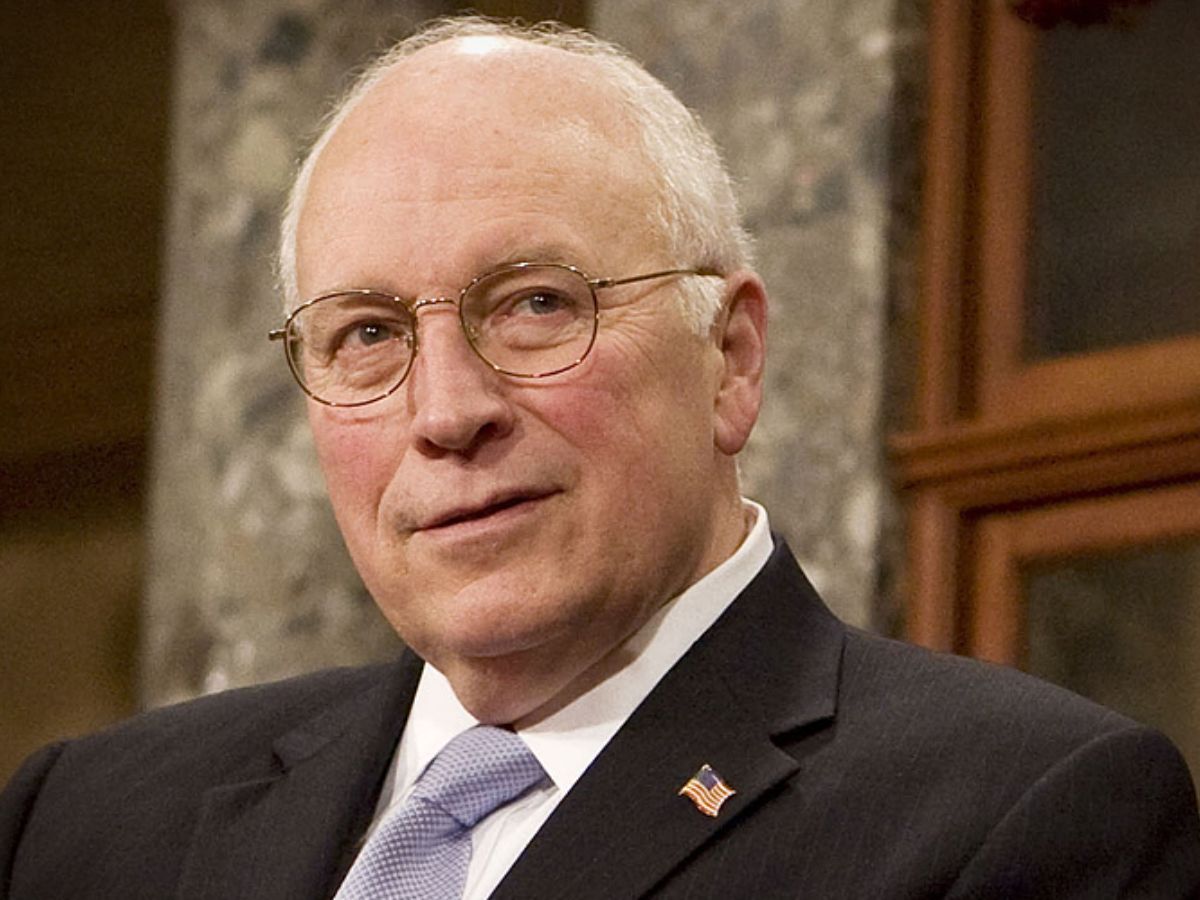
Former US Vice President Dick Cheney dies at 84. [Photo: Reuters]
Dick Cheney, the 46th Vice President of the United States and one of the most influential figures in early 21st-century American politics, has died at the age of 84. His passing marks the end of a career that spanned from Congress to the Pentagon to the White House — and triggered both intense debate and global impact.
Richard Bruce “Dick” Cheney was born on January 30, 1941, in Lincoln, Nebraska, and grew up in Casper, Wyoming. He attended Yale University but later transferred to and earned degrees from the University of Wyoming.
His early career included service as White House Chief of Staff under Gerald Ford, US Representative for Wyoming, and as Secretary of Defence under George H.W. Bush. He became Vice President under George W. Bush from 2001 to 2009 and is often described as the most powerful Vice President in US history.
Cheney was born on January 30, 1941. He passed away on November 3, 2025, at the age of 84.
The family announced that Dick Cheney died on November 3, 2025. His death was attributed to complications from pneumonia and cardiac and vascular disease. Tributes poured in from across political lines, reflecting his controversial but undeniable impact.
He died on November 3, 2025, Monday night due to complications of pneumonia and cardiac and vascular disease, according to a statement from family spokesman Jeremy Adler.
Dick Cheney's estimated net worth, according to many sources put at around US$150 million, citing his decades in politics and business, including his time at Halliburton. Other disclosures show lower historical figures (e.g., about US$30 million in 2008).
Dick Cheney married Lynne Cheney (née Vincent) in 1964. Their partnership spanned over six decades, through public life, politics and private legacy.
Dick Cheney had two daughters: Liz Cheney and Mary. Liz Cheney became a US Representative from Wyoming and a high-profile critic of former President Donald Trump, while Mary has maintained a lower public profile.
Dick Cheney was a member of the Republican Party. His career reflects the conservative and national-security-focused wing of the party.
On February 27, 2007, while visiting Bagram Air Base in Afghanistan, Cheney survived a suicide‐bomb attack at or near the base — the attack killed up to 23 people and injured about 20.
Additionally, in 2006, Cheney accidentally shot prominent Texas attorney Harry Whittington during a quail‐hunting trip, prompting public attention and humour.
His daughter Liz Cheney has been especially visible in recent years, becoming a central figure in Republican politics and a critic of Donald Trump. Her alignment with her father’s later stances drew media attention.
Cheney’s life and political rise were dramatized in the film Vice (2018), directed by Adam McKay and starring Christian Bale as Cheney. The satirical biographical film garnered several awards and nominations, highlighting his behind-the-scenes power.
Cheney’s role during and after the September 11, 2001, terrorist attacks defined his vice presidency. While President Bush was in Florida, Cheney directed emergency responses from the White House Situation Room, authorizing military defences and evacuation orders.
He became the architect of the War on Terror, supporting military operations in Afghanistan and Iraq and advocating for enhanced surveillance powers and controversial interrogation techniques. Critics accused him of expanding executive power, while supporters praised his swift and decisive leadership during one of America’s darkest days.
Though a longtime Republican, Cheney became a vocal critic of Donald Trump. In 2024, he announced he would vote for Democratic nominee Kamala Harris rather than Trump, citing what he called “an individual who is a greater threat to our republic than Donald Trump.” This stance placed him at odds with the dominant MAGA wing of his party.
Cheney was Chairman and Chief Executive of Halliburton from 1995 to 2000. The company later came under scrutiny for its contracts in Iraq and links to Cheney’s prior government role, raising ethics and conflict‐of‐interest questions.
Chelating the story of Dick Cheney reveals a figure who transcended the typical role of Vice President, wielded substantial influence in national security, and left a polarised legacy as much as a celebrated one. His death invites a fresh evaluation of his imprint on US politics and global affairs.