
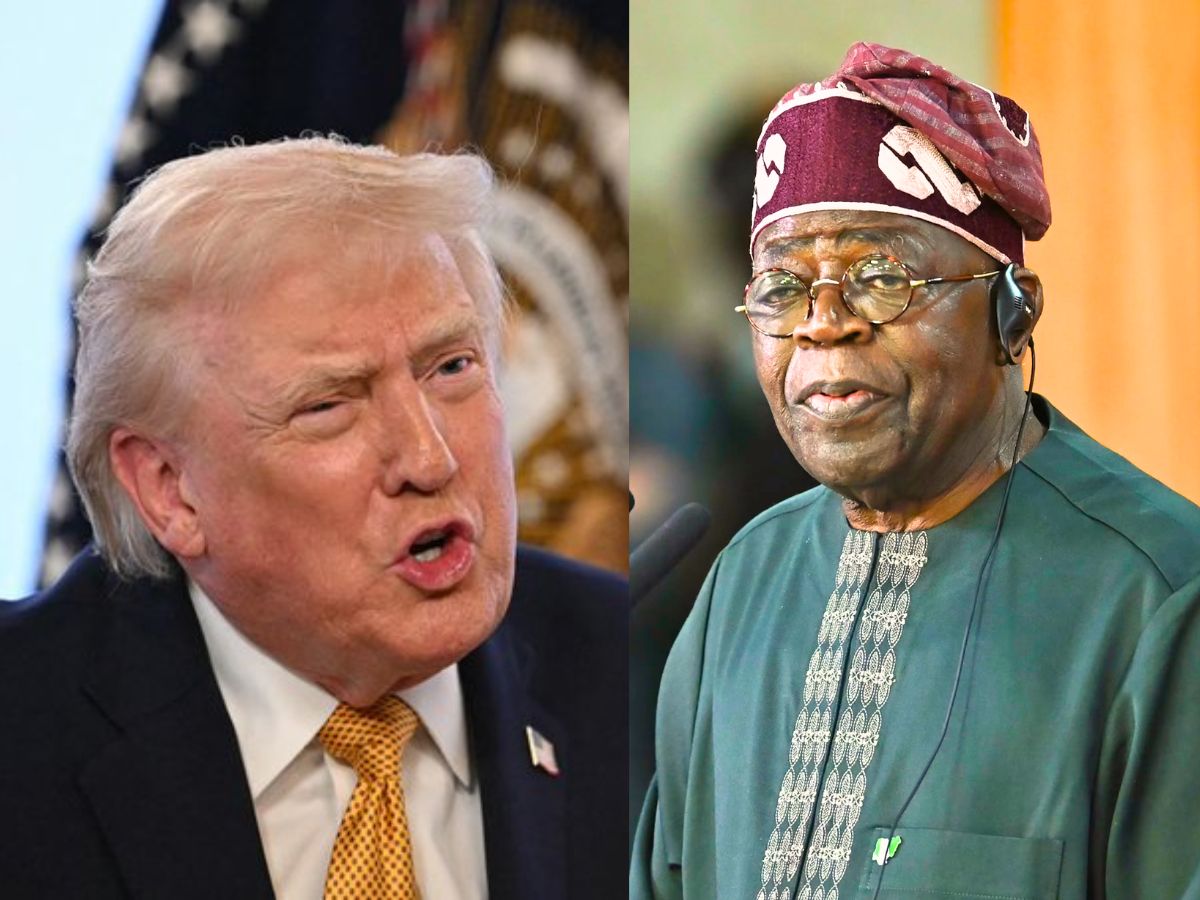
US President Donald Trump has ordered fresh military strikes against ISIS targets in northwest Nigeria, pushing Washington deeper into West Africa’s fight against terrorism. The decision follows months of strong warnings from Trump over violence against Christians and marks a sharp escalation in the US response to militant activity in the region.
The strikes, announced on Thursday, come amid renewed global focus on religious violence, counterterrorism, and America’s expanding security footprint beyond the Middle East.
Why Did Trump Order Strikes on ISIS in Nigeria?
Donald Trump said the airstrikes targeted ISIS militants who were attacking civilians, especially Christians, in parts of northern Nigeria. He described the group as “terrorist scum” and said his administration would not tolerate what he called mass killings based on faith.
“I have previously warned these Terrorists that if they did not stop the slaughtering of Christians, there would be hell to pay, and tonight, there was. The Department of War executed numerous perfect strikes, as only the United States is capable of doing,” Trump said in a post.
He added that he will “not allow radical Islamic terrorism to prosper” under his leadership.
Trump’s Earlier Warnings to Nigeria
The strikes did not come without warning. In October and November, Trump publicly cautioned that Christians in Nigeria faced an “existential threat” and described the violence as close to “genocide.”
He also hinted at possible US military action if the attacks continued. Those remarks triggered diplomatic pushback from Nigeria but signalled that Washington was closely watching developments in the region. The latest operation appears to be the follow-through on those warnings.
Nigeria Confirms Security Cooperation With US
Nigeria’s Foreign Ministry confirmed that the strikes took place under an existing security partnership with the United States. The cooperation includes intelligence sharing and coordinated operations against extremist groups.
In a statement, the ministry said the action was part of efforts to tackle the “threat of terrorism and violent extremism.” It stressed that attacks on Christians, Muslims, or any community remain “an affront” to Nigeria’s values.
US Defence Secretary Pete Hegseth also acknowledged Nigeria’s role in enabling the operation. “The Department of War is always ready, so ISIS found out tonight — on Christmas. More to come,” Hegseth wrote.
Pentagon Signals Broader Military Readiness
The Pentagon released visuals showing at least one projectile being launched from a US warship, reinforcing the message of military readiness. Officials framed the strikes as precise and limited, aimed only at ISIS-linked targets.
Analysts say the timing sends a strong signal to militant groups operating beyond traditional conflict zones that US counterterror operations are expanding geographically.
Nigeria Pushes Back on Religious Violence Claims
Earlier, Nigerian President Bola Ahmed Tinubu rejected Trump’s characterisation of Nigeria as religiously intolerant. He said the country’s constitution protects all faiths. “The characterisation of Nigeria as religiously intolerant does not reflect our national reality,” he said, while reaffirming cooperation with the US to protect civilians.
Nigeria has long struggled with insurgencies in the north, where ISIS-linked groups and other militants operate in remote areas.
Why West Africa Matters to US Security Policy?
The strikes highlight a shift in US counterterror focus. With ISIS weakened in Iraq and Syria, affiliated groups in Africa have grown more active. West Africa now ranks among the fastest-expanding theatres of extremist violence.
By acting in Nigeria, the US signals that future counterterror operations will not remain confined to traditional hotspots. The move also reflects Trump’s emphasis on forceful responses and faith-based rhetoric in foreign policy.