
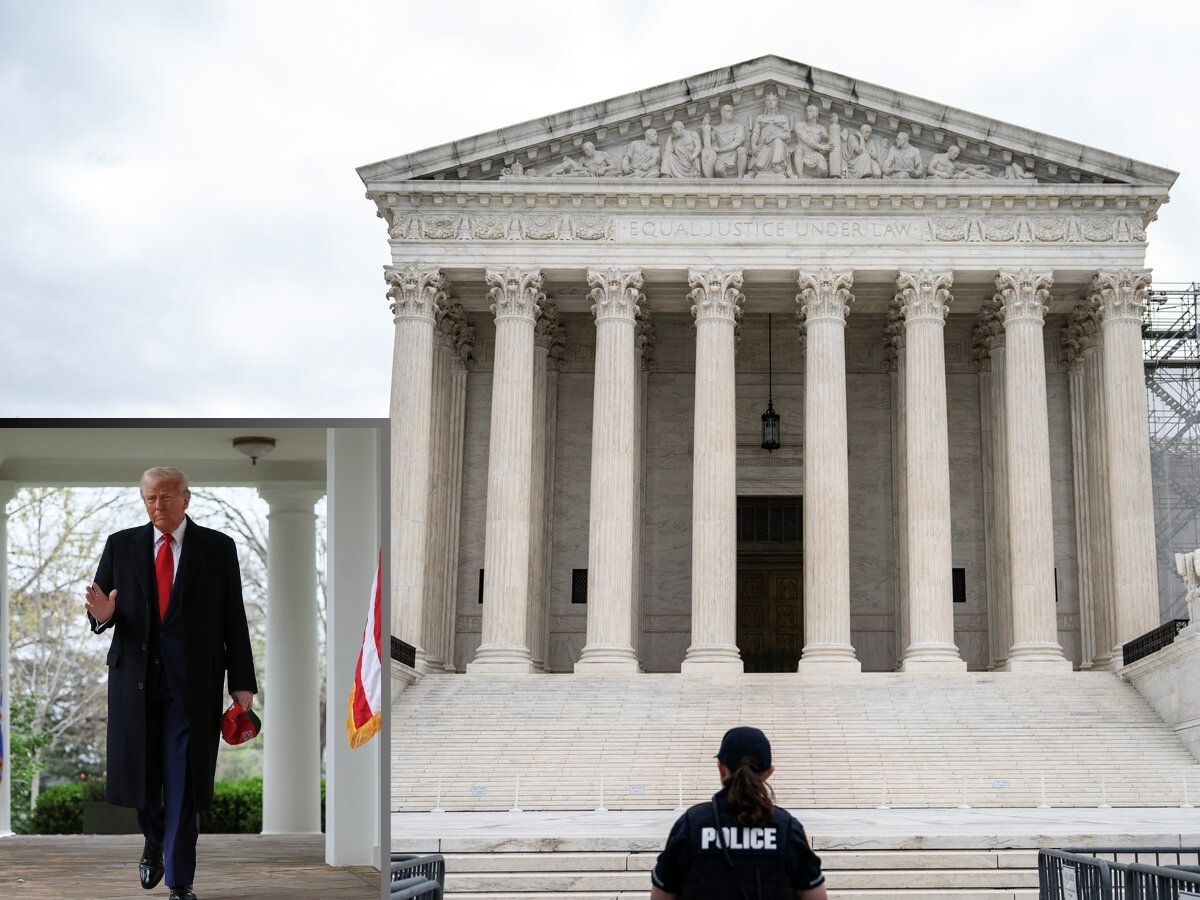
The U.S. Supreme Court appears ready to revisit and potentially discard several of its own historical rulings in the coming months, a move that legal experts say signals the conservative justices’ willingness to dramatically reshape American law by overturning precedents. After major rollbacks on abortion and affirmative action, the court has taken up several cases where parties are openly urging it to overturn earlier rulings, putting a core legal principle under serious examination.
What Key Precedents Are Being Challenged?
The court’s current docket features at least three major cases where overturning precedent is a central request. These challenges target rulings from different eras of the court’s history.
The cases in focus are:
Humphrey’s Executor v. United States (1935): A case argued Monday challenges this New Deal-era precedent that allows Congress to insulate certain federal agency officials from direct presidential control. The Trump administration, in a case involving the firing of an FTC commissioner, has called the ruling “egregiously wrong.”
A 2001 Campaign Finance Ruling: Arguments on Tuesday involve a precedent restricting political party spending on ads coordinated with candidates. The Trump administration is urging the court to overturn it.
A 1986 Voting Rights Act Precedent: In a case from October, Louisiana Republicans asked the court to overturn a ruling on racial gerrymandering, arguing it has been “rendered a fossil.”
Why is the Legal Principle of “Stare Decisis” Important?
This judicial reassessment hinges on the doctrine of “stare decisis” (Latin meaning “to stand by things decided”), a foundational rule designed to bring stability and predictability by compelling courts to respect prior rulings in alike cases.
While the Supreme Court has always overruled itself—most famously in 1954’s Brown v. Board of Education overturning Plessy v. Ferguson’s “separate but equal” doctrine—the current pace and ideological alignment of such actions are notable. “This is going to be another blockbuster term,” said Cardozo Law School professor Wilfred Codrington, questioning if precedent “remains a constraining force at all.”
Also Read: Pakistani Woman Claims Husband Left Her in India for Second Marriage, Appeals to PM Modi for Justice
How Has the Court’s Approach to Precedent Changed?
After the Dobbs v. Jackson decision struck down Roe v. Wade in 2022, the conservative majority has increasingly cast aside precedents it disfavors, from affirmative action in 2023 to agency deference in 2024.
Legal scholars note a shift in how the justices apply stare decisis. Professor Michael Gentithes of the University of Akron argues the conservative bloc has not rigorously adhered to a multi-factor framework established in 1992, instead focusing heavily on whether a past decision was “poorly reasoned.” This aligns with an originalist judicial philosophy, which prioritizes the Constitution’s original meaning over later court interpretations.
What Are the Defenses and Criticisms?
Justice Amy Coney Barrett has publicly defended the court’s respect for precedent, stating under Chief Justice John Roberts it overturns precedent less frequently annually than courts led by his predecessors. However, critics like Professor David Schultz of Hamline University argue such raw counts are misleading given the court’s significantly smaller modern caseload.
Supporters of revisiting these precedents, like Robert Luther of George Mason University, argue that originalism demands correcting past errors. He calls Humphrey’s Executor “deeply flawed” and views this term as “an opportunity to reduce lower court confusion” by aligning the law with what originalists believe is correct.
Also Read: Fact Check: Did Katy Perry ‘Hard Launch’ Her Relationship With Justin Trudeau on Instagram?
Your Questions Answered: Supreme Court Precedent FAQs
Q: What is “stare decisis”?
A: It is the legal principle that courts should follow the rulings of prior cases (precedents) when deciding new cases with similar facts or legal questions. It is a cornerstone of the American common law system, ensuring stability and fairness.
Q: Why is the Humphrey’s Executor case so significant?
A: It is a foundational ruling on the separation of powers. Overturning it would significantly expand presidential authority by allowing the President to fire heads of “independent” regulatory agencies (like the FTC or Federal Reserve) at will, removing congressional checks on that power.
Q: Hasn’t the Supreme Court always overturned some precedents?
A: Yes, but scholars point to the frequency, the high-profile nature of the cases, and the consistent 6-3 ideological split in recent years as indicative of a new judicial approach that places less weight on precedent as a constraining force.
Q: What is “originalism”?
A: It is a judicial philosophy held by several conservative justices that interprets the Constitution based on its original public meaning at the time it was written. Originalists often give less deference to prior court rulings they believe deviated from that original meaning.
Q: What could be the broader impact of this trend?
A: Eroding respect for stare decisis could mean bigger and more regular legal changes each time the Court changes makeup, reducing stability and strengthening the belief that the Court acts politically.