
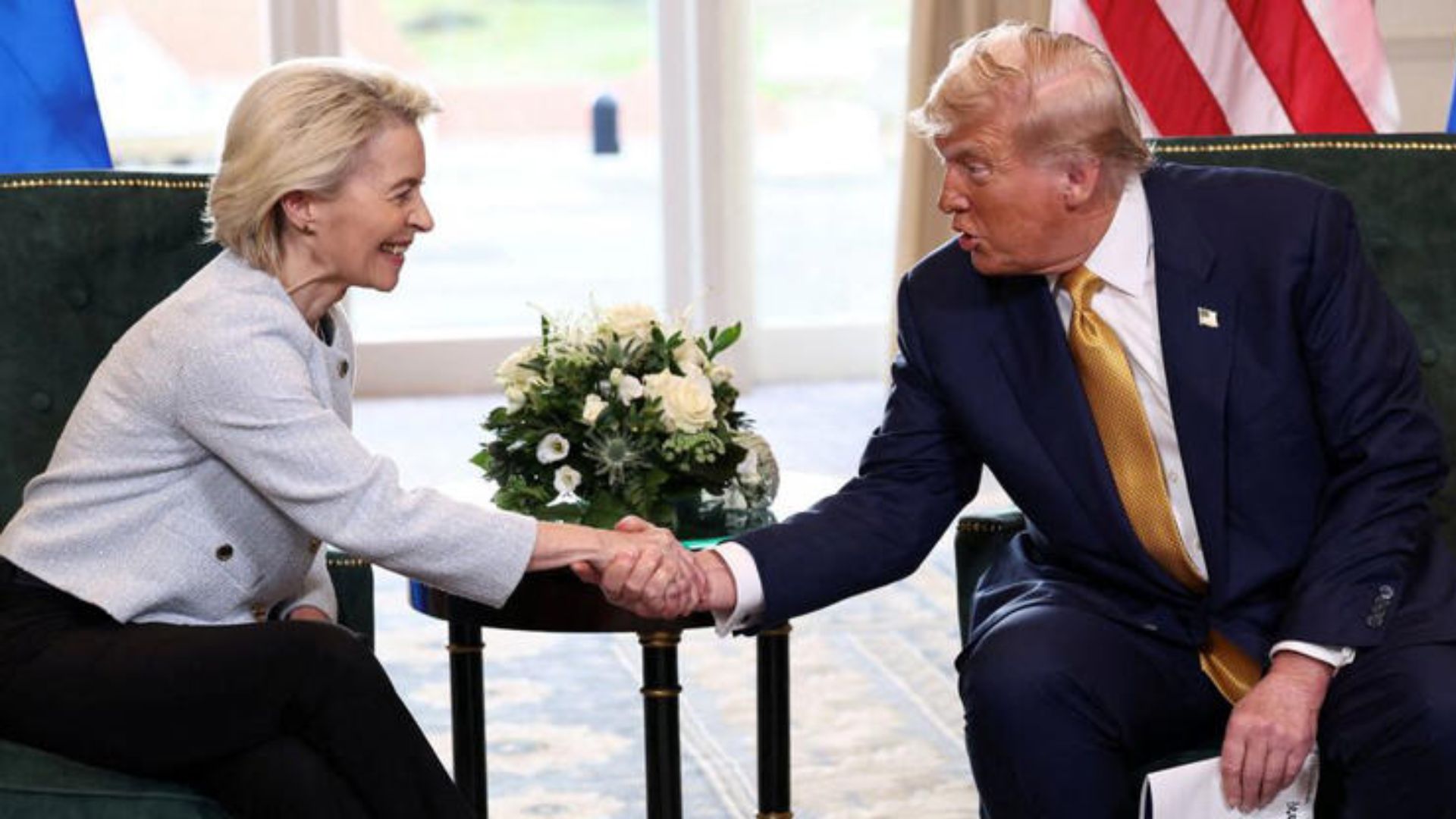
The European Union and the United States have reached a significant trade agreement. This deal imposes a 15% tariff on most EU exports to the US. Without it, both sides risked entering a damaging trade war. However, steel exports still face a 50% tariff, and car tariffs have dropped from 27.5% to 15% starting Friday.
What’s in the Agreement?
The EU agreed to purchase $750 billion worth of US energy over the next three years. Additionally, the EU highlighted that it plans to invest $600 billion in the US. This move allowed former President Donald Trump to claim the deal surpasses Japan’s previous $550 billion promise.
In total, tariffs will now affect 70% of EU exports to the US, worth approximately €380 billion annually. On the other hand, US exports to the EU, including cars, will become duty-free.
Who Gained the Most?
Most financial analysts called it an “unequal deal.” The US secured major wins: a lower tariff rate on imports, large energy contracts, and an end to a World Trade Organization agreement that allowed pharmaceuticals to be traded tariff-free.
France Voices Strong Opposition
France didn’t hold back. Trade Minister Laurent Saint-Martin criticized the EU, saying, “Donald Trump only understands force.” He believed Europe should have responded earlier and more aggressively.
Prime Minister François Bayrou described the deal as a “dark day for the EU.”
Can France Block the Deal?
Despite France’s loud protests, they cannot stop the agreement. Trade negotiations are handled by the European Commission, which means no single country has veto power. Most member states support the deal, with only Hungary’s Viktor Orbán siding with France.
When Does the Deal Begin?
The 15% US tariff begins Friday. However, finalizing details on steel, wine, and spirits tariffs will take more time—possibly weeks or months. On Friday, both sides will issue a joint statement, which must be turned into legal text. Trump is also expected to sign executive orders in the US to enforce the deal. The EU will create a legal agreement separately, which could take several more weeks.
What About Pharma and Other Sectors?
Pharmaceutical products will remain zero-rated for now. Trump agreed not to impose more than 15% tariffs on EU pharmaceutical exports, a condition noted in the Turnberry agreement and the White House statement. If he changes this, the EU may retaliate.
Other sectors like aircraft parts, some chemicals, semiconductors, agricultural products, and raw materials will also receive zero tariffs. The full list will be released by or on Friday.
Wine, Spirits, and Agrifood
Talks are progressing, especially on spirits, which is good news for Irish distilleries. However, France, Italy, Germany, Spain, and Portugal may push harder for protections on wine.
The EU will still block non-compliant US agricultural imports, but it has removed tariffs on specific products like nuts, processed fish, and pet food. It also raised the quota on bison imports at a favorable tariff.
Unequal Impact on Ireland
The deal has created tension in Ireland. Thanks to the UK deal, Northern Irish traders can export to the US at 10% tariffs, while their Irish counterparts must pay 15%.
This difference could strain diplomatic ties, especially under the Good Friday Agreement, which is already under pressure after Brexit.
EU Defends Its Position
European Commissioner Maroš Šefčovič defended the deal, saying, “We did our utmost to keep our member states involved and informed every step of the way.” He recalled how EU leaders tried to keep Trump engaged during tense negotiations in Scotland.