
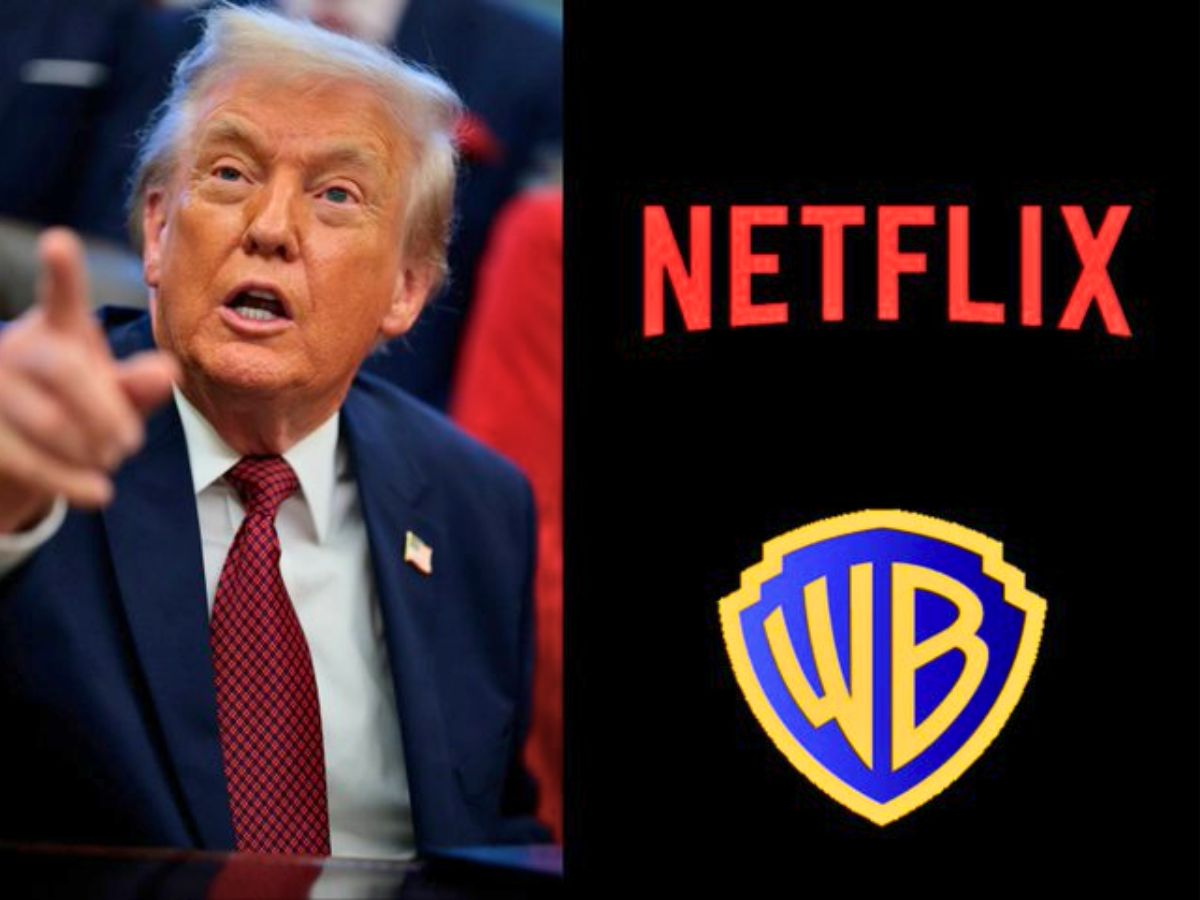
Netflix’s plan to take over Warner Bros. Discovery in an $83 billion deal has sparked a major debate across the entertainment industry and in political circles. The merger, one of the largest ever proposed in Hollywood, has raised questions about market power, jobs, and the future of streaming.
As reactions pour in from unions, studios, and global cinema chains, the deal has now drawn sharp attention from US President Donald Trump, adding a new layer of uncertainty to the already high-stakes decision.
US President Flags Competition Concerns
US President Donald Trump has sounded a note of warning over Netflix’s proposed acquisition of Warner Bros. Discovery (WBD), valued at roughly $83 billion. Speaking at a public event in Washington, DC, he warned that Netflix already has “a very big market share, and when they have Warner Brothers … that share goes up a lot.” He added, “But it is a big market share. It could be a problem.”
Trump also confirmed he recently met Netflix’s co-CEO Ted Sarandos, whom he called a “great person,” and said he intends to be personally involved in reviewing the deal.
Trump Warns Netflix–Warner Bros of $83 Billion Deal
Trump’s comments have sharpened political attention on the mega-merger. He said the companies must expect a tough review, adding that he believes the size of the new entity will attract regulatory scrutiny. His remarks indicate that any approval process may become more complex, especially if he chooses to intervene directly.
His statement has also added uncertainty for investors and industry insiders, who are watching how the Justice Department’s antitrust division handles the case. Trump said the deal would make Netflix even more influential in the entertainment landscape and that regulators “will have to look at that very closely.”
What Exactly is Being Acquired?
The agreement would place Warner Bros.’ iconic film and television businesses under Netflix. This includes major global franchises, the company’s deep movie library, and its streaming operations. Reports indicate that cable networks and news divisions will remain separate through a planned spin-off.
If completed, the merger would create one of the most powerful entertainment companies in history, reshaping how films and shows are produced, distributed, and streamed worldwide.
Why Regulators May Block the Merger?
Market dominance concerns: Analysts believe the combined company could control a significant share of the US streaming market — a level often flagged as an antitrust risk.
Reduced competition: Critics say the takeover could limit consumer choices and give Netflix an outsized influence over pricing and content strategies.
Impact on creators and workers: Industry groups warn the deal may reduce job opportunities, push wages downward, and weaken bargaining power for writers, actors, and production workers.
Threat to theatrical releases: Experts say the merger may reduce the number of movies reaching cinemas, hurting theatres and affecting global box office revenues.
Who is Pushing Back & Why?
Film industry unions, including writers’ groups, have urged regulators to block the deal. They argue that allowing the world’s biggest streaming service to absorb a major studio will damage competition and harm workers across the entertainment sector. They also warn that fewer companies controlling more content will shrink diversity and limit opportunities for new creators.
Cinema owners in several countries share similar concerns, saying theatrical schedules could shrink if Netflix prioritises streaming releases. Netflix, however, insists the deal is “pro-consumer, pro-innovation, pro-creator” and says it plans to continue releasing movies in cinemas.
What Happens Next? Regulatory Review & Uncertainty
The merger still faces a full review by US regulators, who will examine how the combined business could affect competition, creative markets, and pricing. Analysts expect a lengthy process, especially with political pressure increasing.
With Trump’s remarks now at the center of the discussion, the future of the $83 billion Netflix–Warner Bros deal remains uncertain.