
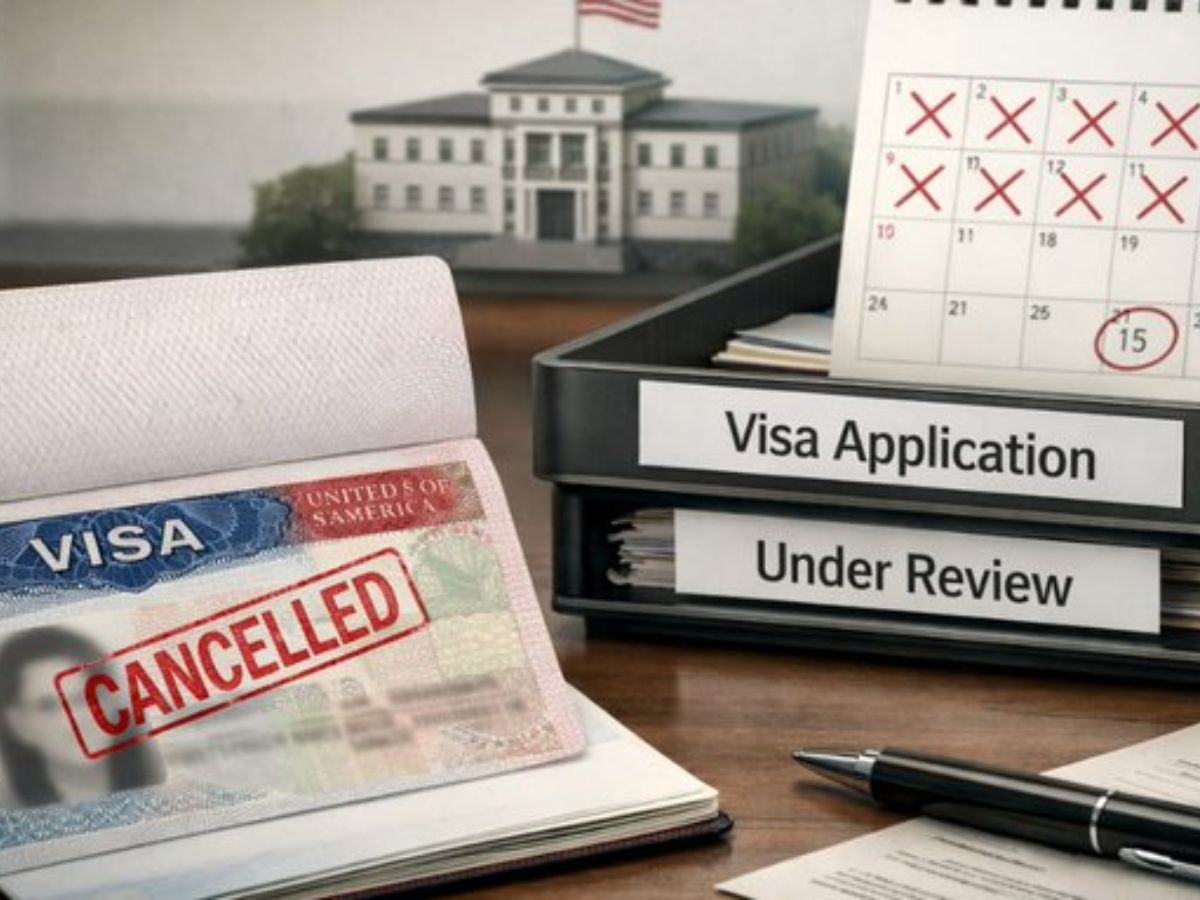
Thousands of Indian H-1B visa holders who travelled to India in December for routine visa renewals now find themselves stuck in their home country. US consulates abruptly cancelled scheduled interviews, forcing many workers to wait months for new appointment dates that extend into late 2026 or beyond. The disruption has caused chaos for professionals, families, and employers, with few clear answers on when processing will resume.
What Happened to H-1B Visa Interviews?
US consulates in India, including New Delhi, Hyderabad, Mumbai and Chennai, cancelled or rescheduled hundreds of H-1B visa renewal interviews that had been set for late December. Many affected workers had planned travel around the holiday period, a common time for stamping and renewals.
Interviews have been pushed to later in 2026, with some now scheduled as far out as October or early 2027, leaving workers unsure when they can return to the United States.
Why Are Interviews Being Cancelled?
The sudden cancellations stem from new US vetting rules that require enhanced checks of applicants’ social media and online presence. This expanded screening was introduced by the US State Department in mid-December as part of a broader security effort. Consular officials say the extra checks reduce daily interview capacity and have triggered a backlog of appointments.
Officials have advised applicants not to show up at consular offices on the originally scheduled dates. The US embassy in India has warned that arriving without a new appointment could result in denied entry to visa facilities.
Who is Affected Most?
Those caught in the visa backlog are largely high-skilled professionals working under H-1B work visas in technology and other sectors. Many are in their 30s and 40s and hold critical roles at major US companies. Families, spouses and children dependent on H-4 visas have also been impacted.
Immigration attorneys report that dozens of firms have hundreds of clients stuck abroad, unable to return in time for work or school. Some professionals face extended stays in India with uncertain income and mounting living costs.
Personal and Professional Impact
The cancellations have disrupted jobs, housing arrangements and school plans for families. Some workers whose visas have expired can no longer re-enter the US without a fresh stamping. Immigration lawyers warn that delays could blindside careers and employment continuity.
With interviews rescheduled far ahead, some employees must choose between long unpaid leave or prolonged separation from their families.
Government and Embassy Response
The US State Department says the new vetting process aims to maintain “thorough background checks” for applicants and ensure national security. Officials urge applicants to plan for extra processing time and complete all required documentation, especially social media details.
Some US firms, including tech companies, have warned employees about the risks of international travel under current conditions and advised them to remain in the US until consulates stabilise scheduling.
Legal Advice and Next Steps
Immigration lawyers say direct legal challenges to cancellations are limited, but affected workers should document all correspondence and seek work-status solutions with employers. Some attorneys recommend requesting remote work or leave while waiting for new appointments.
Workers Turn to Community Support
Faced with uncertainty, many H-1B applicants have taken to online forums and community groups to share experiences and seek peer support. Posts on platforms like Reddit show date changes, cancelled slots, and tips on how others are coping while waiting for rescheduled interviews. These discussions reflect broader anxiety among skilled migrants caught in the visa backlog.
When Could Things Improve?
Consular posts have not provided a firm timeline for clearing the backlog. With social media vetting now standard in the process, H-1B and H-4 visa applicants may face continued delays well into 2026 and beyond. A return to predictability may depend on policy adjustments or enhanced staffing at US diplomatic missions.