
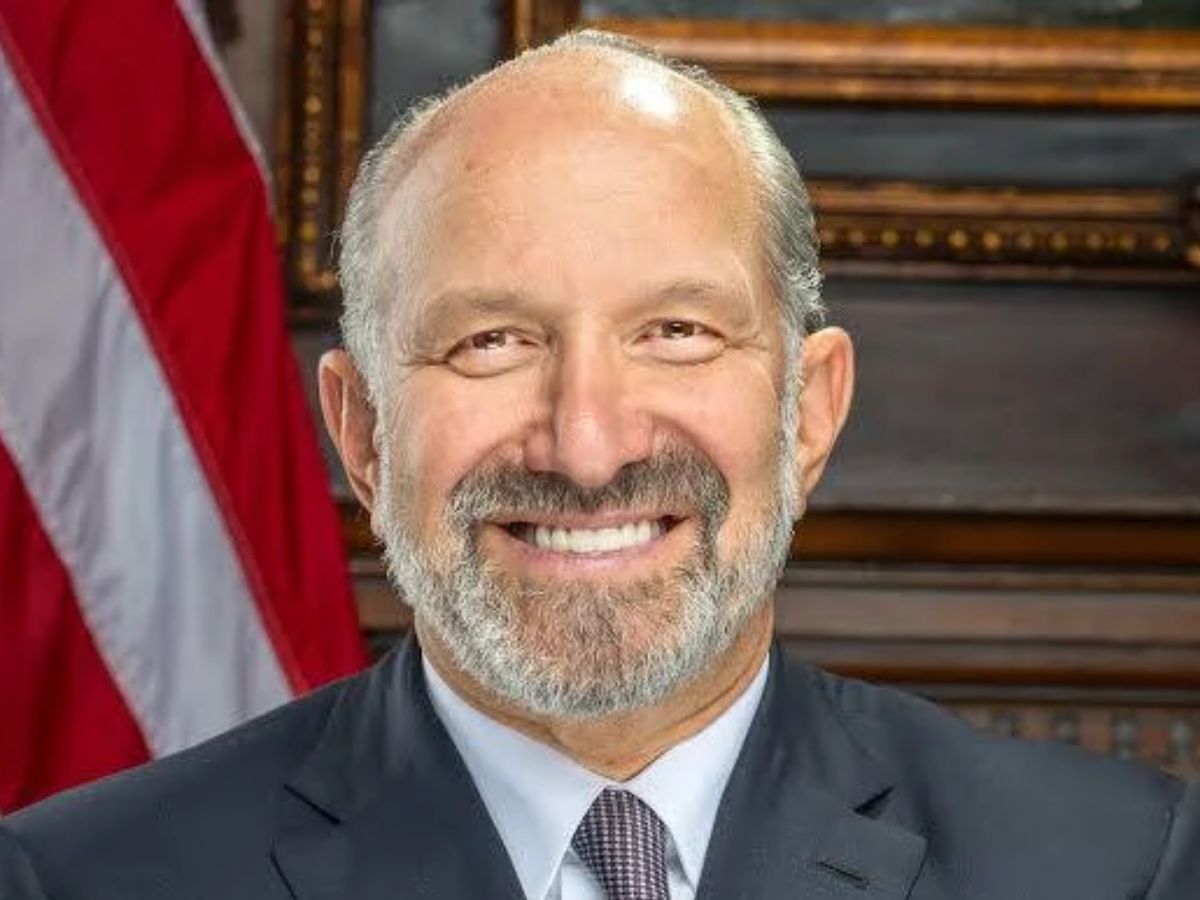
Relations between India and the United States are becoming more strained. On Friday, Howard Lutnick, the US Commerce Secretary during President Donald Trump’s administration, made strong remarks against India. He said that India should apologise and return to the stalled trade talks with the United States.
Lutnick told Bloomberg that in a month or two, India would come back to the table, apologise, and try to make a deal with Donald Trump. He added that it would be up to Trump to decide how to handle Indian Prime Minister Narendra Modi.
These comments came shortly after Donald Trump had stated that the United States had “lost India to Russia and the deepest darkest China.” Trump had also shared a photo on TruthSocial showing Indian Prime Minister Narendra Modi together with Russian President Vladimir Putin and Chinese President Xi Jinping, wishing them all a long and prosperous future.
Comparison with Canada’s Economic Policy
Lutnick compared India’s growing relations with Russia and China to Canada’s past economic policy under Prime Minister Mark Carney. He said that Carney came in with an attitude of “elbows up,” meaning a combative stance toward the US, and imposed retaliatory tariffs. Lutnick noted that eventually, Canada’s GDP went negative and unemployment rose sharply, which forced Carney to drop those tariffs.
He further claimed that India’s hard stance seemed like mere bravado. According to him, Indian businesses would eventually pressure the government to normalise relations with Washington. He suggested that while it may feel good to oppose the world’s biggest market, businesses would ultimately say that the government needs to stop and make a deal with America.
Criticism of India’s Russian Oil Purchases
In the same interview, Lutnick accused India of not fully opening its market to American products and of continuing to purchase discounted Russian oil, which he said indirectly supports Russia’s war in Ukraine.
He stated that India did not want to open its market and should stop buying Russian oil and cease being part of BRICS, suggesting that if India wanted to remain a link between Russia and China, it could do so.
Lutnick also warned that India must either support the US dollar or face harsh consequences, implying that India could face a 50 percent tariff if it chose not to align with the US dollar.
His views were similar to those previously expressed by Peter Navarro, the former US trade representative. Lutnick alleged that India was taking advantage of cheap Russian oil because the sanctions had made it very inexpensive, and India decided to purchase large amounts to make profits.
He further asserted that India needed to decide where its allegiance lay, describing the situation as ridiculous.
India’s Response
India has often rejected such accusations as unfair and pointed out a perceived double standard, emphasizing that China purchases far more oil from Russia than India does, yet the United States rarely criticizes Beijing.
The Ongoing US-India Trade Disputes
In recent years, trade tensions between India and the US have increased. In 2018, the Trump administration imposed tariffs on Indian steel and aluminum, citing national security concerns. In retaliation, India imposed tariffs on several American goods.
Both nations have also clashed over India’s high import duties and complex regulations, which the US claims block American goods and services from entering the Indian market.
Several attempts to restart trade negotiations have failed, with key issues such as market access, intellectual property rights, and data storage rules remaining unresolved. These disputes continue to cause friction, often appearing in public headlines and increasing diplomatic pressure on both sides.
Also Read: US Navy Faces Close Encounter As Two Venezuelan Jets Shadow US Warship In Caribbean