
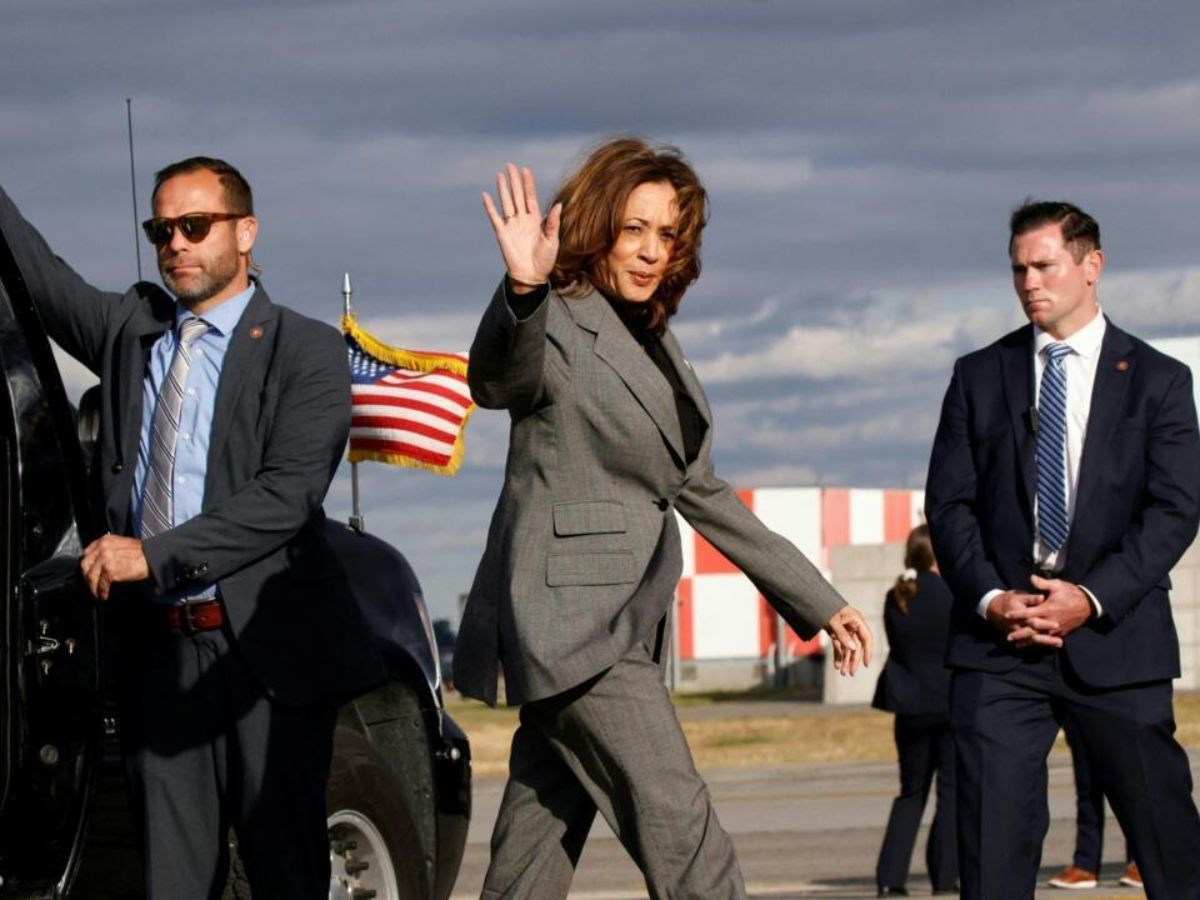
President Donald Trump has cancelled former Vice-President Kamala Harris’ Secret Service detail, seven months after she left office following her failed 2024 presidential campaign. By law, Secret Service protection for ex-vice presidents and their families lasts six months after leaving office. Extensions are rare but legally permitted if security risks justify it.
Reports say former President Joe Biden quietly extended Harris’ protection for one year before leaving office, a move now undone by Trump.
Was Biden Within His Rights?
A 2008 law gives the Secretary of Homeland Security discretion to approve “temporary protection” when conditions warrant it. Experts say Biden’s move to extend Harris’ security fell within legal bounds.
But Trump’s reversal has triggered sharp criticism from Democrats, with California Governor Gavin Newsom’s office calling it “erratic, vindictive political impulse.”
Threats Against Harris
Kamala Harris, the first woman and first person of colour to serve as vice president, has faced a series of publicized threats over the years.
- In 2021, a Florida woman pleaded guilty to sending armed threats against Harris.
- Several men were charged in 2024 for online threats during her presidential bid.
- Earlier this year, a Florida man was arrested for allegedly plotting to kill her with a sniper rifle.
Some of Harris’ allies argue these incidents justify longer-term protection. However, recent intelligence assessments reportedly found no new alarming threats.
Expert View: Security Strain on Secret Service
Ronald Kessler, a journalist with expertise on the Secret Service, told the BBC: “If you set aside political implications, it’s just standard practice. Compared to others, Harris hasn’t stirred up that much.”
He added that Harris’ planned multi-city book tour would require dozens of agents and vehicles nationwide — a significant drain on an agency already strained by UN General Assembly duties this September.
Wider Pattern of Revoked Protections
Harris is not the only high-profile figure to lose protection under Trump. The president has already withdrawn Secret Service coverage from:
- Hunter and Ashley Biden, children of Joe Biden
- Anthony Fauci, former NIAID director
- Ex-Secretary of State Mike Pompeo
- Former National Security Adviser John Bolton
Critics say this pattern points to political motivations, but Trump’s allies argue it reflects a pragmatic reassessment of threats.
What Happens Next?
Without Secret Service coverage, Harris may need to rely on costly private security. Corporations like Meta have spent upwards of $20m annually protecting executives such as Mark Zuckerberg, an expense that could soon be Harris’ reality.
Meanwhile, her upcoming tour to promote her memoir 107 Days has raised questions about whether private firms can match the security standards of federal agents.
Also Read: Trump Aide Sparks Fury, Labels Ukraine Conflict ‘Modi’s War’ Amid Harsh US Tariffs On India
A Look Back at Former Vice-Presidents’ Security
History shows that extended protection for former vice presidents is unusual. Only Dick Cheney received additional coverage, granted by President Barack Obama. Ex-presidents, however, enjoy lifetime protection unless they decline it, as Richard Nixon did in 1985 to save taxpayers money.
The removal of Kamala Harris’ Secret Service detail sits at the intersection of law, politics, and practicality. For some, it is a dangerous political gamble. For others, it is a necessary reallocation of limited resources.