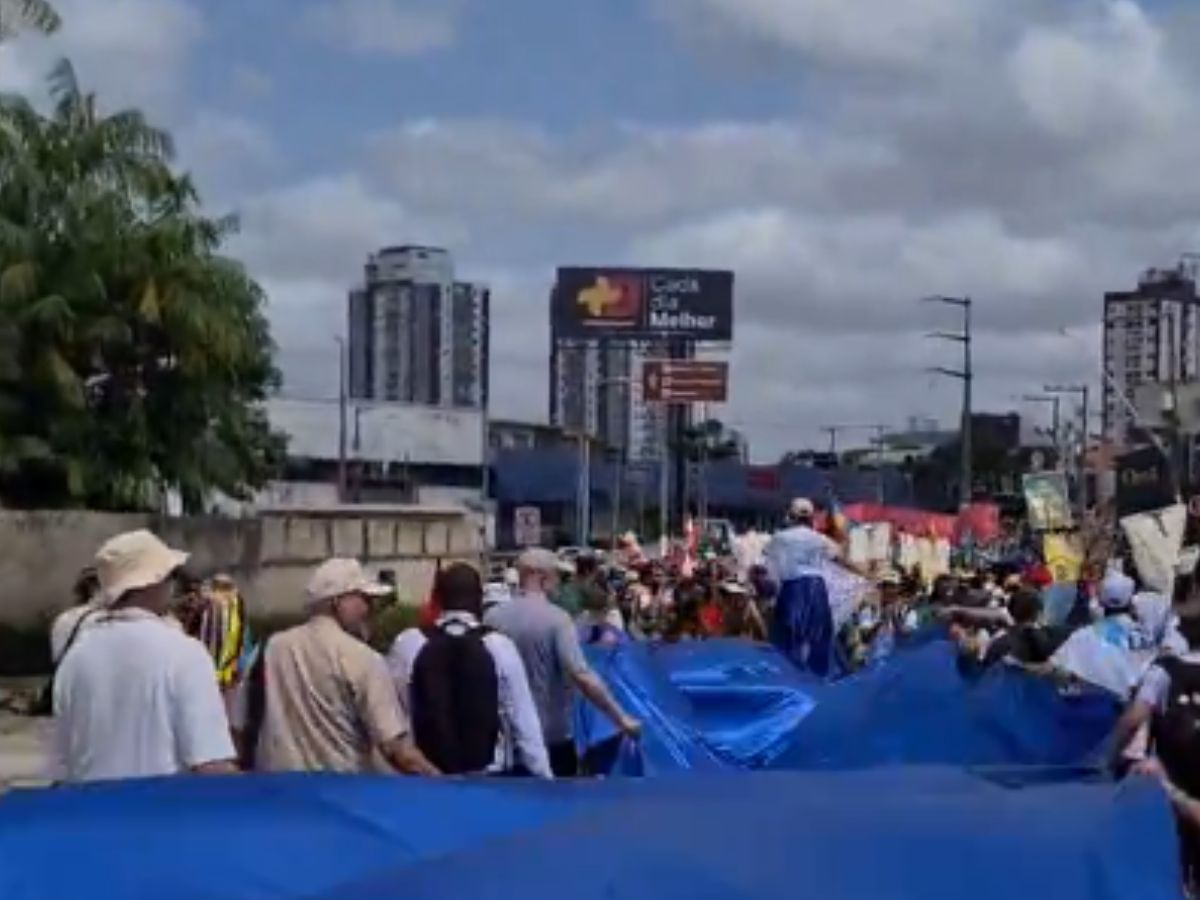
Thousands March at COP30, Calling for Justice (Source: X/ @Janemellett)
Some protesters dressed in black outfits to represent a symbolic “funeral” for fossil fuels. Many others wore red T-shirts, showing the “blood” of environmental defenders who risk their lives protecting nature. On Saturday, people marched with loud chants, giant flags, and handmade signs during what is usually the largest demonstration held at the halfway point of the annual United Nations climate conference.
Large trucks equipped with speakers led the march while organizers guided thousands from different environmental and social justice groups. At the front was Marisol Garcia, a Kichwa woman from Peru, who said they were marching to pressure global leaders to take “more humanized decisions.”
The crowd walked nearly 4 kilometers (about 2.5 miles) along a route that brought them close to the main COP30 meeting site. Earlier in the week, activists had disrupted the event twice by blocking the venue. During one of those incidents, two security officers got minor injuries.
Inside the venue, delegates planned a full day of discussions. A major topic was how to implement the $300 billion per year climate finance commitment that wealthy nations made last year. This funding is meant to help poorer countries move away from fossil fuels, adapt to rising temperatures, and recover from extreme weather events.
Many activists enjoyed being able to protest freely—something they couldn’t do easily in previous climate meetings held in more restricted countries such as Azerbaijan, the UAE, and Egypt. Thousands filled the streets, turning the march into one of the most energetic ones in years.
Youth activist Ana Heloisa Alves, 27, said this was the biggest climate march she had ever witnessed. “This is incredible,” she said. “You can’t ignore all these people.”
She marched to defend the Tapajos River, which Brazil aims to commercially develop. Her group held signs reading, “The river is for the people.”
Pablo Neri, who works with rural communities in Brazil’s Pará state, said the conference organizers should involve more ordinary citizens to reflect the growing mass movement demanding climate justice.
The United States skipped the conference, especially after President Donald Trump dismissed climate change as a “scam” and pulled the country out of the 2015 Paris Agreement, which aimed to keep global warming under control.
One demonstrator, Flavio Pinto from Pará, used performance art to criticize the U.S. He wore a brown suit, a large American-flag-themed top hat, and walked on stilts while waving fake dollar bills printed with Trump’s face. His sign read: “Imperialism produces wars and environmental crises.”
Vitoria Balbina, representing the Interstate Movement of Coconut Breakers of Babaçu, marched alongside mostly women wearing hats woven from Babaçu palm leaves. They demanded access to Babaçu palm trees found on private land—trees that support their income and cultural traditions. She said the protest was not only about environmental survival but also about defending “a way of life.”
The march created a wave of red, white, and green flags stretching up a hill. People gathered outside shops to watch, taking photos as the crowd approached. One passerby, carrying grocery bags, simply said, “Beautiful.”
The climate conference continues until Friday. While major breakthroughs seem unlikely, experts and participants hope for at least some movement on earlier commitments—especially financial support to help vulnerable nations deal with worsening climate impacts.
Also Read: Who Is Keith Michael Lisa? Suspect Identified in Attack on US Attorney Alina Habba’s Office