
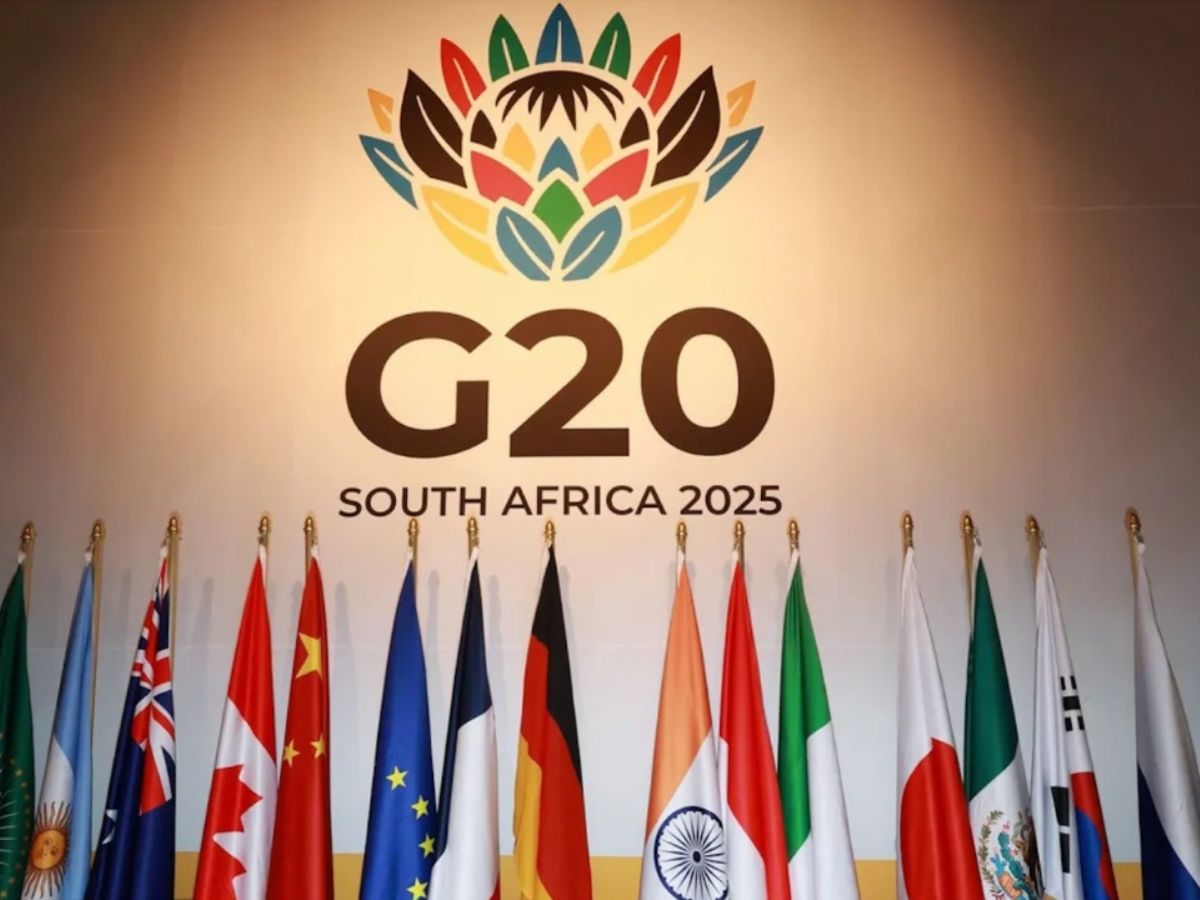
The G20 Summit in Johannesburg began on Saturday, but instead of unity, the event opened under deep geopolitical tension. The absence of US President Donald Trump, growing disagreements over the Ukraine crisis, and a climate negotiation deadlock at COP30 cast a shadow over the global meeting.
World leaders, including Indian PM Narendra Modi, French President Emmanuel Macron, Chinese Premier Li Qiang, Brazilian President Luiz Inacio Lula da Silva and Turkish President Recep Tayyip Erdogan, attended the high-level gathering. But the US president’s decision to boycott the summit set the tone for a divided start.
Washington said South Africa’s priorities—such as strengthening global cooperation on trade, climate and development—“run counter to US policy”.
G20 Summit 2025: Cyril Ramaphosa Pushes Back, Defends Multilateralism
South African President Cyril Ramaphosa opened the summit with a subtle message aimed at the US. He stressed that “multilateralism” remains essential to solve global challenges, especially when the world faces “escalating geopolitical tensions”.
His message highlighted South Africa’s commitment to collective global action at a moment when the US chose not to engage.
G20 Summit 2025: US-Europe Rift Over Ukraine Strategy Widens
Even in Trump’s absence, his influence loomed large. The G20 began just days after the US unveiled a surprise 28-point plan to end the Ukraine war—largely in line with Russia’s demands. The proposal alarmed European nations and Kyiv.
European leaders, along with Canada, Japan and Australia, scheduled a side meeting to “discuss the way ahead on Ukraine”, according to an EU official. A European diplomat said, “We are working on making the US plan something more able to be applied, based on previous dialogue.”
Macron, German Chancellor Friedrich Merz and UK Prime Minister Keir Starmer also insisted that any peace proposal must have the “joint support and consensus of European partners and NATO allies”. Trump has warned Ukraine to accept the deal by Thursday, putting pressure on Kyiv during the summit.
G20 Summit 2025: COP30 Climate Talks Hit a Wall
The summit also faced another major problem—an impasse at the COP30 climate negotiations in Brazil. Talks were supposed to end on Friday after two weeks, but negotiators entered overtime.
Several oil-producing nations reportedly resisted language calling for a phaseout of fossil fuels. This stalled the final agreement.
Despite the setback, Ramaphosa emphasised cooperation. He said the adoption of a joint G20 leaders’ declaration “sends an important signal to the world that multilateralism can and does deliver”.
US Pullback from Global Forums Continues
The US boycott mirrored Trump’s earlier decision not to send a delegation to COP30. Washington confirmed it would send only a chargé d’affaires for the closing ceremony, even though the US will host the 2026 G20 Summit at a Trump-owned golf club in Florida.
This growing American withdrawal has raised concerns about the future balance of global leadership.
Africa’s G20 Moment Overshadowed
This was the first G20 Summit hosted on African soil—seen as a historic moment for the continent. South Africa hoped to highlight Africa’s development needs, climate finance priorities, and its growing role in global decision-making. But the Ukraine conflict and the US absence shifted global attention away from Africa’s agenda.
Diplomats fear that Africa’s major push for investment and climate justice may be drowned out by geopolitical tensions.