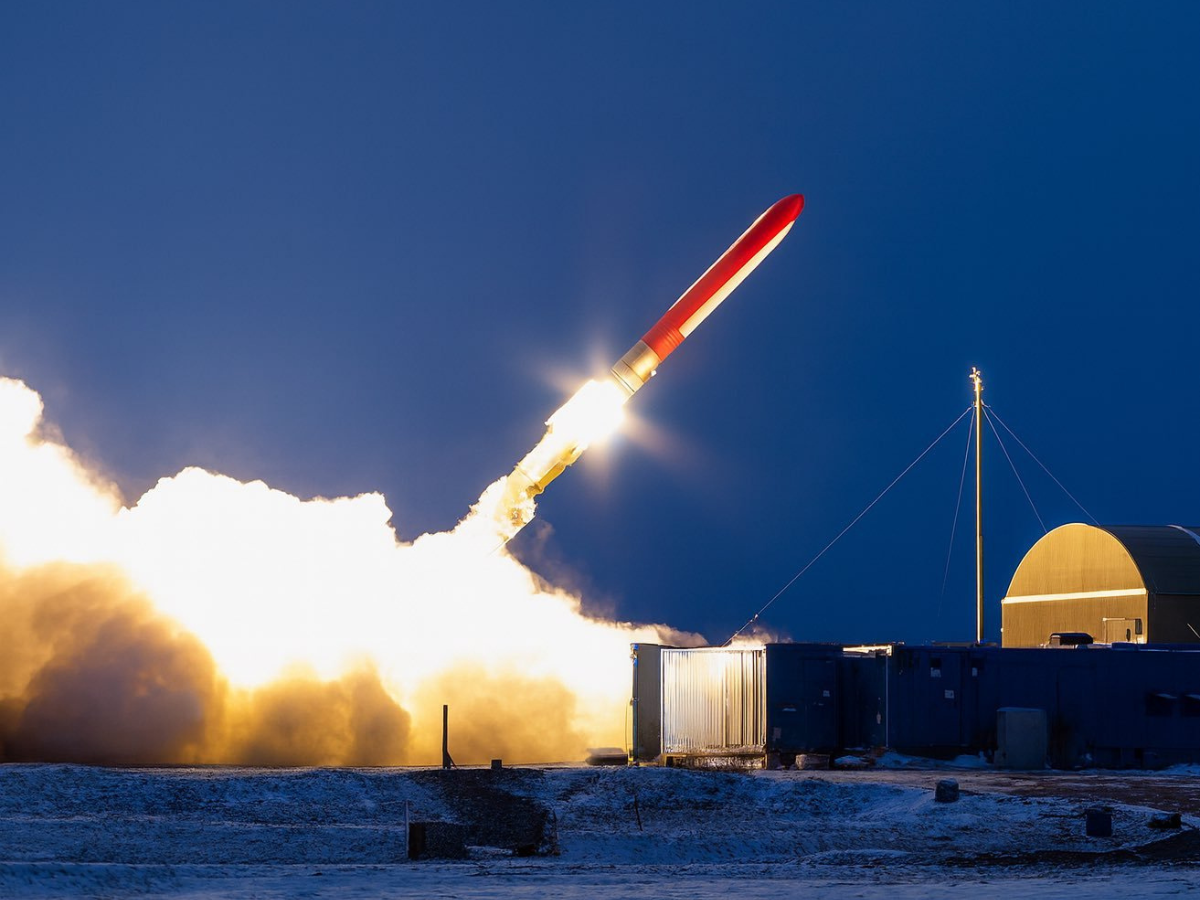
Russian President Vladimir Putin announces the successful test of the 9M730 Burevestnik a nuclear-powered missile with unlimited range (Photo: Pinterest)
The Burevestnik Missile tests on October 21 into consideration by the global powers or superpowers via a statement issued by Vladimir Putin wherein he claimed that Russia had indeed tested the aforementioned cruise missile capable of carrying nuclear warheads and powered by nuclear reactor.
The Burevestnik or 9M730 in official parlance, is a state-of-the-art cruise missile designed to fly indefinitely on nuclear (NPP) power. Such design offers the cruise missile vastly longer operational range in comparison to conventional design with limited onboard fuel. It obtains a unique edge in tactics and maneuverability over its adversary operators.
The word "Burevestnik" translates to Storm Petrel a seabird that is usually found to appear in turbulent weather. The name represents the attributes of resilience and unpredictability Russia attaches to the design of the missile and its intended purpose NATO has given it a different code SSC-X-9 Skyfall.
ALSO READ: India-UK Signs Rs. 3,900 Cr Defence Deal for Lightweight Missiles & Naval Tech
Moscow has never commented on the actual speed of the missile but defense analysts believe that Burevestnik could travel anywhere between subsonic and near-supersonic speed and keep flying on a low-altitude profile. This unpredictable charge trajectory makes it next to impossible to be tracked or intercepted by any existing air defense systems. It travelled 14,000 km (8,700 miles) and was in the air for about 15 hours.
The missile's interesting selling point is its theoretically unlimited range. During the last flight test, it purportedly flew 14,000 kilometers in 15 hours, demonstrating that it could hit any target worldwide without needing refueling with an ability that no other cruise missile can claim.
ALSO READ: What Are Tomahawk Missiles & How They Could Impact Ukraine War? | Russia-Ukraine War
According to General Valery Gerasimov, Chief of General Staff of Russia, the successful test was carried out on 21 October 2025. The missile remained airborne for hours until completing its trajectory proving the success of the nuclear propulsion system. The test was hailed by Putin as a watershed moment in which the skeptics were belied.
The Burevestnik is conventional nuclear armed cruise missiles, nuclear-powered and nuclear capable. This tandem capability means that it could theoretically fly indefinitely before releasing its nuclear payload. "Unique by its own right, the Burevestnik is such a weapon that has no counterparts in the world," according to Putin.
The 9M730 Burevestnik is a member of Russia's next-generation strategic arsenal developed in response to the U.S. withdrawal from the Anti-Ballistic Missile Treaty (ABM) in 2001 with the objective of the missile is to counteract Western missile defenses to ensure that Russia's deterrence remains credible against NATO advancements.
ALSO READ: Massive Solar Explosion Strikes Venus: Could Earth Be Next?
Putin has instructed the Russian defense department to classify the technical details of the missile and prepare infrastructure for its deployment. Wearing military fatigues while talking to the media, Putin sent a double message both symbolic and strategic that Russia remains steadfast amid Western pressure due to the war in Ukraine.
A technical analysis, Burevestnik is intended to be a political message in view of the tensions on the rise, its actual deployment would alter the way the world talks about nuclear deterrence and perhaps throw into turmoil the arms control agenda. While to most Western analysts it seems provocative, Russia considers it as an umbrella against aggression and reinforcing its claim of being the dominant nuclear power.
ALSO READ: Why Life Seems to Speed Up with Age | Neuroscience of Time
Disclaimer: Information is based on official statements and verified reports; technical data may evolve as further details on Burevestnik tests emerge.