
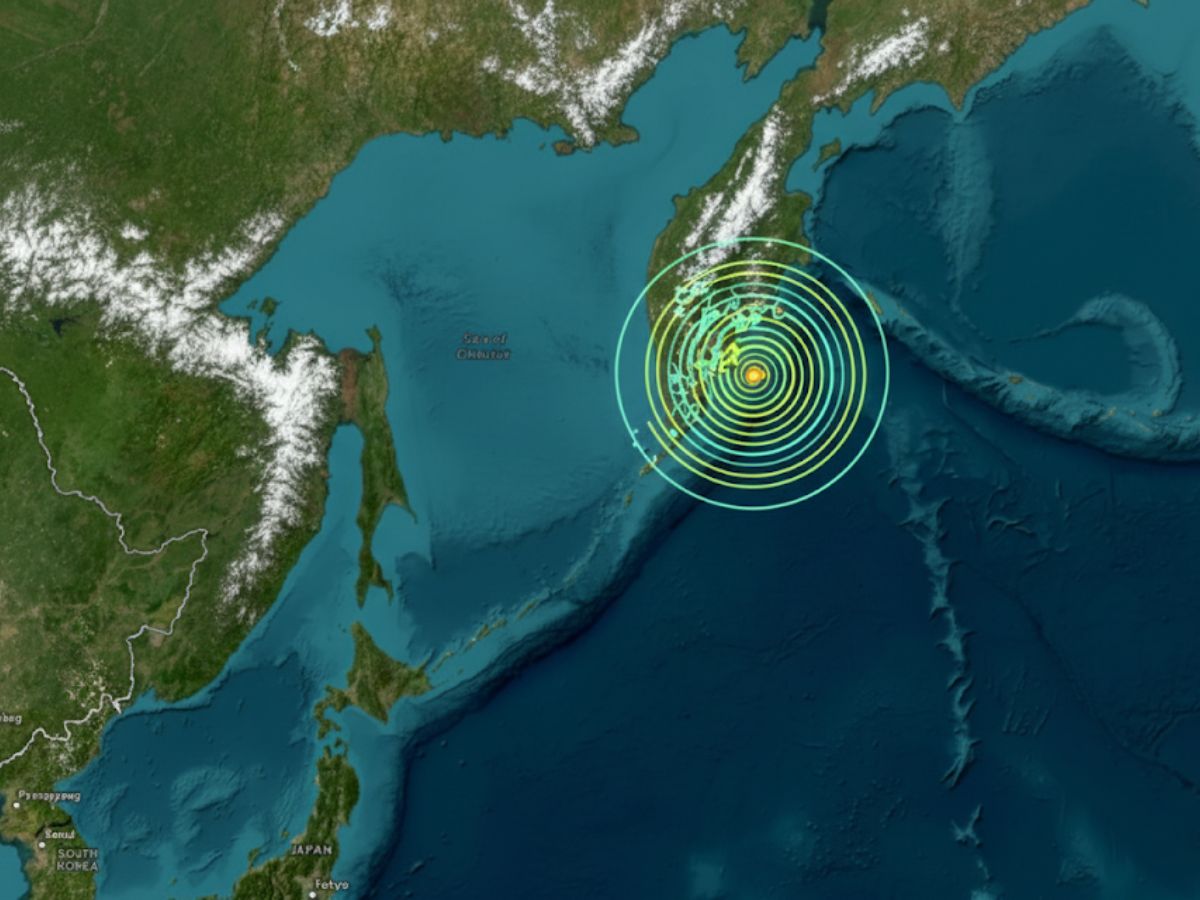
A major, shallow earthquake struck off the coast of Russia’s Kamchatka Peninsula on Thursday, sending tremors through the remote Pacific region and triggering immediate tsunami warnings for Russia and parts of Alaska. While there were no immediate reports of casualties or significant damage, the powerful temblor put emergency services on high alert and revived memories of a similar large quake that struck just months ago.
How Powerful Was the Earthquake?
The quake’s power was measured differently by various agencies but was universally categorized as major. The U.S. Geological Survey (USGS) measured the quake at 7.8, striking just 10 kilometers (6.2 miles) deep—an unusually shallow depth that can intensify shaking and raise tsunami risks. Several strong aftershocks followed, the most significant measuring magnitude 5.8. Russia’s Emergencies Ministry provided a slightly lower magnitude estimate of 7.2. The discrepancy is common due to different measurement methodologies.
Also Read: 7.8 Magnitude Earthquake Strikes Kamchatka Again – Is a Tsunami Warning in Effect?
Where Were Tsunami Warnings Issued?
The shallow depth and offshore location immediately raised concerns about tsunami generation. In response, authorities in the North Pacific issued a number of alerts:
Russia: Officials issued a tsunami warning for the eastern coast of the Kamchatka Peninsula, which faces the Pacific Ocean and the Bering Sea. Waves between 0.5 and 1.5 meters (1.6–4.9 feet) were forecast. A tsunami watch was also declared for the Kuril Islands, a chain stretching between Russia and Japan.
United States: The National Weather Service and U.S. Pacific Tsunami Warning Center issued advisories for parts of Alaska, warning of dangerous waves and currents. Authorities across the North Pacific followed with multiple alerts.
No Threat Declared: The alert’s reach was limited by authorities’ prompt confirmation that Hawaii, British Columbia, and the rest of Canada were not at risk of tsunamis.
What Was the Immediate Response?
Regional Governor Vladimir Solodov announced that emergency crews were placed on high alert and began inspecting critical infrastructure, residential buildings, and public facilities within minutes of the tremor. “This morning is once again testing the resilience of Kamchatka residents,” he wrote on the Telegram messaging app. The primary public safety directive was for residents in coastal areas to stay clear of shorelines due to the dangerous currents and wave activity associated with tsunami events.
Is This Region Prone to Such Events?
The Kamchatka Peninsula lies in the Pacific Ring of Fire, making it one of the planet’s most quake-prone regions. This event reflects that ongoing threat. Only a few months ago, in July, an 8.8 quake struck Russia’s Far East, sparking tsunami alerts across borders. The pattern of major quakes points to the region’s fragile geology and the need for strong preparedness measures.