
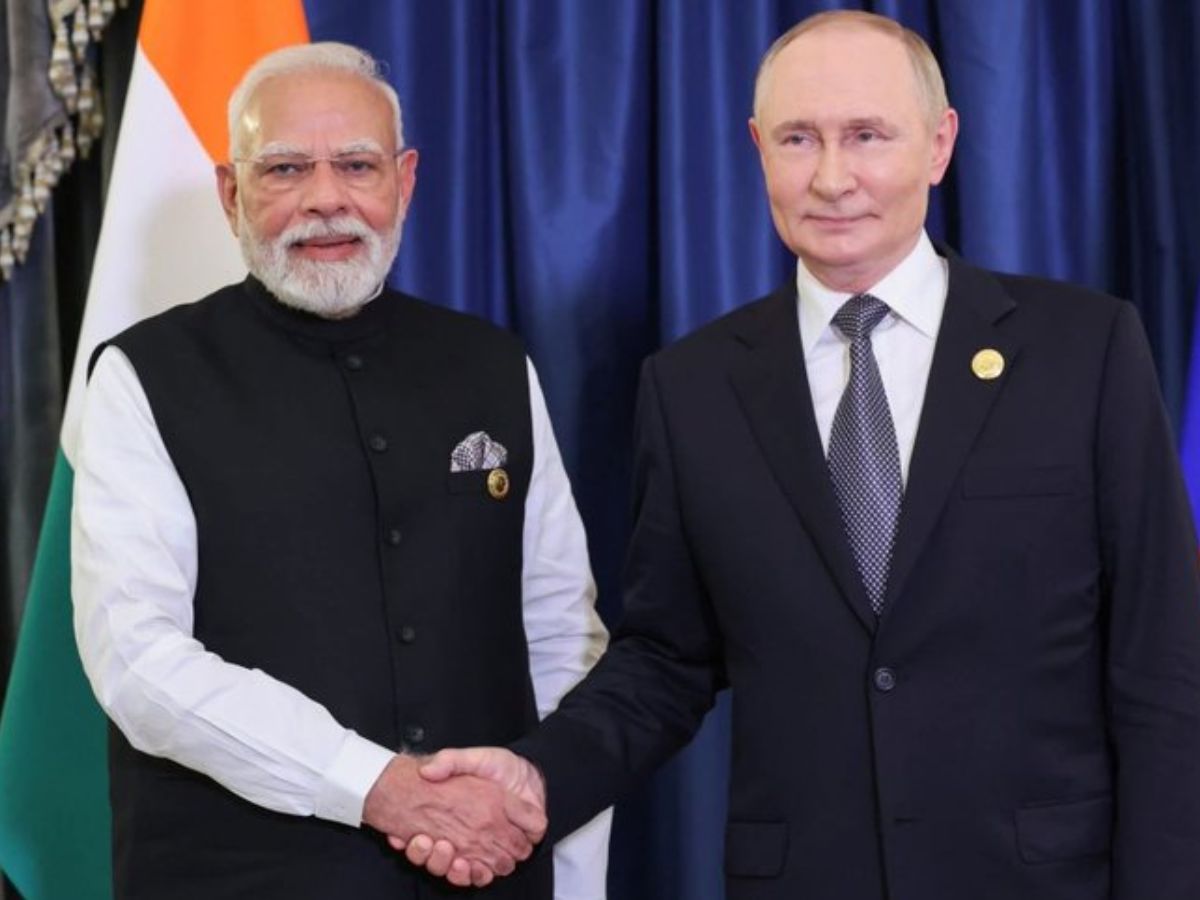
Russian President Vladimir Putin is set to visit India today (December 4) for a two-day diplomatic trip, marking his first visit since the Russia-Ukraine war began in 2022. While India and Russia share a long-standing alliance dating back to India’s independence, this visit carries heightened importance as New Delhi faces growing pressure from the West, particularly the United States, to reduce its ties with Moscow.
The visit will include discussions between Putin and Indian Prime Minister Narendra Modi on trade, defence, energy, and strategic cooperation. Analysts note that both sides are likely to focus on deepening bilateral relations while navigating external geopolitical pressures.
Key Discussion Agenda During Putin Modi Meet
Trade: A Top Priority
Ahead of the visit, the official agenda has highlighted trade as a key focus. Kremlin spokesperson Dmitry Peskov stated that some countries are trying to create “obstacles” in India-Russia trade, but both nations are determined to expand their bilateral trade to $100 billion over the next five years.
“There are some countries that would try and put obstacles on the way of development of our trade. So let’s stick to our own interests and we have to make sure that India is sharing this approach,” Peskov said in an interview with Sputnik News.
Russia has suggested creating a framework to insulate trade relations from third-party pressures and discussed mechanisms for settling trade in national currencies to avoid reliance on the US dollar. Putin has also indicated that boosting Indian imports will be a key agenda item during his meetings with Modi.
The visit includes the India-Russia Business Forum, where discussions will cover expanding Indian engineering exports to Russia, increasing Russian purchases of Indian food and pharmaceutical products, promoting joint digital services, and strengthening industrial cooperation.
Crude oil will also be a central topic. Despite US President Donald Trump imposing additional tariffs totaling 50% on Indian imports, India has continued to purchase Russian crude. Putin’s delegation includes heads of Rosneft and GazpromNeft, indicating oil discussions will be high on the agenda. India is expected to seek the restoration of ONGC Videsh Ltd’s 20% stake in the Sakhalin-1 project in Russia’s Far East.
Defence Deals: S-400s and Su-57 Jets
Defence cooperation is another key focus of the visit. India is likely to discuss acquiring additional S-400 air defence systems and exploring the more advanced S-500 Prometheus platform. Peskov confirmed, “S-400 is on the agenda. We will have certain members of the delegation that can discuss in detail.”
India may also consider procuring at least two squadrons of Su-57 fighter jets. Peskov described the Su-57 as “the best plane in the world” and confirmed it will be discussed during the summit.
Ahead of the visit, Russia ratified the Reciprocal Exchange of Logistic Support (RELOS) defence pact, which will be further discussed by Modi and Putin. The summit may also include collaboration on defence projects such as assembling the 48N6 missile variant of the S-400 system in India through Bharat Dynamics Limited.
Russia remains India’s largest defence supplier, accounting for 77% of Indian defence imports in 2024, according to the Stockholm International Peace Research Institute.
Civil Nuclear Cooperation
Civil nuclear energy is expected to be a major topic. Russia has offered India small modular reactors, which are cost-effective and flexible, and has suggested joint investments in the sector. Peskov noted, “We were deeply involved in creating a sector of peaceful nuclear energy in India, in Kudankulam, and we were hoping for the continuation of this project.”
India has expressed interest in small reactors due to their lower capacity (~300 MW), cost efficiency, and potential for rapid deployment, exploring options with multiple countries including France.
Labour Mobility and People-to-People Ties
Another important agenda is a labour mobility agreement to allow skilled Indian workers to legally migrate to Russia, addressing shortages in sectors such as IT. Officials say this pact is “the single most important development” of the visit.
By the end of 2025, over 70,000 Indian nationals are expected to be officially employed across Russia under quotas managed by the Russian Ministry of Labour. Moscow-based Indian Business Alliance president Sammy Manoj Kotwani told PTI, “India has one of the world’s most dynamic and skilled workforce and Russia is undergoing a major industrial transformation. This agreement creates a win-win opportunity for both sides — providing skilled manpower for Russia’s economy while ensuring secure and dignified employment for Indian professionals.”
Discussions may also include the recruitment of Indian nationals in the Russian army, though the Ministry of External Affairs noted that around 50 Indians currently serving are expected to be discharged.
US Sanctions and the Russia-Ukraine War
Putin and Modi are expected to discuss US sanctions and trade pressure. Trump has imposed a 25% tariff on Indian imports of Russian crude and additional secondary sanctions targeting Russian oil firms Lukoil and Rosneft.
Modi is also likely to raise the issue of the Russia-Ukraine war, consistent with his repeated calls for a peaceful resolution. This is especially relevant as Putin recently met with US officials Steve Witkoff and Jared Kushner to discuss a potential peace deal.
High Stakes and Strategic Outcomes
Putin’s visit is seen as strategically critical, with expectations for “significant outcomes” across trade, defence, energy, and labour cooperation, according to Dmitry Peskov. Observers note that while trade and defence dominate the agenda, the visit also provides India and Russia an opportunity to navigate geopolitical pressures, including Western sanctions and the ongoing war in Ukraine.
The summit is therefore being closely watched for agreements that could shape India-Russia ties for years, from defence deals to energy security and skilled workforce cooperation.