
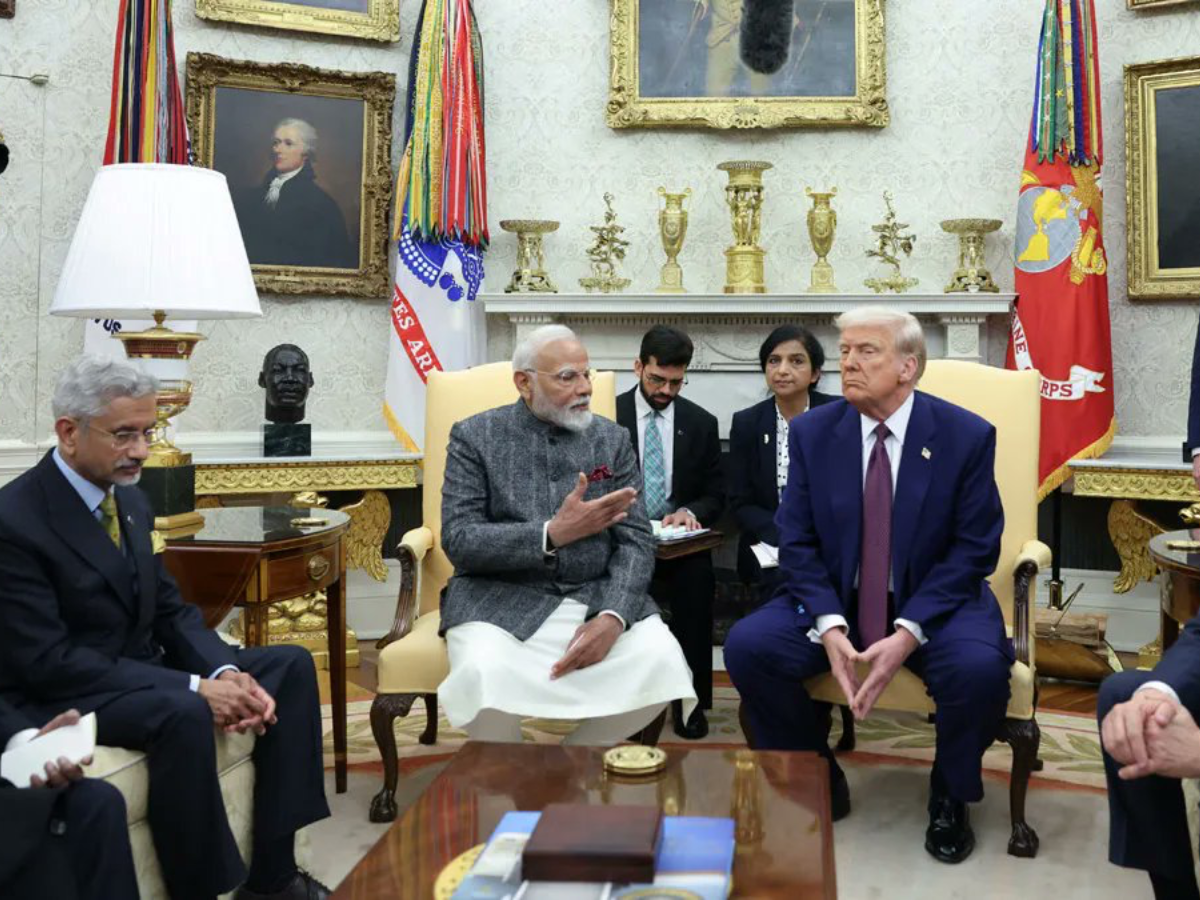
India and the United States reach another critical point in their strategic relationship. A recent telephone call between Prime Minister Narendra Modi and US President Donald Trump underlined both progress and pressure points in a partnership that has grown steadily but now sits under renewed scrutiny.
Their discussion, described as warm and constructive, came at a time when bilateral trade negotiations, political criticism and shifting global dynamics shape the future of this key geopolitical bond.
Overview of the Bilateral Landscape
According to both sides, the conversation ranged over the trajectory of the Comprehensive Global Strategic Partnership. Modi and Trump reviewed cooperation across trade, technology, defence, security and energy.
While both the leaders reportedly expressed satisfaction over the ongoing engagement between the two countries, they underlined that momentum needed to be sustained as negotiations on several issues have dragged on for too long.
ALSO READ: Bangladesh to Hold First Post-Hasina Election on February 12
Why the Call Was Important
The timing of the call was as important as its content. It came hours after US and Indian negotiators began another round of trade talks in New Delhi. Washington has indicated that New Delhi’s latest proposals are its strongest yet, though barriers remain, particularly in agriculture.
For the US, gaining access to India’s meat and dairy market has long been a sticking point. For India, protecting domestic producers remains politically sensitive.
Political heat over the relationship
The Modi-Trump conversation also came amid growing criticism within the US. Representative Sydney Kamlager-Dove this month slammed Trump’s policies toward India, calling them counterproductive. Her comments reflected broader concerns in Washington about tariffs, trade penalties and the direction of the relationship.
The sentiment was heightened by the US this week imposing steep combined tariffs of as much as 50 percent on Indian goods linked to Russian oil purchases, which triggered concern of another phase of trade friction.
What is the Next
Yet, despite those tensions, both countries retain the view of each other as indispensable partners in a changing world. India is increasingly viewed from Washington as an emerging alternative market as the US seeks to diversify its trade exposures.
New Delhi, meanwhile, remains set on a broad expansion of cooperation through the COMPACT framework that binds defence, commerce, and technological collaboration into a single bow for the decades ahead. The negotiating teams have more gaps to bridge, but the leaders call signals that neither side will allow their disagreements to get in the way of what remains one of the world’s most consequential partnerships.
Disclaimer: This article offers general reporting and analysis based on available information and should not be taken as official policy guidance or diplomatic representation.