
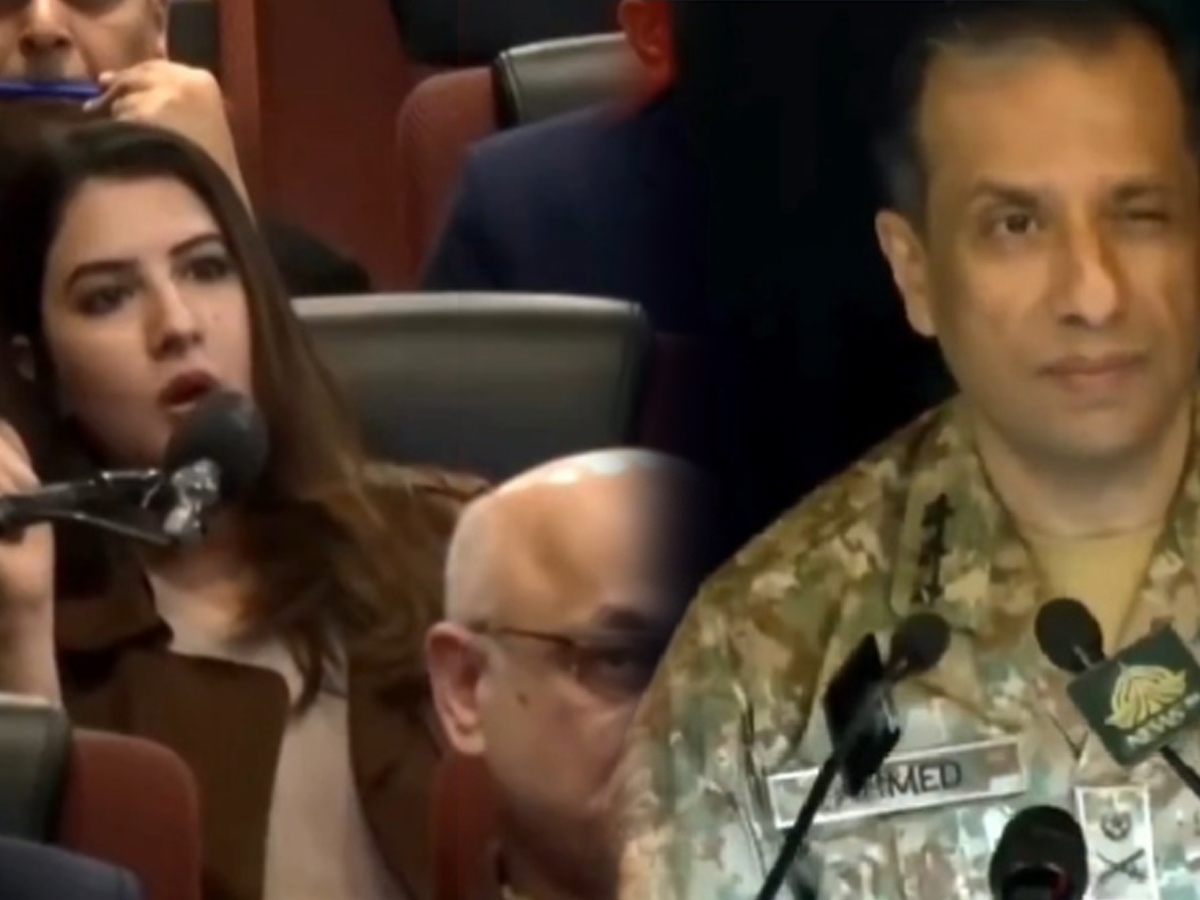
A short clip from a recent press briefing by Pakistan army’s media wing chief, Lt Gen Ahmed Sharif Chaudhry, has sparked a social-media storm. In the video, the journalist pressing him for answers about the security status of jailed former Prime Minister is seen getting an unexpected reaction, Chaudhry smiles and winks at her.
The action triggered swift criticism. Observers described it as unprofessional and unbecoming of an army general.
What Happened at the Press Conference
During the briefing, journalist Absa Komal asked Chaudhry pointed questions about allegations that the former prime minister posed a “national security threat.” She asked, “How is it different from the past, or should we expect any development in the future?” Chaudhry replied aggressively, “And add a fourth point, he is also a ‘zehni mareez’ (mental patient).” He then smiled and winked at Komal. That gesture, in a formal, televised military-press context, shocked many.
Why Critics Are Calling It Unprofessional
Many social-media users reacted instantly. One wrote, “He’s not a professional soldier.” Another said, “This shows how unprofessional their army is. How can someone in uniform wink like this publicly?” Others added: “He is the General of the Pakistan Army… no wonder the state of affairs they are in.”
For critics, the incident reflected a larger problem, where intimidating language and dismissive gestures replace professional conduct and respect.
Sharif Chaudhry’s Recent History of Aggressive Briefings
Lt Gen Chaudhry is no stranger to controversy. Over recent months, he has often led fiery press briefings filled with strong anti-India rhetoric and blunt attacks on political opponents. His harsh comments about the former premier, calling him “mentally ill,” “narcissist,” and “anti-state”, drew widespread attention.
He also accused foreign media and intelligence agencies of fueling anti-army narratives. The wink, many argue, crossed the line from stern commentary to personal mockery in a public, formal setting.
The Broader Impact — Trust in Institutions, Military Conduct, Media Rights
This episode touches on more than just one moment. It raises questions about respect, professionalism, and power dynamics. When a senior military official appears publicly to mock a journalist, it sends a chilling message.
It undermines faith in impartial institutions and threatens free media reporting. Critics worry such conduct discourages journalists from asking tough questions — especially in sensitive political situations.