
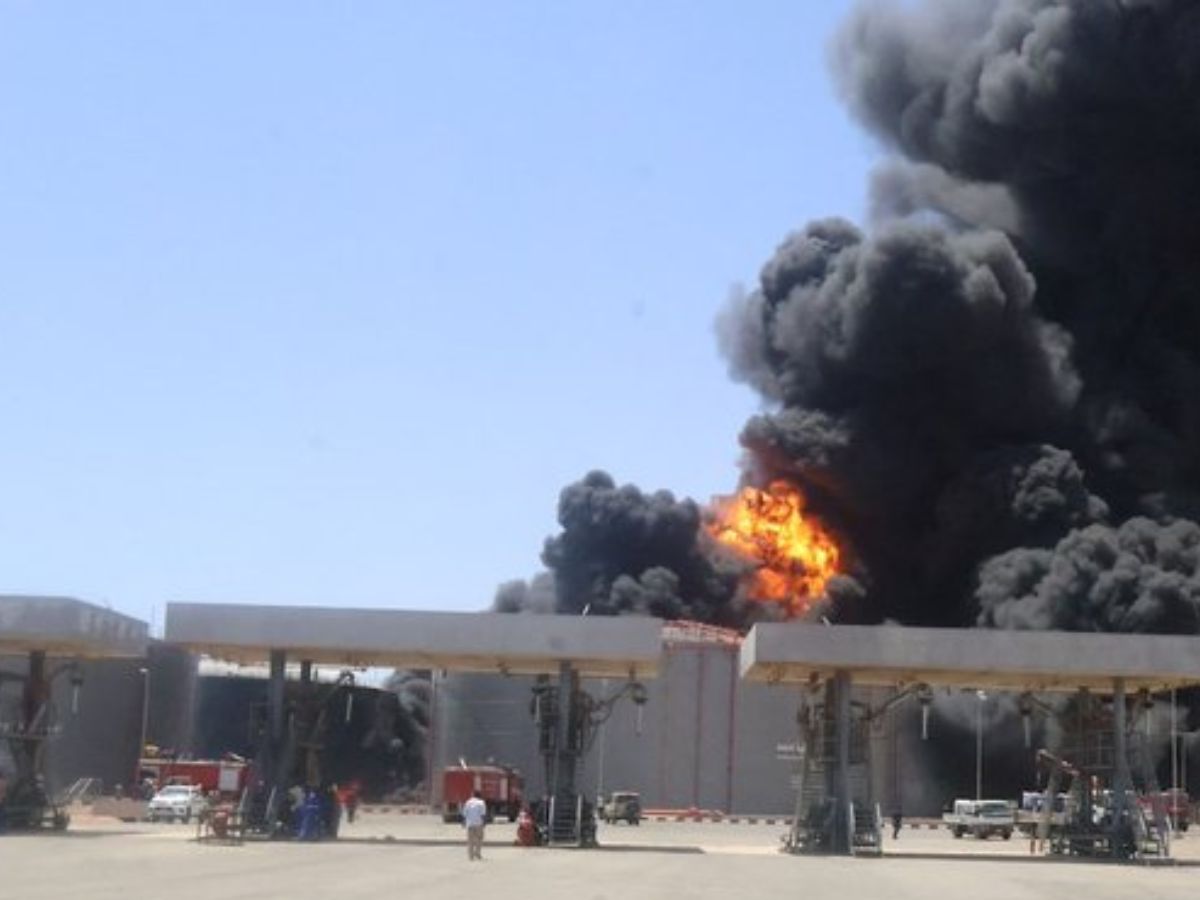
At least 104 civilians have lost their lives in a series of drone attacks across Sudan’s Kordofan region, as the ongoing civil war between rival military forces turns even more deadly. The conflict, now in its third year, has reached a dangerous new phase.
Drone strikes intensify after key military base falls
The drone attacks began in early December and continued until Friday. This surge in violence followed the capture of a major army base in Babnusa by the paramilitary Rapid Support Forces (RSF) after nearly a week of fierce fighting.
As clashes intensified, the focus of the war shifted from Darfur in western Sudan to the central Kordofan region, triggering fresh destruction and humanitarian suffering.
Children among victims in deadliest attack in Kordofan
The most devastating strike occurred in Kalogi, South Kordofan, where a kinde in rgarten and a hospital were hit. According to reports, 89 people were killed, including 43 children and eight women.
Reacting to the incident, UN human rights chief Volker Turk said he was “alarmed by the further intensification in hostilities” and stressed that attacking medical facilities is a violation of international humanitarian law.
UN peacekeepers Targeted
The violence also claimed the lives of six Bangladeshi peacekeepers serving with the United Nations. They were killed on December 13 when drones struck their base in Kadugli, the capital of South Kordofan.
UN Secretary-General Antonio Guterres condemned the assault, calling the strikes “horrific drone attacks” and warning that attacks on peacekeepers “may constitute war crimes under international law”.
Military Hospital attack sparks outrage
Just a day later, Dilling Military Hospital came under fire. Casualty figures varied between sources. The Sudan Doctors Network reported nine deaths and 17 injuries, describing the incident as “systematic targeting of health institutions”.
UN officials, however, said six people were killed and 12 others wounded, many of them medical staff.
Army blames RSF as crisis deepens
The Sudanese Armed Forces (SAF), which are aligned with the government, accused the RSF of carrying out the attacks. The RSF has not issued any response to these allegations so far.
Disease outbreaks worsen humanitarian disaster
Beyond the killings, the violence has pushed the region into a severe health crisis. North Kordofan’s Health Minister Iman Malik revealed that the state has recorded 13,609 cholera cases and 730 dengue fever infections.
She added that 30 percent of health facilities are no longer operational due to the fighting, making it extremely difficult to treat patients.
Mass displacement across Kordofan
More than 40,000 people have fled North Kordofan, while many civilians remain trapped in besieged cities such as Kadugli and Dilling, unable to escape the violence.
In Heglig, which the RSF briefly captured before handing it over to South Sudan’s army under a three-party agreement, nearly 2,000 people were forced to flee to White Nile state.
Peace efforts restart amid rising death toll
The escalation comes as international peace efforts resume. On December 15, SAF chief Abdel Fattah al-Burhan met Saudi Crown Prince Mohammed bin Salman and expressed willingness to work with US President Donald Trump on peace initiatives.
The following day, Egypt and the United States jointly rejected “any attempts to divide Sudan” and urged a comprehensive ceasefire.
World’s worst humanitarian crisis
Sudan has topped the International Rescue Committee’s Emergency Watchlist for the third consecutive year. Since the war began in April 2023, more than 40,000 people have been killed, according to UN estimates. Aid groups believe the real number is far higher.
Over 14 million people have been displaced, making Sudan home to what the United Nations describes as the largest humanitarian crisis in the world.