
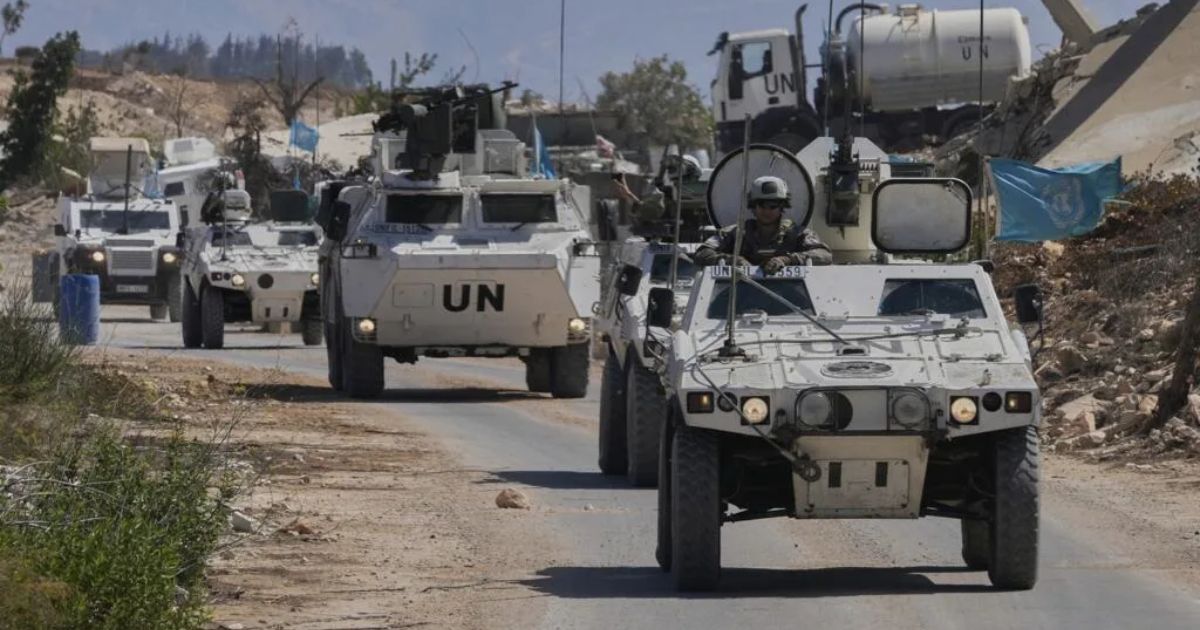
Final Extension of UNIFIL Mandate
The United Nations Security Council voted unanimously to renew its peacekeeping force in southern Lebanon for the final time, paving the way for a complete withdrawal by the end of 2027. The UN Interim Force in Lebanon (UNIFIL), which was initially deployed in 1978 following Israel’s invasion of Lebanon, will remain operational until December 2026 before entering a one-year phased drawdown in consultation with the Lebanese government.
The resolution, introduced by France and backed by the United States, marks a turning point in one of the UN’s longest-running operations. Acting US Ambassador to the UN Dorothy Shea said the decision reflects a “radically different” security environment, urging Lebanon to take full responsibility for its southern border.
Friction With Hezbollah and Israeli Concerns
Its mandate has grown over the years, especially after the 2006 Israel-Hezbollah war, to assist the Lebanese military in keeping a buffer zone clear of armed entities. The force has, however, been criticized by both sides. Hezbollah, which holds sway over southern Lebanon, has fought with the mandate, while Israel has long complained that UNIFIL failed to stem Hezbollah’s expansionary weapons.
Israel’s UN Envoy Danny Danon welcomed Thursday’s vote, stating the peacekeeping mission “enabled Hezbollah to become a dangerous regional threat.” The step is taken amid Washington’s efforts towards a comprehensive plan that ties the disarmament of Hezbollah to a phased Israeli pullout from southern Lebanon, in addition to the establishment of a US- and Gulf-financed economic development zone to cut Hezbollah’s reliance on Iranian patronage.
ALSO READ: “Not Nearly Enough”: WFP Warns Gaza Still on Brink of Starvation
Lebanon’s Reaction and Future Ambiguity
Lebanese Prime Minister Nawaf Salam received the resolution favorably, as it reaffirmed demands that Israel withdraw from five locations it still occupies. Salam underscored the need to deploy state control over all of Lebanon’s territory. There are, however, issues. UNIFIL officials have raised doubts as to how the 2006 Security Council resolution that demands Hezbollah’s disarming and Israel’s withdrawal can be achieved when Israeli forces are still occupying Lebanese land.
Even after a US-arranged ceasefire last November, the cross-border attacks have continued unabated with the Israeli assault on Lebanese soil and recurring skirmishes that even targeted UNIFIL bases. International law considers deliberate attacks against peacekeepers as a war crime.
With the countdown to the exit of UNIFIL underway, the mission leaves a legacy of stability mixed with frustration. Its pullout may remake the fragile balance along the Israel-Lebanon border, but whether or not Lebanon will be able to hold its own without international peacekeepers is in doubt.