
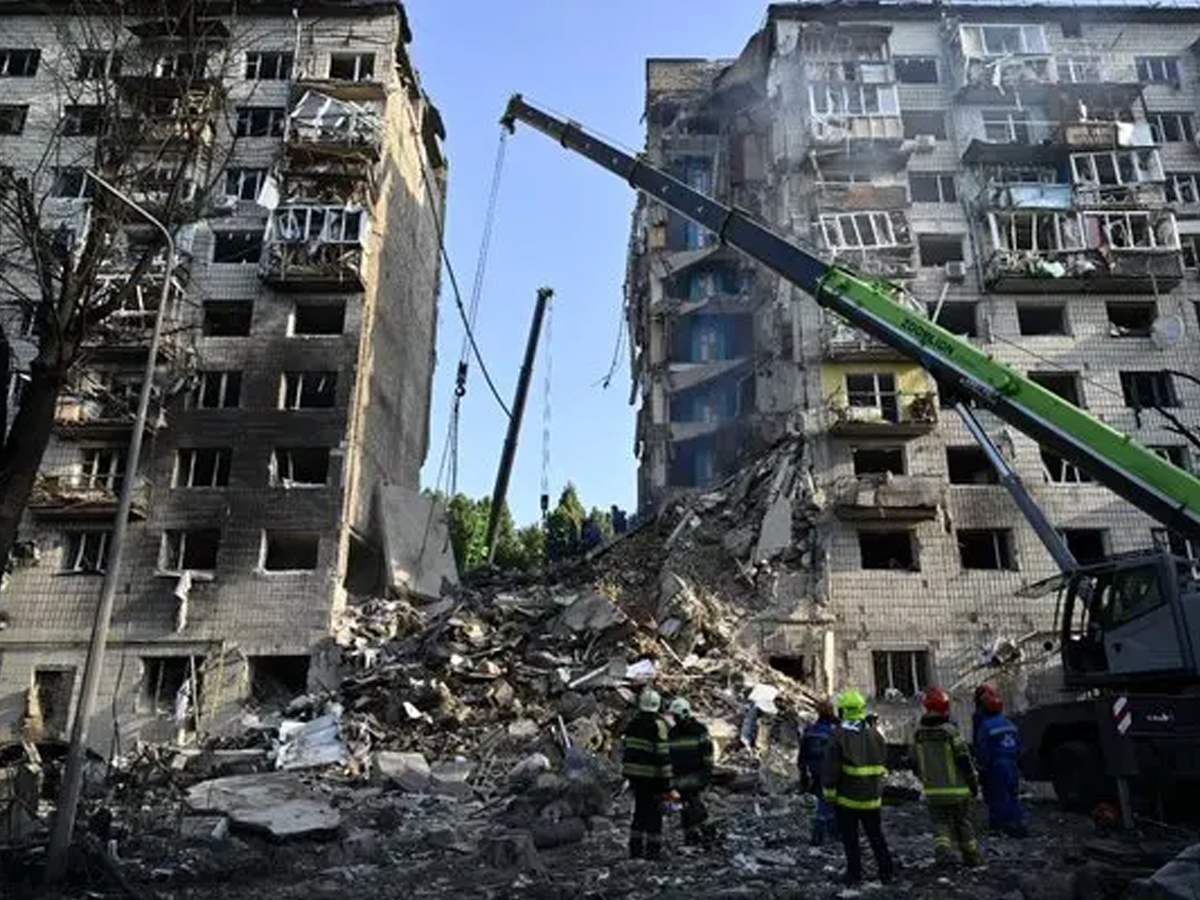
Late Friday night and into early Saturday, Ukraine came under a massive aerial assault launched by Russian forces. The attack used dozens of missiles and hundreds of drones. Explosions rocked Kyiv and nearby regions. By morning, emergency crews found three people dead, nearly 30 injured, and widespread damage to homes and energy infrastructure. The assault triggered a major power outage that left over 600,000 households — including more than 500,000 in the capital — without electricity.
How Many Weapons And What Targets
Officials say Russia launched roughly 36 missiles along with about 600 drones. The strikes hit energy facilities and residential buildings across the country. Lights went out, heating systems shut down — just as temperatures began to dip. Ukraine’s Air Force scrambled and intercepted most of the incoming drones and missiles. They reported shooting down 558 drones and 19 missiles.
Human Cost — From Burnt Flats to Injured Families
Emergency crews rushed to burning apartment blocks in Kyiv. Among the injured was a 13-year-old child, according to the city mayor. The city saw nearly 30 people wounded during the barrage. The cold weather added to the danger, as many wounded and displaced people now also face plummeting night-time temperatures. Residents told reporters they awakened to deafening blasts and rushing sirens.
Why Russia Struck Now — And What It Hopes to Achieve
Moscow called the assault a “massive strike… against Ukrainian military-industrial complex enterprises and the energy facilities that support their operation.” As winter approaches, hitting energy infrastructure cripples civilian life. These kinds of attacks signal a clear intent to weaken Ukraine’s resolve and ability to weather the cold months. The timing also coincides with planned diplomatic moves, as Ukraine prepares talks with U.S. officials over a proposed peace plan.
Ukraine’s Response and International Reactions
Ukrainian officials condemned the strike: they say such attacks on civilian infrastructure and residential areas amount to war crimes. Kyiv also reiterated its continuing long-range strikes on Russian refineries and depots. It warns that attacks will not end until Russia stops targeting civilians.
Many around the world watched in shock — unstable power, damaged homes, and injured children added a grim chapter to the war. International allies expressed concern over the escalation and urged Russia to respect international humanitarian law.
Why This Attack Matters — And What Comes Next
The strike showed both how destructive modern drone-missile raids can be — and how vulnerable civilian infrastructure remains even with strong air defenses. As winter nears, blackouts could worsen human suffering.
Ukraine now faces a dual challenge: surviving the cold and defending both its people and its energy grid. The coming days will test its resilience. Meanwhile, diplomats gear up for peace talks. How those talks proceed may depend on whether Russia backs down — or doubles down on such attacks.