
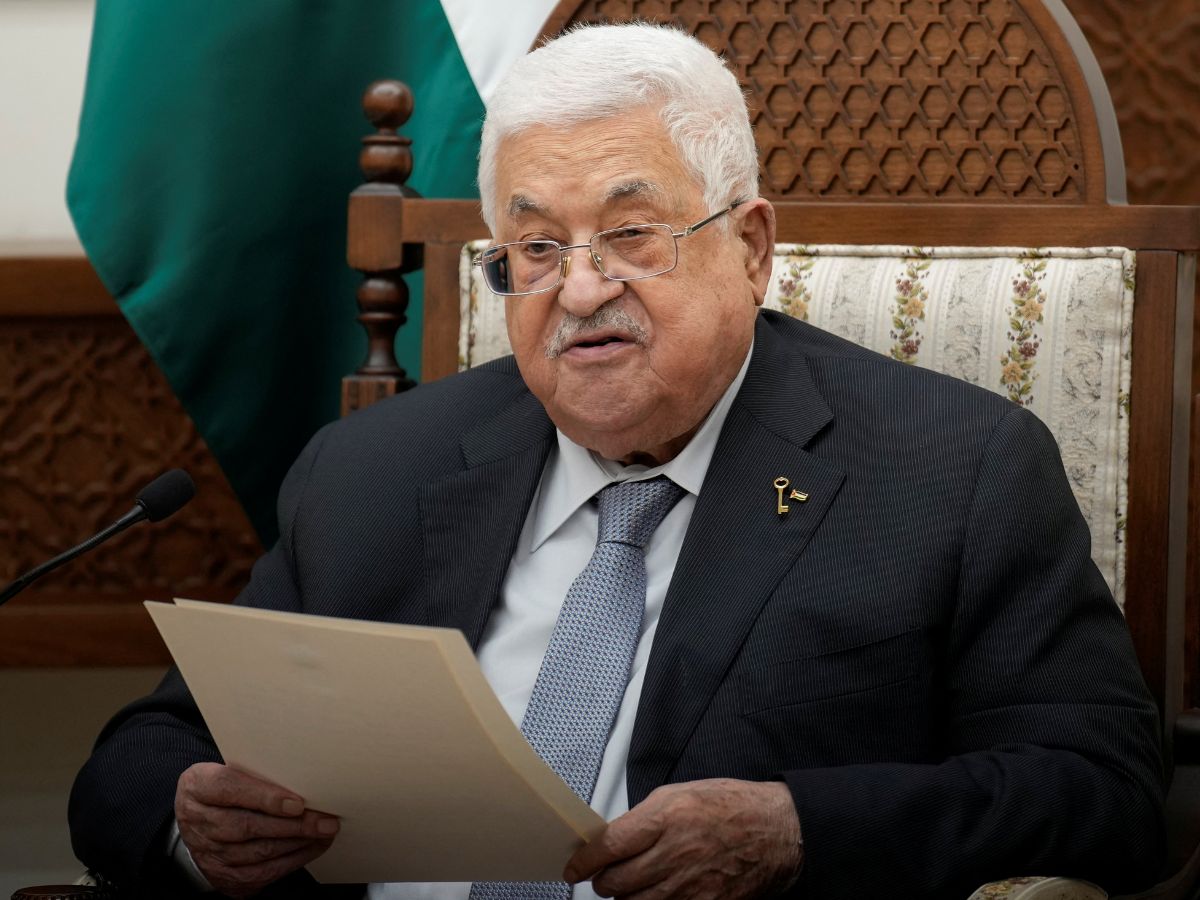
Palestinian President Mahmoud Abbas strongly rejected a governmental role for Hamas and threw his support behind a fresh international peace initiative in a major speech he gave via video link to the UN General Assembly. Abbas also laid out a conditional vision for Gaza’s future.The speech marked a clear attempt to position his Palestinian Authority (PA) as the sole legitimate administrator of a future Palestinian state.
What Did President Abbas Propose?
Abbas presented a multi-point plan centered on the implementation of the peace proposal announced by France. This plan calls for a simultaneous exchange: the release of all remaining Israeli hostages held by Hamas for a complete end to Israeli military operations in Gaza. Following this, a transitional administration would govern the strip. Crucially, Abbas stated this administration must include his PA and explicitly exclude Hamas, which he demanded must disarm. He expressed his readiness to work with international leaders, including French President Emmanuel Macron and Saudi leadership, to implement this roadmap.
Why Was Abbas Speaking via Video?
The 89-year-old leader was unable to attend the UN gathering in person after the US State Department revoked visas for him and 80 other Palestinian officials last month. US Secretary of State Marco Rubio justified the move by accusing them of undermining peace efforts and unilaterally seeking statehood. His remote appearance unfolded under these circumstances, amplifying the diplomatic discord surrounding the peace process.
What is the French Peace Plan?
The plan, co-chaired by Saudi Arabia, envisions a sequence of events leading to a sustainable peace. It begins with the hostage-for-ceasefire swap, followed by the establishment of a transitional government in Gaza without Hamas. The establishment of a “sovereign, autonomous, and demilitarized State of Palestine” is the ultimate objective. Although Abbas has approved the idea, there are many obstacles in its way. The United States and Israel have not endorsed the plan; the US continues to oppose unilateral recognition of a Palestinian state, referring to it as a “reward for Hamas.”
How Did Abbas Address the War and Hamas?
Abbas walked a delicate line, condemning the violence on both sides while reaffirming his political stance. He denounced Israel’s military offensive in Gaza, accusing it of committing “one of the most horrific humanitarian tragedies of the 20th and 21st Centuries.” Simultaneously, he stated he “rejected” the actions of Hamas during its October 7th attack on Israel. This dual condemnation reflects an effort to distinguish the PA from Hamas and appeal to the international community by adhering to a position that rejects armed militancy and seeks a diplomatic solution.
What Are the Broader Goals for Palestinian Statehood?
A key theme in Abbas’s speech was the pursuit of international legitimacy. He urged nations still withholding recognition of Palestine to extend it and pressed the UN for full membership. His vision: a “sovereign, autonomous, demilitarized State of Palestine.” Yet, despite his endorsement, formidable obstacles remain.. Abbas argued that a sovereign state should assume “full responsibilities” for Gaza and the Israeli-occupied West Bank, connected geographically, with Arab and international support.
Also Read: Systematic Sabotage? Wave of Drone Incursions Over Danish Airports Raises Alarm in NATO
A Promise of Internal Reform
Acknowledging long-standing criticisms of his authority, Abbas pledged significant internal reforms. He promised “national efforts toward reform, including holding presidential and parliamentary elections within one year of the war’s end.” He envisioned a “democratic, modern state committed to international law,” a clear contrast to Hamas’s rule in Gaza. The last elections, held in 2006, were won by Hamas, leading to a violent split with Abbas’s Fatah party in 2007. A major barrier to the PA’s acceptability as a governing body in a post-war Gaza by both Israelis and Palestinians is doubts about its legitimacy and governance, which this pledge seeks to allay.